



Celestia (TIA) wallet
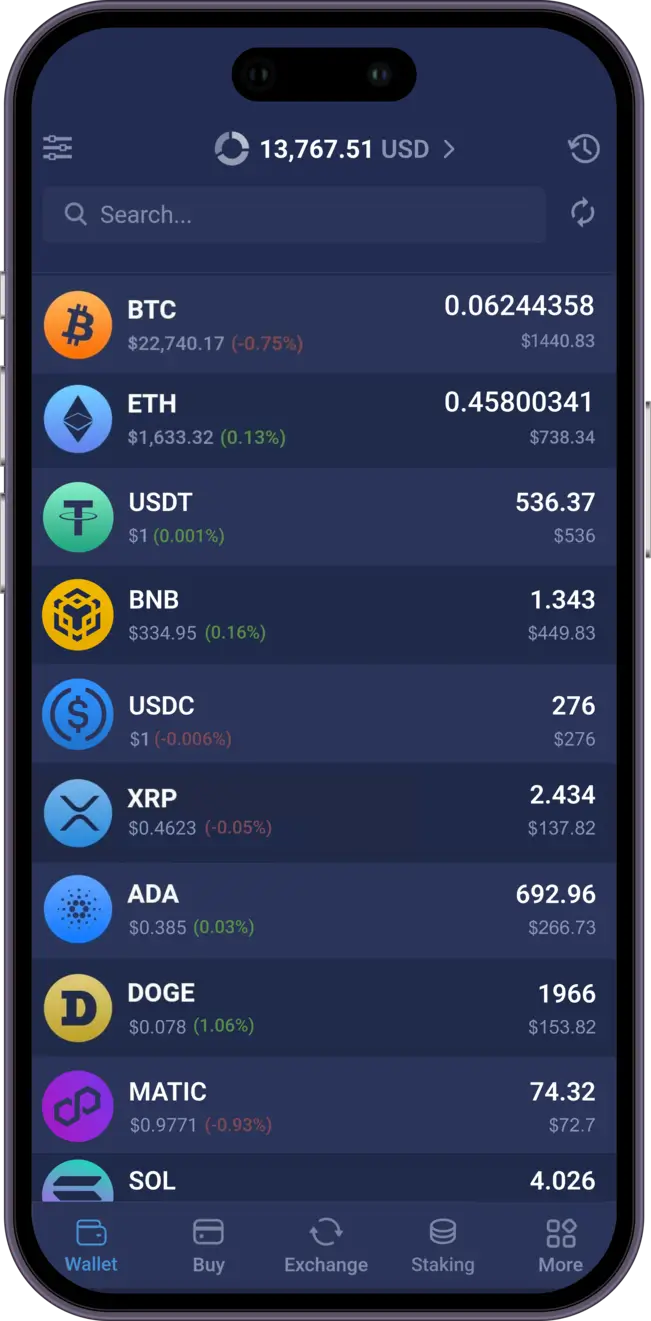
Manage your Celestia, Ethereum, XRP, Litecoin, XLM and over 1000 other coins and tokens.
 Download Celestia Wallet

Trusted by 15,000,000 users worldwide



What Our Customers Say
Rated 4.9 out of 5 stars from 27,424 happy customers!
![[object Object]](/images/reviews/review_1.webp)

![[object Object]](/images/reviews/review_2.webp)
![[object Object]](/images/reviews/review_3.webp)
![[object Object]](/images/reviews/review_4.webp)
![[object Object]](/images/reviews/review_5.webp)
![[object Object]](/images/reviews/no-avatar.webp)
Why Choose Atomic Celestia wallet

Private
No registration and KYC required to use the app. We don't track your data

Secured
Your private keys are encrypted and never leave your device. Only you have control over your funds

24/7 Online Support
Fast support for your needs. Live chat and email support for customers from all over the globe.
Download Atomic Wallet

Windows

MacOS

Ubuntu

Debian

Fedora
Windows support update
Atomic Wallet Desktop supports Windows 10 and 11 only. Windows 7 and 8 are no longer supported.



Celestia is one of the most searched modular blockchain projects because it approaches scaling differently from traditional all-in-one chains. Instead of handling every blockchain function in the same place, Celestia focuses on data availability and consensus, while execution can happen elsewhere.
That makes a Celestia wallet useful not only for storing TIA, but also for following the broader modular ecosystem, managing transfers, and keeping your portfolio organized in one place.
What is Celestia?
Celestia is a modular blockchain designed to power rollups and other blockchain networks by providing data availability and consensus as specialized base-layer functions. In simple terms, Celestia helps other chains publish transaction data in a way that stays verifiable without forcing every blockchain to do everything itself.
This modular design is a big part of why Celestia stands out. Instead of asking one chain to handle execution, settlement, consensus, and data availability all at once, Celestia focuses on the parts it is built to do best.
How Celestia works
Celestia separates core blockchain responsibilities. Rollups and app-specific chains can use it as a data availability layer, while choosing their own execution environments and application logic.
- Data availability: Celestia helps chains publish block data so users and networks can verify that data was made available.
- Data availability sampling (DAS): Celestia light nodes can verify data availability efficiently without downloading every byte of every block.
- Modular architecture: developers can build custom rollups and sovereign chains without forcing one chain to handle the full stack in a monolithic way.
- TIA utility: TIA is used in the network for fees related to blobspace, proof-of-stake participation, and governance.
What is TIA used for?
TIA is the native asset of the Celestia network. It plays an important role in how the network operates and how developers and users interact with it.
- Network fees: developers use TIA when submitting data to Celestia.
- Proof-of-stake: TIA secures the network through delegation and validator participation.
- Governance: TIA holders can participate in protocol governance.
- Ecosystem utility: developers may also choose TIA as a gas token or currency when bootstrapping rollups built with Celestia underneath.
Celestia wallet use cases
A Celestia wallet is primarily about managing TIA safely and keeping access to the ecosystem simple.
- Store TIA: keep your Celestia balance in a non-custodial wallet environment.
- Send and receive: use your wallet for standard TIA transfers and day-to-day asset management.
- Portfolio management: track TIA alongside other major coins and tokens in one app.
- Swap convenience: move between TIA and other supported assets without juggling multiple wallet interfaces.
Keplr vs Atomic Wallet for Celestia
Different wallets fit different jobs. Keplr is often the first stop for users who want a wallet closely aligned with the Cosmos-style ecosystem and native staking flows. Atomic Wallet is better suited for users who want a broader multi-asset experience with buying, swapping, and portfolio management in one interface.
| Feature | Keplr | Atomic Wallet |
|---|---|---|
| Main focus | Cosmos ecosystem and native chain interactions | Multi-asset wallet experience |
| Best for | Users who want deeper chain-native flows | Users who want simpler everyday asset management |
| Celestia fit | Commonly used for native Celestia staking interfaces | Useful for storing TIA and managing it with a broader portfolio |
| User experience | Ecosystem-oriented wallet flow | All-in-one wallet interface for buy, swap, and storage |
Pros and cons of using Atomic Wallet for TIA
Pros
- Store TIA together with many other supported assets
- Simple interface for users who do not want a chain-specific wallet only
- Built-in buy and swap flows for a smoother retail experience
- Useful for people managing a broader crypto portfolio, not just one ecosystem
Considerations
- Chain-native Celestia actions may still be more familiar in ecosystem-specific wallets
- Users deeply active in rollup or validator workflows may prefer specialized tools
- Wallet choice depends on whether the priority is native ecosystem depth or multi-asset convenience
How to use a Celestia wallet
Getting started with a TIA wallet is usually straightforward.
Download Atomic Wallet
Install the wallet on your desktop or mobile device.
Create a new wallet or restore an existing one
Complete the setup flow and store your backup phrase securely offline.
Get your TIA wallet address
Open your Celestia wallet inside the app and copy your address to receive funds.
Fund your wallet
Receive TIA from another wallet or use supported buy and swap flows where available.
Manage your assets
Store, send, receive, and monitor TIA alongside other supported crypto assets in one place.
Why Celestia matters in crypto
Celestia matters because it pushes blockchain design toward specialization. Its modular model is built around the idea that scalability improves when networks separate execution from consensus and data availability, instead of forcing one chain to do every task alone.
For users, that means Celestia is more than just another token. It is part of the infrastructure layer behind the next generation of rollups, appchains, and modular crypto applications.


