Otherside Metaverse: Inside Yuga Labs’ New Onchain Economy
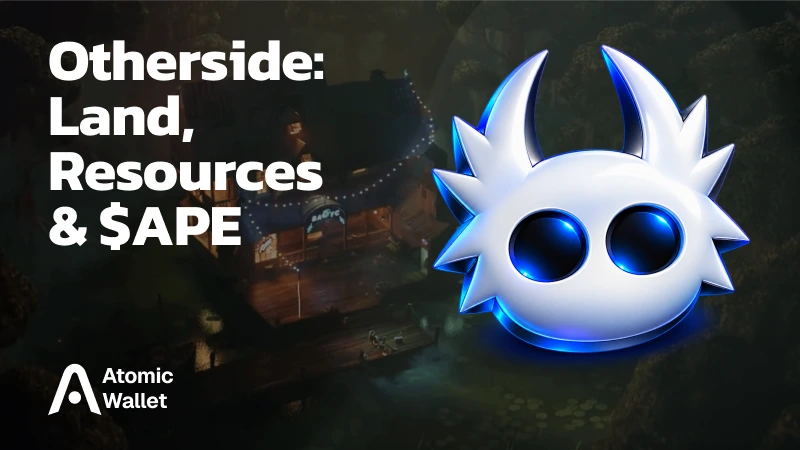
Otherside is moving past the old “BAYC metaverse” pitch.
Yuga Labs is now building it around a real onchain economy: 74 resources, roughly 100,000 Otherdeeds, harvesting, crafting, Kodas, and $APE moving value in and out of the system. Virtual land is becoming infrastructure for gameplay and economic activity, not just something to own.
What Is Otherside?
Otherside is Yuga Labs’ persistent Web3 world that combines MMORPG-style gameplay with onchain ownership and a player-driven economy.
Players can explore shared environments, own Otherdeeds, interact with Kodas, and enter experiences created by Yuga and outside builders. Koda Nexus serves as a central social hub, while ApeChain handles the blockchain layer underneath the world.
The bigger idea is to turn Yuga’s NFTs into functional assets inside a world where land, characters, resources, and $APE all have a role.
How Otherside Grew Out of BAYC
Otherside is the latest step in Yuga Labs’ expansion from NFT collections into a broader onchain ecosystem.
- 2021: Bored Ape Yacht Club launches with 10,000 NFTs and a membership-driven community.
- 2022: Yuga announces Otherside as a shared virtual world built around its growing IP ecosystem.
- 2024: ApeChain launches as blockchain infrastructure for the wider Ape ecosystem.
- 2026: Otherside shifts toward a resource economy built around land, crafting, Kodas, and $APE.
The progression is clear: BAYC created the community and IP, while Otherside is where Yuga is trying to turn those assets into an active digital economy.
Inside the 74-Resource Otherside Economy
Otherside’s new economy is built around 74 onchain resources distributed across roughly 100,000 Otherdeeds.
The system introduces several core mechanics:
- Harvesting: players collect resources from land.
- Landowner fees: Otherdeed owners can charge for harvesting activity on their plots.
- Crafting: resources feed into items and other gameplay systems.
- Kodas: Kodas and MegaKodas interact with resource and progression mechanics.
- $APE: ApeCoin is positioned as the route for value entering and leaving the economy.
This gives Otherdeeds a more active role than simple virtual land ownership. Their value inside the game can increasingly depend on resources, player activity, and how the wider crafting economy develops.
Otherdeeds, Kodas and MegaKodas
Otherdeeds provide the land, while Kodas and MegaKodas add characters and gameplay utility to the Otherside economy.
The important shift is from ownership to use. Yuga is tying these assets more closely to what players can produce, access, and do inside Otherside.
How ApeChain and $APE Fit In
ApeChain handles the onchain infrastructure, while $APE acts as the economic asset connecting Otherside to the wider crypto market.
ApeChain is built with Arbitrum Orbit and uses APE as its native gas token. It gives Otherside a dedicated blockchain layer for transactions involving digital assets, applications, and other onchain activity.
Inside the new resource economy, Yuga has positioned $APE as the only route for value moving into and out of the system. In practice, that creates a clear stack: Otherside generates the activity, ApeChain processes it, and APE connects that activity to the external economy.
As $APE gains more utility across ApeChain and Otherside, users may also want a self-custody option for managing their crypto.
Atomic Wallet lets users hold and manage supported assets while keeping control of their private keys.
What Is Live and What Is Still Being Tested?
Otherside is already accessible as a persistent world, but its full resource economy is still rolling out in stages.
Early testing is starting with selected resources and Yuga-controlled land. Some resource balances may reset while Yuga tunes supply and gameplay, so the current economy should be viewed as an active test rather than a finished system.
Why This Changes the Yuga Labs Story
Otherside is becoming the place where Yuga’s NFTs, community, and blockchain infrastructure are supposed to converge.
Yuga has spent the past few years narrowing its focus around BAYC, ApeCoin, ApeChain, and Otherside. That makes the new economy more important than another metaverse feature: it is a test of whether NFT ownership can support persistent utility, production, and commerce.
If the resource system gains real usage, Yuga moves beyond selling digital collectibles toward operating an economy around them. If it does not, the gap between owning an asset and actually needing it inside Otherside remains the central challenge.