Degen Meaning: What It Means in Crypto and Online
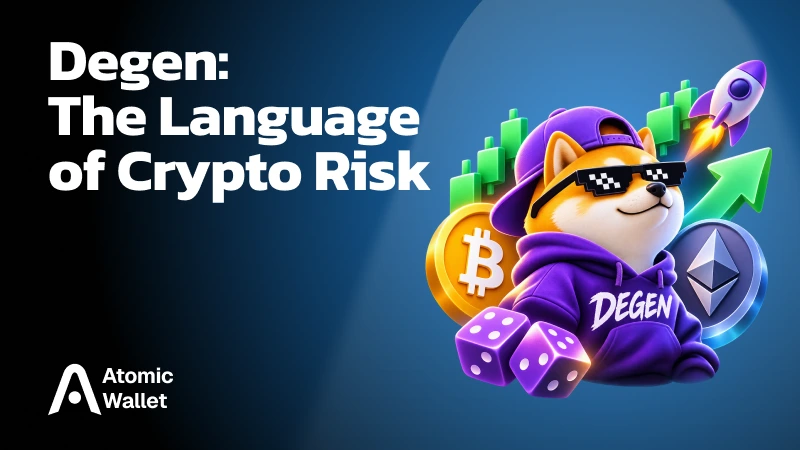
Degen is short for “degenerate.” In crypto, it usually describes someone drawn to high-risk trades, speculative tokens, or experimental projects. But the word also carries a social meaning: traders often use it jokingly about themselves or as a friendly name for their community.
The tone matters. A cheerful “GM, degens” welcomes the group, while calling someone a degen during an argument can sound insulting. Understanding the word means recognizing both its definition and how people use it.
What Does Degen Mean?
Degen is an informal shortening of “degenerate,” used to describe a person whose behavior is considered reckless, excessive, or objectionable.
Pronounced “DEE-jen,” the word is usually a noun: one person is a degen, and several are degens. Outside crypto, it can refer to someone’s gambling, habits, or behavior, often with a mocking or critical tone.
In online communities, the meaning can soften. People may call themselves degens to acknowledge an obsession, laugh at a questionable decision, or signal that they belong to the group. The label alone tells you little about someone’s actual behavior.
That flexibility explains why the same word can function as an insult, a joke, or a shared identity. The surrounding message—and the relationship between the people using it—helps determine which meaning applies.
What Is a Degen in Crypto?
In crypto, a degen is someone who embraces high-risk speculation, often through newly launched tokens, memecoins, NFTs, or experimental decentralized finance (DeFi) projects.
The label suggests an appetite for opportunities with uncertain outcomes and potentially large returns. A degen might buy a token before much information is available or move funds into a new protocol offering unusually high yields. Speed, hype, and the desire to get in early often influence these decisions.
But degen also describes a cultural identity. Someone may use it playfully because they spend their time following token launches, discussing markets, and sharing memes. Calling yourself a degen does not automatically mean you skip research or put everything into one trade.
The distinction matters: the word can describe reckless behavior, deliberate risk-taking, or simply membership in a crypto community. It is an informal label, not a measure of trading skill.
Where Does the Word Degen Come From?
Degen comes from “degenerate” and draws on gambling language, particularly the expression “degenerate gambler,” before becoming a familiar label in crypto communities.
In gambling, the expression carries a negative meaning: someone who bets excessively or recklessly, sometimes continuing despite mounting losses. Crypto traders adopted the shortened form with a more self-deprecating tone, acknowledging the speculative nature of their activity.
The label became especially visible during DeFi Summer in 2020, when traders chased token rewards and yields across emerging protocols. “DeFi degen” became a recognizable description of participants willing to experiment with these opportunities.
As the term spread through NFT and memecoin communities, it acquired a broader social role. Today, calling yourself a degen can communicate enthusiasm, belonging, and an awareness that the opportunity you are chasing could go badly.
In December 2020, Decrypt named “DeFi degens” its first-ever People of the Year. The recognition covered both traders and builders experimenting with decentralized finance, showing how the label had grown into an identity associated with an emerging crypto movement.
How Is Degen Used in Texts and Online?
Online, degen can name a person, describe a risky idea, or serve as a playful greeting within a community.
The surrounding words help you read the tone. These examples show how the meaning shifts:
In the last example, degen works as an informal verb. People also use it descriptively in expressions such as “degen trading” or “degen behavior.”
Outside crypto, the word can refer to excessive habits or behavior someone considers questionable. A person joking about spending the entire night gaming may call themselves a degen without referring to trading at all.
Is Degen an Insult?
Degen can be an insult, but crypto communities frequently use it as self-deprecating humor or a friendly expression of belonging.
Calling yourself a degen lets you set the tone: you might be laughing at a risky purchase or acknowledging how closely you follow the market. Among friends, the same word can be affectionate.
Calling someone else a degen is more sensitive. During an argument, or when aimed at a stranger, it can suggest that their behavior is irresponsible or objectionable. A term that feels welcoming in one group may sound hostile in another.
If you are unsure how it will land, avoid using it as a label for someone else. Their own use of the word is usually a better guide than its popularity online.
What Is Degen Trading?
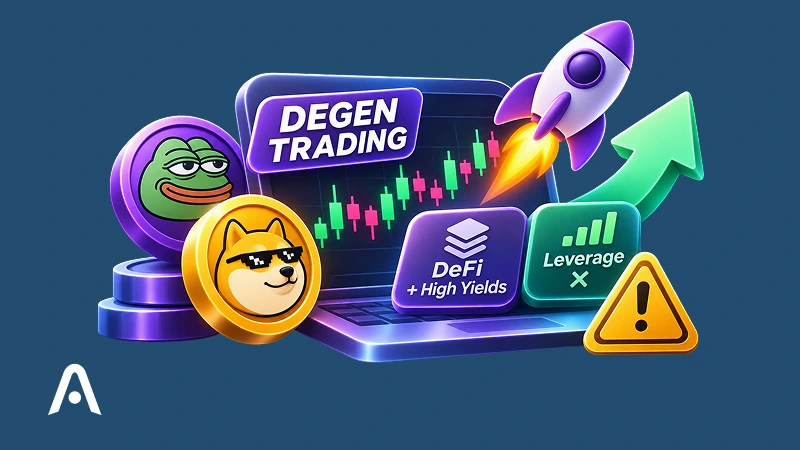
Degen trading is an informal term for highly speculative trading that prioritizes large potential returns while accepting substantial uncertainty or risk.
It describes an approach rather than a specific strategy. Common examples include:
- Buying a newly launched memecoin: Entering before reliable information, established liquidity, or a trading history is available
- Chasing unusually high DeFi yields: Depositing into an experimental protocol because its advertised rewards look attractive
- Using aggressive leverage: Taking a large position relative to the collateral supporting it, making small adverse price movements more damaging
Buying a memecoin or using DeFi does not automatically make someone a degen. The label usually reflects how much uncertainty they accept, how quickly they act, and how heavily they expose themselves to a speculative outcome.
Research can inform that decision, but it cannot make an experimental project predictable. Even a carefully considered degen trade can end in a complete loss.
What Are the Risks of Degen Trading?
Degen trading can expose users to sharp price declines, liquidity problems, scams, contract failures, and liquidation when leverage is involved.
The main risks extend beyond choosing a token that falls in price:
- Market losses: Hype can fade quickly, leaving a speculative token worth far less than its purchase price
- Limited liquidity: A quoted price does not guarantee you can sell your full position near that price
- Rug pulls: Project insiders may remove liquidity or abandon a project after attracting buyers
- Smart contract failures: Bugs or malicious code can put funds deposited into a protocol at risk
- Liquidation: A leveraged position can be forcibly closed when its collateral no longer meets the required margin
These risks can compound. Falling prices may trigger rushed selling just as liquidity disappears, making an exit more expensive than expected.
Community enthusiasm offers little protection against those outcomes. A busy group chat, a familiar influencer, or screenshots of other traders’ profits do not establish that a project is trustworthy or that its token will remain easy to sell.
A token that falls 90% needs a 900% gain to return to its original price. For example, a $1,000 position would shrink to $100, and that remaining amount would need to grow tenfold just to break even. A large percentage rebound can still leave a trader well below their entry price.
Degen vs. Other Crypto Slang
Degen describes a person, a style of risk-taking, or a community identity. Related terms such as ape in, FOMO, and rekt describe different parts of the trading experience.
These terms often appear together. Someone might feel FOMO, ape into a new token, and end up rekt if its price collapses.
They are not interchangeable, though. A single impulsive purchase does not tell you how someone usually trades, and suffering a loss does not automatically make them a degen.
Is Degen the Same as the DEGEN Token?
Degen is a slang term, while DEGEN is also the name and ticker of a specific cryptocurrency associated with Farcaster and Base.
The token launched on Base in January 2024 and initially rewarded participation in Farcaster’s degen community. Its name draws on the existing slang and the community identity surrounding it.
Context helps distinguish the two. “GM, degens” addresses people, while “buy DEGEN” or “DEGEN price” refers to the asset. Capitalization can provide a clue, although people do not always follow it consistently online.
For more about the project, read our guide to the DEGEN token.
Manage Your Crypto With Atomic Wallet
With Atomic Wallet, you can manage supported crypto assets while keeping control of your private keys.
Use our wallet to receive, send, and swap crypto from your phone or desktop. Your private keys stay on your device, and you control access to your funds.
That control comes with responsibility: protect your recovery phrase and check what you are buying. Self-custody does not remove a token’s market risks or make a speculative project trustworthy.