What Is Canton Network? The Privacy Blockchain Built for Wall Street
For years, blockchain adoption in traditional finance faced a fundamental problem.
Public blockchains offer transparency and composability, but financial institutions cannot expose sensitive transactions, positions, and client activity to the entire world.
This challenge has limited the ability of banks, exchanges, and asset managers to move large-scale financial infrastructure onchain.
Canton Network was built to solve that problem.
Designed specifically for capital markets, Canton combines blockchain-based settlement with privacy-preserving infrastructure that allows institutions to share data only when necessary. As tokenization accelerates and trillions of dollars in real-world assets move onchain, Canton is positioning itself as the network connecting traditional finance and blockchain technology.
Its growing ecosystem now includes some of the largest names in global finance, making it one of the most closely watched institutional blockchain projects in the industry.
Why Canton Network Is Getting Attention
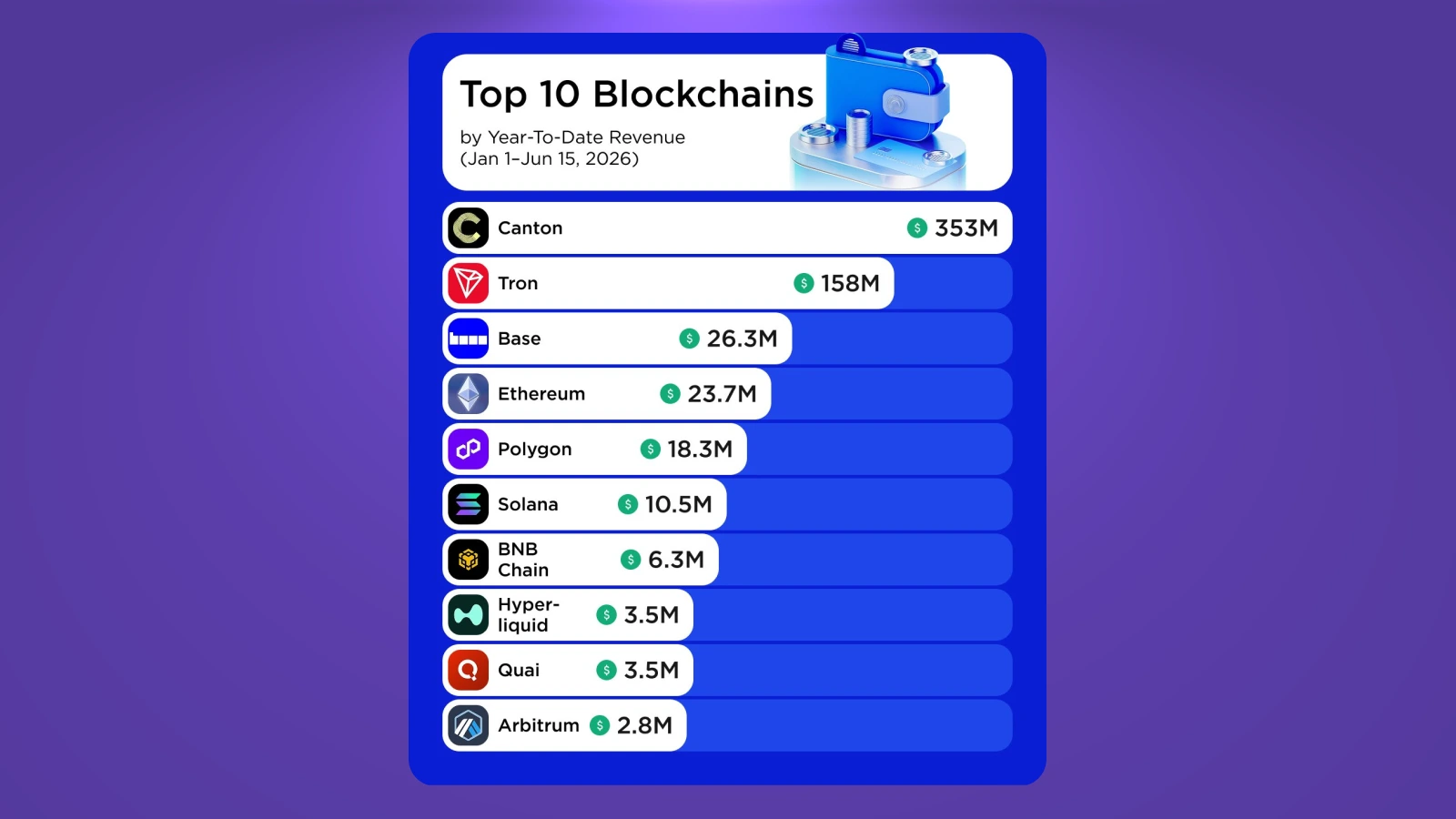
Canton Network has become one of the leading blockchain platforms focused on institutional finance and tokenized assets.
Unlike most public blockchains, Canton was designed from the ground up for regulated financial markets rather than retail trading or consumer applications.
Several factors are driving growing interest in the network:
- increasing adoption of tokenized assets
- participation from major financial institutions
- strong growth in network activity
- expanding ecosystem development
- growing demand for privacy-preserving blockchain infrastructure
The project’s momentum reflects a broader trend across financial markets.
Banks, asset managers, exchanges, and payment providers are increasingly exploring how blockchain technology can improve settlement, reduce operational costs, and unlock new forms of financial interoperability.
As a result, Canton has emerged as one of the most important blockchain networks serving the rapidly growing tokenization sector.
What Is Canton Network?
Canton Network is a privacy-enabled blockchain designed to support institutional finance, tokenized assets, and synchronized financial markets.
Created by Digital Asset, the network aims to provide the benefits of blockchain technology while addressing the privacy, compliance, and operational requirements of regulated financial institutions.
Its architecture is built around several core principles:
- privacy by design
- interoperability between applications
- synchronized settlement across institutions
- programmable financial workflows
- support for tokenized real-world assets
Unlike traditional public blockchains where all transactions are visible to everyone, Canton allows participants to share information selectively while maintaining a common source of truth across the network.
This approach makes the platform particularly attractive for capital market applications where confidentiality, compliance, and operational control are essential requirements.
As tokenization expands across bonds, funds, stablecoins, and other financial products, Canton aims to provide the infrastructure layer capable of supporting institutional-scale blockchain adoption.
Why Wall Street Needs Privacy on Blockchain
Privacy is one of the biggest reasons financial institutions have been slow to adopt public blockchain infrastructure.
Traditional financial markets handle sensitive information every day, including trading activity, settlement instructions, portfolio allocations, and client data.
On most public blockchains, this information can often be viewed by anyone.
For institutions, that creates significant challenges:
- protection of client information
- confidentiality of trading strategies
- regulatory compliance requirements
- operational security concerns
- competitive business considerations
A large asset manager cannot publicly expose every position it holds. A bank cannot reveal all transaction details to every network participant.
This is where Canton takes a different approach.
Rather than making every piece of data visible across the entire network, Canton allows participants to share information only with parties that are entitled to see it while still benefiting from blockchain-based settlement and interoperability.
For many institutions, that balance between privacy and connectivity is the key requirement for moving financial infrastructure onchain.
How Canton Network Works
Canton Network connects institutions through a shared blockchain environment while allowing them to maintain control over their own data.
The network is designed to synchronize activity across multiple applications and organizations without requiring every participant to expose all information publicly.
Several technologies support this architecture:
- synchronized markets
- atomic settlement
- interoperability across applications
- Daml smart contracts
- the Global Synchronizer
One of the network’s core concepts is synchronized settlement.
Rather than relying on separate systems that must constantly reconcile records, Canton enables different parties to coordinate transactions through a shared framework that maintains consistency across the network.
The platform also supports atomic transactions, allowing multiple actions to settle together as a single operation.
This combination of privacy, interoperability, and synchronized execution is designed to make blockchain infrastructure practical for complex financial workflows that traditional public networks were not originally built to support.
Canton vs Public Blockchains
Although Canton uses blockchain technology, its goals differ significantly from networks such as Ethereum and Solana.
Most public blockchains were designed as open platforms for developers, consumers, and decentralized applications.
Canton was built primarily for regulated financial institutions.
This difference shapes nearly every aspect of the network.
While Ethereum and Solana prioritize open participation and public transparency, Canton prioritizes privacy, compliance, and coordination between institutions operating in regulated environments.
Rather than competing directly with retail-focused blockchain ecosystems, Canton is attempting to create infrastructure tailored to the specific requirements of global capital markets.
Who Is Building on Canton Network?
Canton’s growing ecosystem includes some of the largest organizations in traditional finance.
The network has attracted attention because it is being explored and utilized by institutions that collectively manage trillions of dollars in assets and financial activity.
Participants and ecosystem contributors include:
- Goldman Sachs
- DTCC
- HSBC
- BNP Paribas
- Broadridge
- Visa
These organizations are exploring a wide range of use cases, including:
- tokenized assets
- digital collateral
- repo markets
- stablecoin settlement
- cross-institution financial workflows
The involvement of major financial institutions is one of the reasons Canton has become a prominent name within the tokenization narrative.
Rather than focusing primarily on retail crypto adoption, the network is positioning itself as infrastructure for the next generation of institutional finance.
Canton vs Public Blockchains
Although Canton uses blockchain technology, its goals differ significantly from networks such as Ethereum and Solana.
Most public blockchains were designed as open platforms for developers, consumers, and decentralized applications.
Canton was built primarily for regulated financial institutions.
This difference shapes nearly every aspect of the network.
While Ethereum and Solana prioritize open participation and public transparency, Canton prioritizes privacy, compliance, and coordination between institutions operating in regulated environments.
Rather than competing directly with retail-focused blockchain ecosystems, Canton is attempting to create infrastructure tailored to the specific requirements of global capital markets.
Who Is Building on Canton Network?
Canton’s growing ecosystem includes some of the largest organizations in traditional finance.
The network has attracted attention because it is being explored and utilized by institutions that collectively manage trillions of dollars in assets and financial activity.
Participants and ecosystem contributors include:
- Goldman Sachs
- DTCC
- HSBC
- BNP Paribas
- Broadridge
- Visa
These organizations are exploring a wide range of use cases, including:
- tokenized assets
- digital collateral
- repo markets
- stablecoin settlement
- cross-institution financial workflows
The involvement of major financial institutions is one of the reasons Canton has become a prominent name within the tokenization narrative.
Rather than focusing primarily on retail crypto adoption, the network is positioning itself as infrastructure for the next generation of institutional finance.
The Canton Coin (CC) Explained
CC is the native asset of the Canton ecosystem and plays a role in supporting network operations and economic activity.
As the network expands, CC is designed to help align participants, validators, and infrastructure providers around the long-term growth of the ecosystem.
Its primary functions include:
- paying network fees
- supporting validator operations
- contributing to network security
- facilitating ecosystem activity
- participating in protocol economics
One notable characteristic of Canton is that network fees are burned rather than distributed, creating a unique economic model tied to network usage.
As adoption increases and more financial activity settles through the network, demand for infrastructure services and ecosystem participation could grow alongside overall network activity.
The $355 Million Digital Asset Funding Round
The company behind Canton Network recently completed one of the largest fundraising rounds in blockchain infrastructure.
Digital Asset announced a $355 million funding round that valued the company at approximately $2 billion.
The raise attracted participation from a broad group of institutional and strategic investors, including organizations connected to both traditional finance and digital assets.
Key highlights include:
- $355 million raised
- approximately $2 billion valuation
- participation from major financial institutions
- support from leading crypto investors
- capital allocated toward ecosystem expansion
The funding round is significant because it demonstrates growing confidence in tokenization infrastructure from investors operating at the highest levels of global finance.
As institutions continue exploring blockchain-based settlement and asset tokenization, Canton’s infrastructure strategy appears increasingly aligned with broader market trends.
Risks Investors Should Know
Despite its institutional momentum, Canton Network still faces a number of risks that could affect long-term adoption.
The network is targeting one of the largest opportunities in blockchain: bringing capital markets onchain. However, success is far from guaranteed.
Investors should consider several factors:
- slower-than-expected institutional adoption
- regulatory uncertainty surrounding tokenized assets
- competition from other blockchain networks
- execution risk across a complex ecosystem
- dependence on broader tokenization growth
Many of the markets Canton is targeting operate under strict regulatory frameworks and move more slowly than retail crypto sectors.
While this can create large opportunities, it can also extend adoption timelines and increase operational complexity.
As a result, Canton remains a high-potential infrastructure play, but one that depends heavily on the continued expansion of tokenized finance.
Managing CC Safely
Secure asset management remains essential when interacting with any emerging blockchain ecosystem.
Whether holding CC as an investment or participating in the broader Canton ecosystem, users should prioritize security and self-custody.
A few best practices include:
- storing recovery phrases offline
- verifying wallet addresses before transactions
- avoiding phishing sites and fake applications
- reviewing token permissions regularly
- using trusted self-custody solutions
Maintaining direct control of private keys helps reduce reliance on third parties and provides greater ownership over digital assets.
Atomic Wallet offers a self-custodial environment for managing cryptocurrencies while allowing users to retain full control of their funds and private keys.
Conclusion: Could Canton Become Wall Street’s Blockchain?
Canton Network is pursuing a different vision from most blockchain projects.
Rather than focusing on retail users, meme coins, or consumer applications, the network is targeting the infrastructure that powers global financial markets.
Its approach combines several trends shaping the future of finance:
- tokenization of real-world assets
- blockchain-based settlement
- institutional adoption
- privacy-preserving infrastructure
- interoperable financial markets
By addressing the privacy and compliance requirements of regulated institutions, Canton is attempting to solve one of the biggest barriers preventing large-scale blockchain adoption in traditional finance.
Whether it ultimately becomes the dominant network for tokenized assets remains uncertain.
What is clear is that as trillions of dollars in financial products move onchain, networks built specifically for institutional markets could play an increasingly important role—and Canton is positioning itself at the center of that transformation.