Altcoin Season Index: When Does Altseason Start?
Altcoin season does not start on a fixed date. It begins when a broad share of major altcoins starts outperforming Bitcoin over a sustained period.
That is what the Altcoin Season Index is designed to measure. Instead of tracking one token or one sector, it looks at market-wide performance against BTC to show whether leadership is shifting toward altcoins.
What Is Altcoin Season?
Altcoin season, or altseason, is a market period when a broad range of altcoins outperforms Bitcoin.
The key word is broad. A rally in ETH, SOL, or a handful of memecoins is not enough on its own. Altseason implies that stronger performance is spreading across a meaningful share of the altcoin market.
Bitcoin does not need to fall for this to happen. BTC can still rise during altseason — altcoins simply need to rise faster.
What Is the Altcoin Season Index?
The Altcoin Season Index measures how many major altcoins are outperforming Bitcoin over a set period.
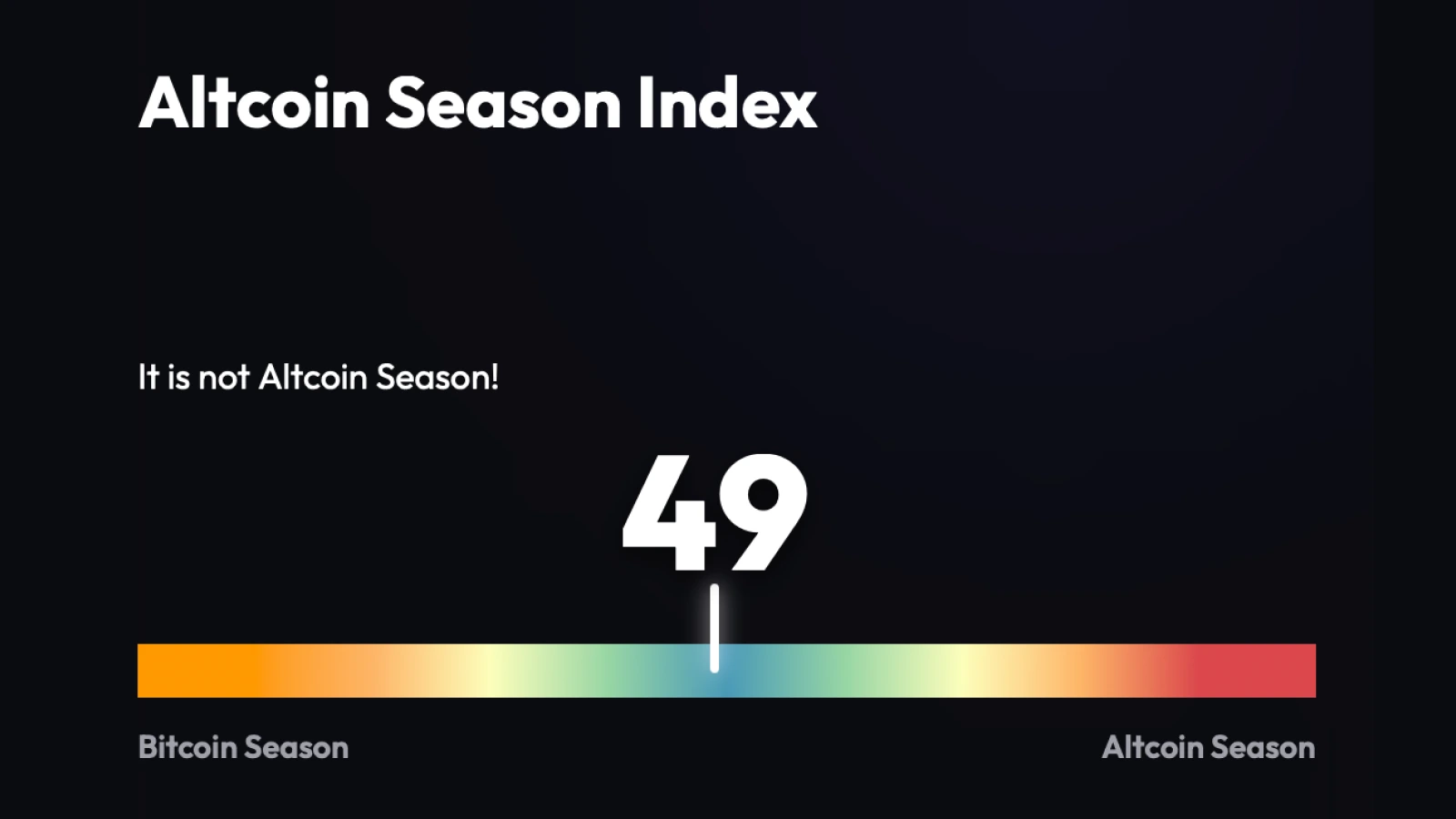
The index runs from 0 to 100:
- 0–25: Bitcoin Season
- 26–74: Neutral territory
- 75–100: Altcoin Season
A higher score means more altcoins are beating BTC. A reading above 75 is commonly used as the threshold for a confirmed altcoin season.
How Is the Altcoin Season Index Calculated?
The index compares the 90-day performance of major altcoins against Bitcoin.
Most major versions use this same basic approach, but they do not track exactly the same assets.
Stablecoins and certain wrapped or asset-backed tokens are excluded. Because the indexes use different baskets of assets, their scores can differ even on the same day.
When Is Altcoin Season?
Altcoin season is generally considered confirmed when the Altcoin Season Index reaches 75 or higher.
That means at least 75% of the coins tracked by the index have outperformed Bitcoin over the previous 90 days. There is no fixed date or schedule for altseason — it depends on how market leadership shifts between BTC and the broader altcoin market.
The 75 level is a confirmation signal, not a prediction. By the time the index reaches it, altcoins may already have been outperforming Bitcoin for weeks.
Altcoin Season vs Bitcoin Season
The difference comes down to which side of the market is outperforming: Bitcoin or altcoins.
Bitcoin Season does not necessarily mean altcoins are falling, just as Altcoin Season does not require Bitcoin to decline. The distinction is about relative performance: which part of the crypto market is gaining faster.
How to Read the Altcoin Season Index
The index is best used as a measure of market rotation, not as a forecast.
A low reading shows Bitcoin leading most of the market. A move toward 50 means performance is becoming more balanced, while a sustained rise toward 75 suggests altcoin leadership is broadening.
The direction also matters. An index climbing from 25 to 60 can show a meaningful shift toward altcoins even before the market officially reaches the 75 threshold. At the same time, a reading above 75 does not guarantee that altcoins will keep rising.
Because the index uses trailing 90-day returns, it reacts to moves that have already happened. Different providers also track different groups of coins, so the exact score should be treated as context rather than a standalone trading signal.
For users managing Bitcoin and altcoins across changing market cycles, Atomic Wallet provides a self-custody environment for holding and managing crypto while keeping control of private keys.