P2P Meaning in Crypto: How Peer-to-Peer Networks and Trading Work
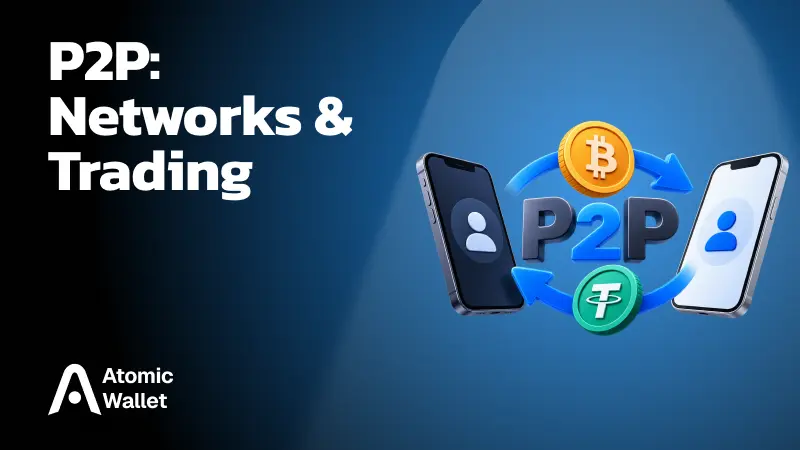
P2P stands for peer-to-peer. In crypto, it describes both the networks that connect blockchain nodes and marketplaces where people buy and sell crypto directly with each other.
You might encounter the term in a description of Bitcoin or beside a “Buy USDT” button on an exchange. The same abbreviation appears in both places, but the processes—and the role of intermediaries—are different.
Understanding that distinction helps you see how a transaction works, who controls the funds, and what protection you have when trading.
What Does P2P Mean in Crypto?
P2P means participants interact with one another to exchange information or value. In crypto, its two main uses are network communication and person-to-person trading.
The context tells you which meaning applies:
- P2P network: Nodes share transaction and block data with other nodes. Bitcoin uses this network to support payments without a financial institution processing them, as described in its original whitepaper
- P2P trading: A buyer and seller exchange crypto and payment under agreed terms, often through a marketplace that provides listings and escrow.
For example, sending BTC to a friend’s address is a crypto transfer. Buying USDT from someone and paying them by bank transfer is a P2P trade.
P2P trading can still involve a centralized platform. The buyer and seller transact with each other, while the operator may hold the seller’s crypto in escrow and help resolve disputes. The label alone does not tell you who controls the funds.
How Does a P2P Crypto Network Work?
A P2P crypto network connects nodes that share transaction and block data, allowing the blockchain to operate without one central server maintaining its records.
Bitcoin provides a clear example. Your wallet signs a transaction using your private key and submits it through a node or service. Nodes check the transaction against the network’s rules and relay it to other peers. A miner can then include it in a block, which full nodes independently validate.
This shared verification helps prevent someone from spending the same bitcoin twice. A transaction needs a valid signature, and its inputs must be available to spend under Bitcoin’s rules. Bitcoin’s developer documentation explains how nodes validate and relay transactions and blocks.
Your wallet does not have to download the entire blockchain to send crypto. Many wallets connect to nodes or supporting services to access network data. P2P describes the underlying network; the wallet is your interface for using it.
What Is P2P Crypto Trading?
P2P crypto trading means buying or selling cryptocurrency with another person, usually through a marketplace where you select an offer and an agreed payment method.
Instead of placing an order in a trading order book, you browse advertisements from other users or merchants. Each offer specifies the terms of the exchange:
- Price: How much fiat you pay or receive per unit of crypto
- Order limits: The minimum and maximum amount available for the trade
- Payment method: The bank transfer or payment service accepted
- Payment window: How long the buyer has to complete payment
You typically accept the listed terms when opening an order. “Peer-to-peer” does not mean every price is individually negotiated.
The marketplace coordinates the trade, while the buyer sends payment to the seller through the selected payment method. Major platforms can also require identity verification, hold crypto in escrow, and handle disputes.
How Does a P2P Trade Work?
A typical P2P trade combines a fiat payment between two people with a separate release of cryptocurrency held by the marketplace.
Imagine buying 100 USDT from a seller who accepts your local bank transfer. The process usually follows these steps:
- Choose an offer: Check the price, order limits, payment method, and seller’s terms
- Open the order: The platform locks the seller’s 100 USDT in escrow
- Send payment: Transfer the agreed fiat amount to the payment account shown in the order
- Mark the order as paid: Notify the seller through the platform after completing the transfer
- Receive the crypto: The seller checks that payment has arrived and confirms release to your platform balance
Marking an order as paid does not prove that the seller has received the money. The seller must check their own bank account or payment app before releasing crypto. If payment or release becomes disputed, use the platform’s appeal process and retain the order’s payment records.
What Does Escrow Actually Protect?
Escrow holds the seller’s cryptocurrency while the trade is in progress; it usually does not hold or control the buyer’s fiat payment.
This helps prevent the seller from moving the reserved crypto elsewhere while waiting for payment. But the bank transfer happens outside the marketplace.
That boundary matters. A payment screenshot cannot replace checking the receiving account, and escrow does not make every payment method irreversible.
P2P Trading vs Wallet Transfers, Spot Trading, and DEX Swaps
P2P trading involves a chosen buyer or seller, while wallet transfers, spot trades, and DEX swaps serve different purposes and use different settlement processes.
For example, buying USDT from a seller by bank transfer is a P2P trade. Withdrawing that USDT to your own address afterward is a separate wallet transfer.
A centralized exchange can offer both spot trading and a P2P marketplace. The useful comparison is therefore between transaction methods, rather than assuming P2P and exchanges are entirely separate categories.
What Are the Benefits and Risks of P2P Trading?
P2P trading gives you more choice over the offer and payment method, while adding risks linked to the counterparty and the fiat payment.
It can be useful when you want to buy or sell crypto in your local currency using a payment method available to you. You can compare offers by price, amount, and payment terms rather than accept a single quote. Availability depends on your region and the offers currently listed.
The main trade-offs are:
- Counterparty risk: The other person may delay the transaction, misrepresent payment, or pressure you to bypass the platform
- Payment risk: Some payment methods allow disputes or reversals after crypto has been released
- Price risk: A seller’s margin may be included in the quoted rate, even when the platform advertises zero trading fees
- Timing: Completion depends on the payment arriving and being checked, rather than only on blockchain processing
Compare the total amount you pay with the crypto you receive. A zero-fee offer can still cost more than another buying method if its exchange rate is worse.
How Can You Trade P2P More Safely?
Use the platform’s order process, verify payment independently, and keep records that support an appeal if something goes wrong.
Before and during a trade:
- Review the trader and offer: Check completed trades, feedback, price, limits, and payment terms. A strong history is useful evidence, but it cannot guarantee a safe transaction
- Keep communication on the platform: Use the order chat so support can review the conversation if a dispute arises
- Check payment identities: Use your own payment account and follow the platform’s rules for matching account names to verified identities
- As a buyer, mark paid only after sending payment: If you have already paid, seek support before agreeing to cancel an unresolved order
- As a seller, check your receiving account: Confirm the correct amount has arrived and inspect the payer’s name before releasing crypto
- Save evidence and raise a dispute: Keep the order details, payment record, and relevant messages if the other party fails to complete their side
A screenshot, notification, or message saying “payment completed” can be fabricated. Check the transaction inside your own bank or payment app, and do not release crypto under pressure.
Where Does Your Crypto Go After a P2P Trade?
On many P2P marketplaces, purchased crypto first arrives in your platform account. Withdrawing it to a self-custody wallet is a separate transaction.
Before confirming, check:
- The receiving wallet supports the asset on the selected network
- The withdrawal network matches the receiving network
- The destination address is correct
- The amount you will receive accounts for any withdrawal fee
After the withdrawal confirms, you can manage the asset through your wallet. Self-custody gives you control over the keys, so protecting your recovery phrase becomes part of protecting your crypto.
Atomic Wallet lets you receive and manage supported assets while keeping control of your private keys. Check the asset and network, copy your receiving address, and withdraw your crypto from the marketplace into your own wallet.