Aztec Network: Privacy Layer 2 on Ethereum and the Role of the AZTEC Token
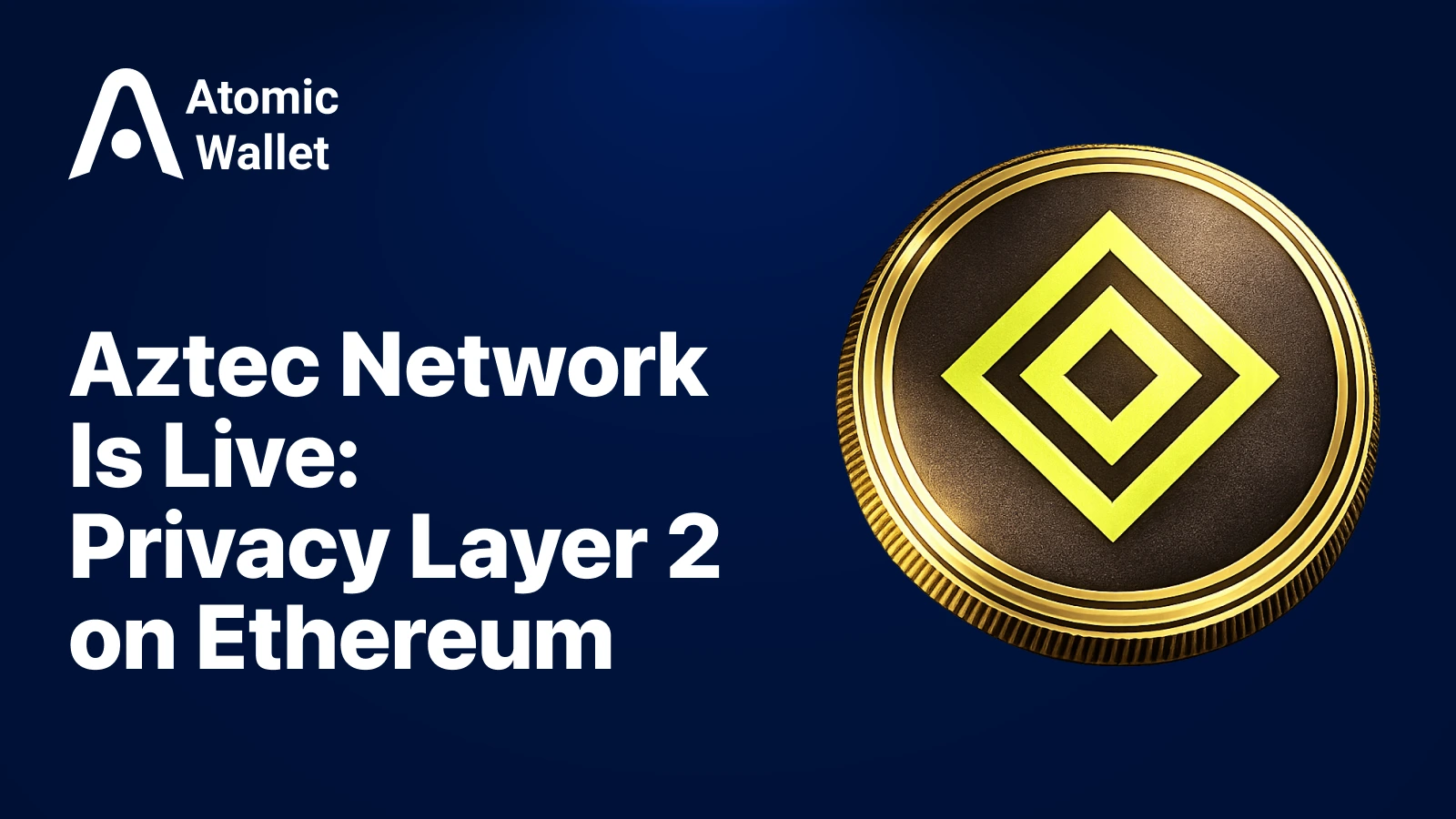
Aztec Network is emerging as one of the most discussed privacy Layer 2 projects on Ethereum, especially after the AZTEC token went live and tens of millions of tokens were staked within the first days. Unlike privacy coins focused purely on anonymous transfers, Aztec positions itself as a programmable privacy layer — bringing confidential smart contracts to Ethereum. This article breaks down what Aztec actually is, how privacy L2 works, and why early staking activity signals structural interest rather than short-term hype.
What Is Aztec Network?
Aztec Network is a zkRollup built on Ethereum that introduces privacy-by-default execution for smart contracts. Instead of exposing all transaction data and contract state publicly, Aztec enables developers to build applications where sensitive information can remain confidential while still being verifiable through zero-knowledge proofs.
Key characteristics:
- A zkRollup secured by Ethereum
- Privacy-first smart contract execution
- Programmable confidentiality at the application level
- Built around Noir, Aztec’s zero-knowledge–focused programming language
- Designed differently from traditional L2s that focus only on scaling and cost reduction
Unlike standard Layer 2 solutions that primarily improve throughput and fees, Aztec integrates privacy directly into the execution environment, making confidentiality a core feature rather than an add-on.
What Is a Privacy Layer 2?
A privacy Layer 2 (privacy L2 or private rollup) is an Ethereum scaling solution that not only increases throughput but also adds confidentiality to transactions and smart contract interactions.
To understand this distinction:
- Ethereum is public by default — balances, transfers, and contract interactions are visible to anyone.
- Traditional L2s focus on scalability, reducing fees and congestion.
- Privacy L2s add confidential execution, hiding certain data while maintaining cryptographic verifiability.
- This enables real-world applications where users or businesses do not want all activity exposed onchain.
Privacy L2 networks aim to solve a structural limitation of public blockchains: the tension between transparency and usability. By combining scalability with selective confidentiality, they attempt to make Ethereum more practical for both individuals and enterprises without sacrificing security.
Why Privacy on Ethereum Is Becoming Relevant Again
Ethereum’s radical transparency was once considered a pure advantage. Over time, however, full public visibility has revealed structural limitations. Every wallet balance, strategy, and smart contract interaction can be monitored in real time, which creates unintended side effects.
MEV extraction, copy trading, and front-running are natural consequences of transparent state. Users who deploy capital publicly expose their positions, and competitors can react instantly. For enterprises, public execution is even more problematic: financial data, business logic, and user interactions are not always meant to be globally visible. As Ethereum adoption grows, the demand for selective confidentiality — not total anonymity, but controlled privacy — is becoming more practical than ideological. Privacy L2 solutions like Aztec are emerging in response to this gap.
The AZTEC Token Is Now Live
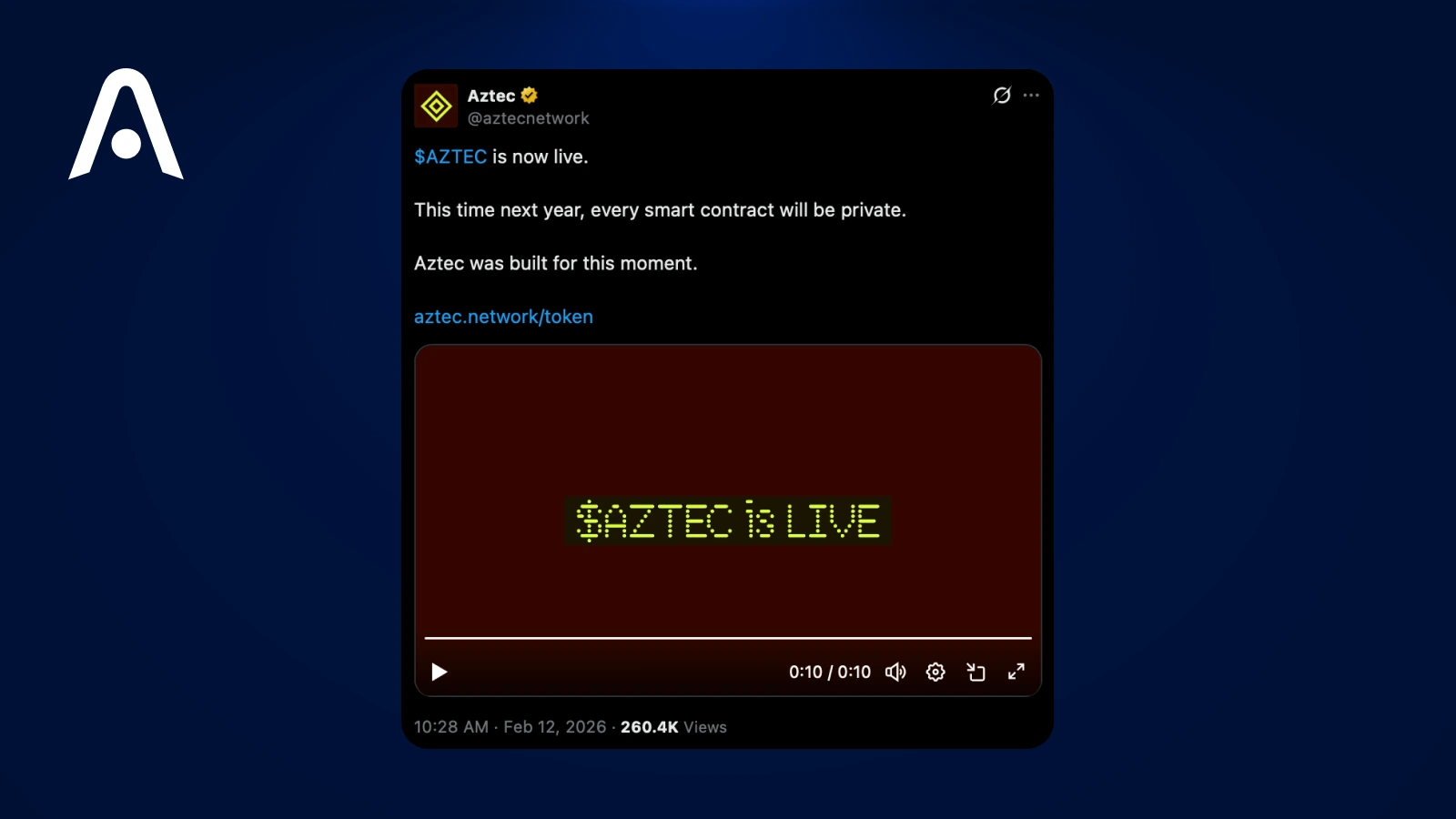
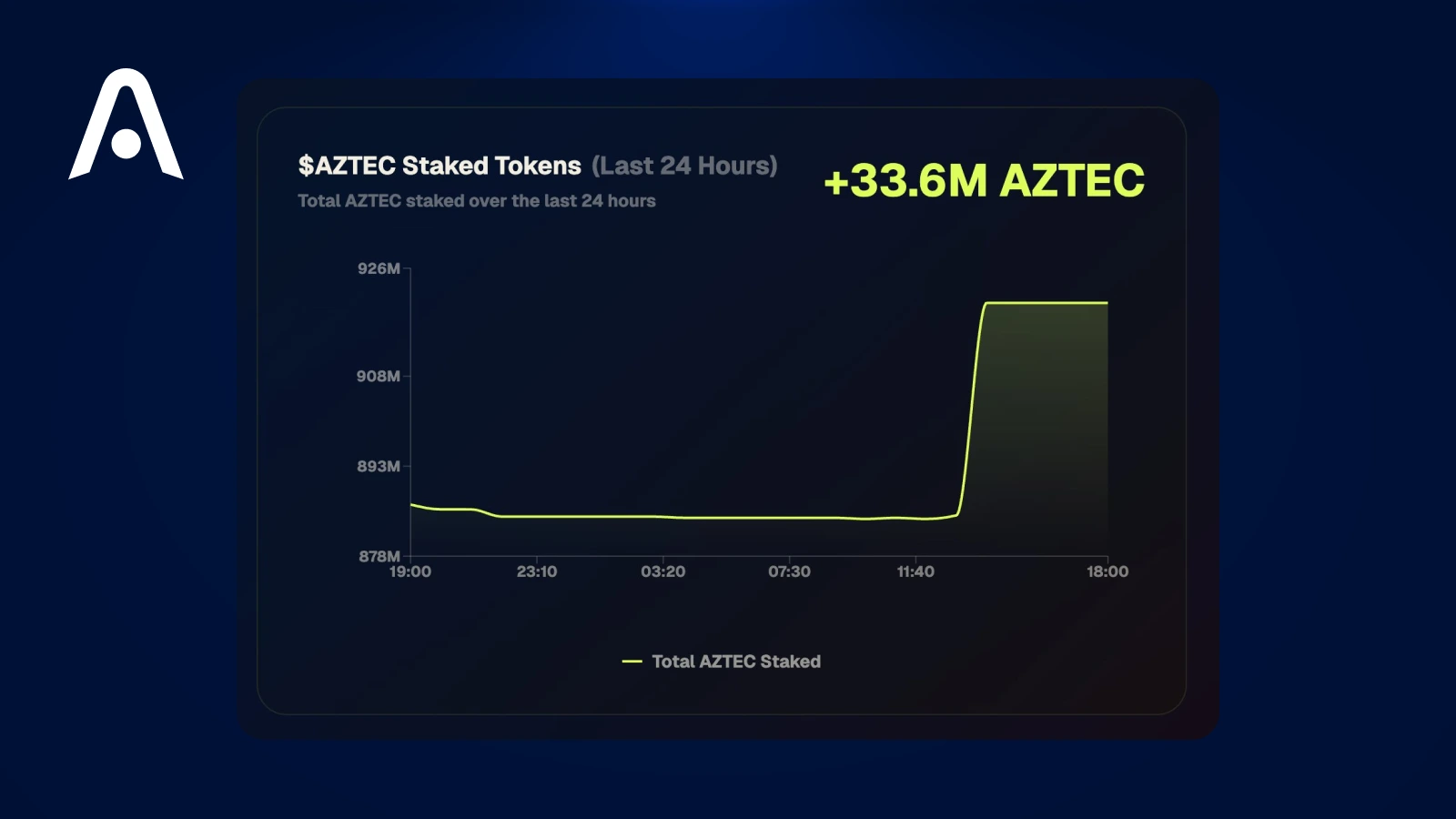
With the AZTEC token now live, attention has shifted from purely technical discussions to network participation. Early activity showed tens of millions of AZTEC staked within a short timeframe, signaling immediate engagement from the community.
What this launch represents:
- Activation of the network’s economic layer
- Early staking participation as a signal of conviction
- Governance rights tied to protocol evolution
- Alignment between token holders and network security
The focus is less about short-term price movement and more about how the token integrates into the network’s security and governance structure. In privacy-focused infrastructure projects, staking often reflects long-term positioning rather than speculative trading alone.
AZTEC Staking Explained
Staking plays a structural role in the Aztec network. Rather than being a yield mechanism alone, it functions as part of the protocol’s security and governance design.
At a high level:
- Staking contributes to network security and validator alignment
- It signals long-term participation rather than short-term trading intent
- Staked tokens may influence governance decisions over time
- It separates active network participants from passive holders
The early wave of staking activity reflects more than speculative excitement. In infrastructure-focused L2 projects, staking often indicates that participants are positioning for governance influence and ecosystem growth, not just liquidity events. That distinction matters when evaluating early momentum.
How Aztec Differs From Privacy Coins
Aztec is not a privacy coin in the traditional sense. Unlike networks such as Monero, which focus primarily on anonymous transfers, Aztec is designed to enable confidential smart contract execution within Ethereum’s ecosystem.
The difference is architectural. Privacy coins aim to obscure transaction metadata across the network. Aztec, by contrast, introduces programmable privacy — allowing developers to determine which data remains private and which remains verifiable. This enables selective confidentiality rather than blanket anonymity. From a regulatory and compliance perspective, this distinction is significant: Aztec’s model centers on privacy as functionality, not invisibility.
Aztec vs Other Ethereum L2s
Aztec is part of the Ethereum Layer 2 ecosystem, but it follows a fundamentally different design philosophy. While most L2s focus on throughput and cost efficiency, Aztec makes privacy a core execution feature.
Risks and Challenges of Privacy L2 Networks
Despite strong technical positioning, privacy Layer 2 networks face structural challenges. Confidential execution increases complexity, both technically and politically.
Key considerations:
- Regulatory pressure: Privacy-focused infrastructure may attract scrutiny depending on jurisdiction and use case.
- Technical complexity: Zero-knowledge systems are harder to build, audit, and optimize compared to standard smart contracts.
- Ecosystem maturity: Developer adoption and application growth take time, especially for new programming environments.
- Liquidity and adoption risk: Even technically strong networks must attract sustained usage to justify long-term value.
Privacy L2 networks solve a real design problem, but their success depends on balancing confidentiality with usability, compliance, and ecosystem growth.
Security Warning: Fake AZTEC Claim and Staking Sites
Token launches and early staking phases often attract phishing campaigns. As AZTEC becomes more visible, fake claim portals and imitation staking dashboards can appear across social media and search results.
To reduce risk:
- Always verify official links through Aztec’s confirmed channels
- Double-check contract addresses before interacting
- Avoid connecting your wallet to unknown “claim” or “stake” websites
- Be cautious of urgency-based messaging (“claim now” / “limited window”)
Privacy-focused projects do not eliminate security risks — they can amplify them during early adoption phases. Wallet safety and link verification remain critical, especially when interacting with newly launched tokens.
What Aztec Means for the Future of Web3 Privacy
Aztec represents a broader shift in how privacy is framed in Web3. Rather than positioning confidentiality as opposition to transparency, privacy L2 networks treat it as infrastructure — something applications can opt into when needed.
If successful, privacy rollups could move Ethereum beyond fully public DeFi toward a hybrid model where transparency and confidentiality coexist. That balance — privacy with verifiability — may define the next phase of Layer 2 innovation.
Secure Your Base Layer First
Interacting with new Layer 2 tokens and staking systems requires careful wallet management. Self-custody ensures that you remain in control of your assets while engaging with evolving ecosystems like Aztec.
Atomic Wallet provides a neutral way to store and manage ERC-20 tokens securely, offering full control of private keys without acting as a staking intermediary or trading platform.