What Is Ostium? The On-Chain Gateway to Global Markets
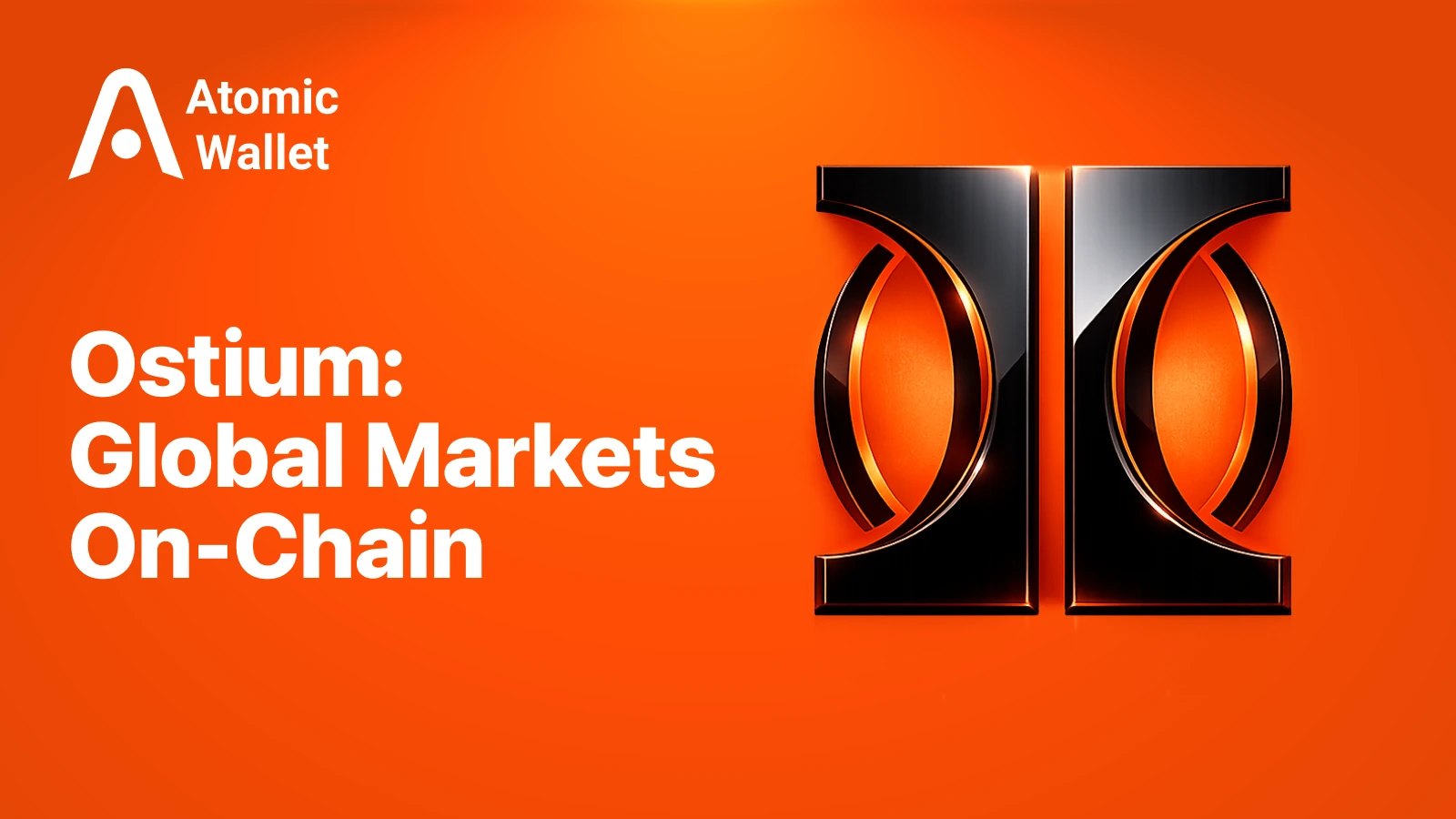
Crypto trading is starting to expand far beyond crypto itself.
Protocols like Ostium are pushing DeFi toward a new direction where traders can access stocks, commodities, forex, indices, and crypto markets from a single on-chain environment using self-custodial wallets and USDC settlement.
That shift is turning perpetual futures into something much larger than a crypto-native product. Instead of trading only BTC or ETH, users can now take leveraged exposure to global macro markets directly through blockchain infrastructure.
Why Ostium Is Getting Attention
Ostium is attracting attention because it brings global macro markets into one on-chain perpetual trading venue.
Most perpetual trading platforms focus primarily on crypto assets. Ostium takes a different approach by centering much of its activity around non-crypto markets:
- stocks
- commodities
- forex
- indices
- ETFs
That positioning helped the protocol stand out inside the increasingly crowded perp trading sector.
The broader narrative around Ostium combines several trends at once:
- self-custodial trading
- RWA-related infrastructure
- macro market exposure
- on-chain finance
- perpetual futures growth
The protocol’s traction accelerated further through rising trading volume, institutional backing, and growing interest in bringing traditional financial market exposure into DeFi-native systems.
What Is Ostium?
Ostium is a perpetual trading protocol on Arbitrum that offers synthetic exposure to global financial markets through self-custodial on-chain trading.
The platform allows users to trade perpetual instruments tied to assets across multiple market sectors while settling positions directly in USDC.
Ostium currently supports dozens of trading pairs spanning:
- stocks
- ETFs
- commodities
- forex
- indices
- crypto assets
Instead of operating like a traditional brokerage, the protocol focuses on synthetic market exposure through perpetual contracts.
That means traders can speculate on price movement without directly owning the underlying asset itself.
The broader architecture combines:
- wallet-based access
- on-chain settlement
- leverage trading
- oracle-driven pricing
- transparent execution infrastructure
This positioning makes Ostium less like a standard crypto exchange and closer to an on-chain macro trading platform.
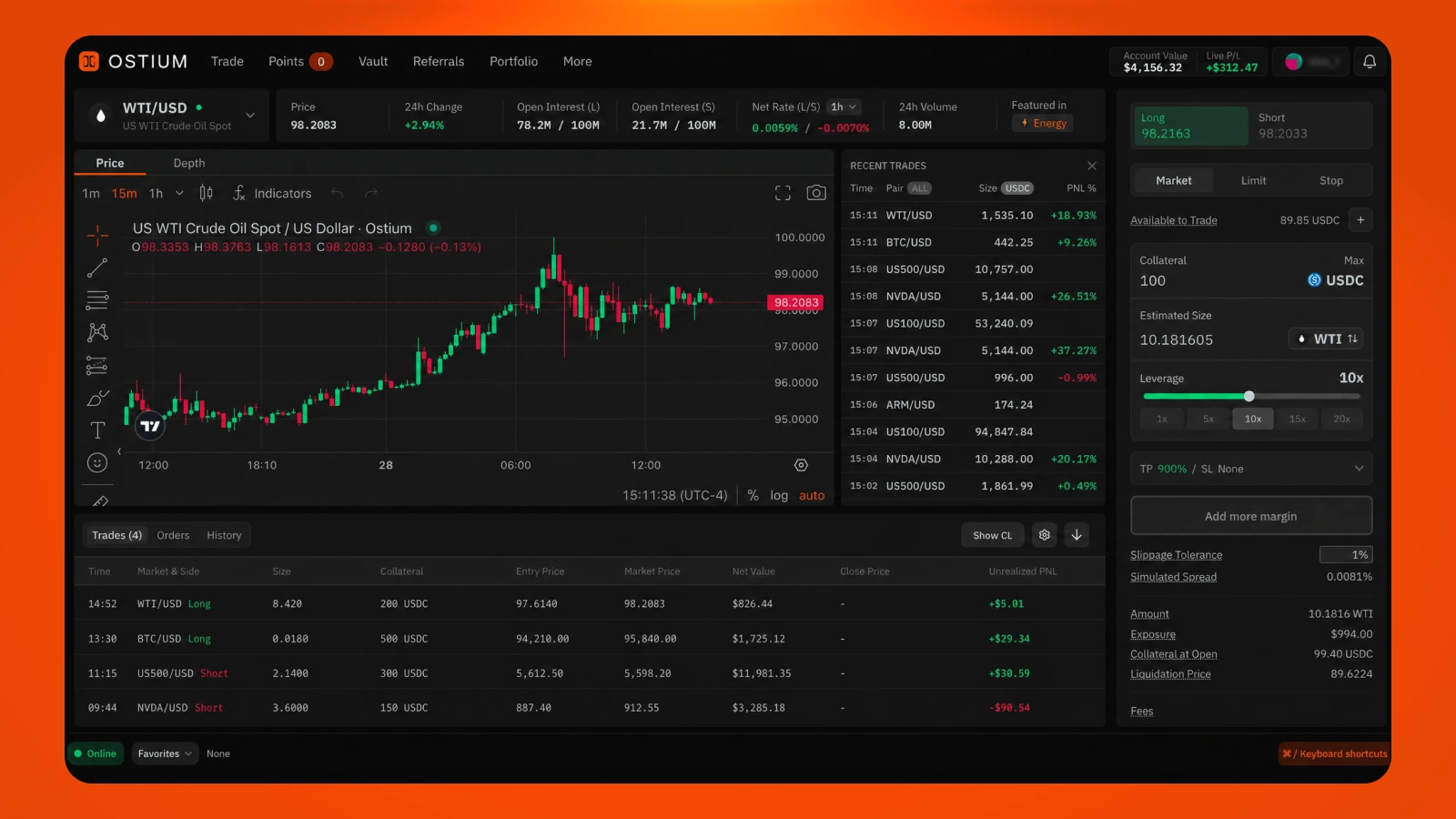
How Ostium Works
Ostium allows users to trade synthetic perpetual exposure to global assets without directly owning the underlying stocks, commodities, or currencies.
The system is built around perpetual contracts tied to real-world market prices through external pricing infrastructure and oracle feeds.
From the user perspective, the process is relatively simple:
- deposit USDC
- connect a wallet
- open long or short positions
- manage leverage directly on-chain
Instead of purchasing actual shares of a company or holding physical commodities, traders gain price exposure through perpetual instruments that track the underlying market.
This structure allows Ostium to support:
- global market access
- self-custodial trading
- leveraged macro exposure
- instant USDC settlement
- on-chain execution transparency
The result feels closer to trading macro markets through crypto infrastructure rather than using a traditional brokerage account.
What Markets Can You Trade on Ostium?
Ostium combines multiple traditional and crypto asset classes into one on-chain perpetual trading environment.
That multi-market structure is one of the protocol’s defining features.
Instead of separating crypto trading from traditional market speculation, Ostium brings them into a single perpetual trading layer.
This matters because many macro traders already move between:
- equities
- commodities
- FX markets
- crypto assets
Ostium attempts to compress that experience into one self-custodial environment settled entirely in USDC.
Ostium vs Tokenized Stocks
Ostium provides synthetic market exposure rather than direct ownership of tokenized real-world assets.
This distinction is important because many users confuse perpetual exposure with tokenized asset ownership.
On Ostium, traders are not buying actual shares of companies or holding tokenized versions of stocks. Instead, they are trading perpetual contracts tied to market prices.
That means users:
- do not own the underlying stock
- do not receive dividends
- do not get shareholder rights
- only gain price exposure through derivatives
The structure is much closer to perpetual futures trading than to traditional investing.
This model allows Ostium to offer broad market exposure without requiring the protocol to custody or tokenize the actual underlying assets themselves.
Why Ostium Fits the RWA and Macro Trading Narrative
Ostium sits at the intersection of DeFi, global macro trading, and on-chain financial infrastructure.
The protocol reflects a broader shift happening across crypto markets:
- RWAs moving on-chain
- macro trading entering DeFi
- perpetual futures expanding beyond crypto assets
- self-custodial finance infrastructure growing
What makes Ostium particularly interesting is that much of its activity centers around non-crypto markets rather than crypto-native speculation alone.
Instead of building another BTC/ETH perp venue, the protocol is positioning around:
- equities
- commodities
- forex
- indices
- cross-market macro exposure
That gives Ostium a very different identity from most DeFi trading protocols and places it closer to the emerging narrative around on-chain global financial markets.
Self-Custody and USDC Settlement on Ostium
Ostium combines self-custodial trading with USDC-denominated settlement, allowing users to access global markets directly from crypto wallets.
That structure changes how traders interact with financial markets.
Instead of opening traditional brokerage accounts or transferring funds through multiple intermediaries, users can:
- connect a wallet
- deposit USDC
- open leveraged positions
- settle trades directly on-chain
The protocol keeps trading infrastructure inside crypto-native systems while still providing exposure to external financial markets.
USDC settlement also simplifies the experience by keeping collateral and PnL denominated in stable digital dollars rather than volatile crypto assets.
Combined with wallet-based access, the result feels closer to global macro trading built around self-custodial crypto infrastructure.
Ostium’s Liquidity and Infrastructure Model
Ostium relies on external pricing and liquidity infrastructure designed to mirror execution conditions from underlying global markets.
The protocol is not attempting to replace traditional financial markets themselves. Instead, it acts more like a distribution layer connecting on-chain traders to price exposure across multiple asset classes.
To support that model, Ostium uses:
- oracle-based pricing systems
- external market data infrastructure
- liquidity-backed perpetual markets
- on-chain settlement mechanisms
This architecture helps synthetic perpetual pricing stay aligned with underlying market conditions across stocks, commodities, forex, and crypto.
The broader goal is to create a trading environment where users can access global markets through DeFi infrastructure while maintaining pricing and execution quality close to traditional financial venues.
Why Traders Are Watching Ostium
Ostium is becoming one of the most closely watched protocols in the emerging on-chain macro trading sector.
Part of that attention comes from differentiation. While most perp protocols compete around crypto-native markets, Ostium built its identity around global financial exposure.
The protocol’s growth metrics accelerated attention further:
- tens of billions in cumulative trading volume
- hundreds of thousands of trades
- thousands of active traders
- institutional-backed funding rounds
The project also attracted backing from major crypto trading and infrastructure firms, reinforcing the perception that on-chain macro trading may become a larger category inside DeFi.
For many traders, Ostium represents something different from a standard perp exchange:
- global market access
- self-custodial trading
- USDC settlement
- macro positioning through DeFi rails
That combination is why the protocol is increasingly discussed as a serious infrastructure layer for on-chain global markets.
Risks and Limitations of On-Chain Global Market Perps
Trading synthetic perpetual exposure to global markets still carries significant leverage, infrastructure, and market risks.
Even though the assets tracked on Ostium include stocks, commodities, and forex pairs, the trading experience still operates through perpetual derivatives rather than direct ownership.
That introduces risks connected to:
- leverage liquidation
- funding costs
- oracle dependency
- liquidity conditions
- volatile market movements
Synthetic exposure also differs fundamentally from traditional investing. Traders gain price exposure only, without ownership rights tied to the underlying assets.
As on-chain global market trading expands, regulatory and infrastructure questions are also likely to remain important topics for the sector over time.
Accessing Global Markets Through Crypto Wallets
Protocols like Ostium are expanding how users interact with global financial markets through self-custodial crypto infrastructure.
Instead of relying entirely on traditional brokerage systems, traders can increasingly access multiple asset classes directly from wallet-based environments.
That includes exposure to:
- stocks
- commodities
- forex
- indices
- crypto markets
This shift is part of a broader movement toward merging traditional market access with on-chain financial infrastructure.
Wallets now function as more than simple crypto storage tools. They increasingly act as access layers for trading, settlement, transfers, and participation across expanding digital financial ecosystems.
Atomic Wallet provides a multi-asset environment for managing crypto holdings and interacting with broader blockchain infrastructure while maintaining self-custodial control.
Conclusion: Ostium and the Rise of On-Chain Macro Trading
Ostium reflects a broader shift toward bringing global market exposure into self-custodial crypto infrastructure.
The protocol is pushing perpetual trading beyond crypto-native speculation and toward a much wider macro trading environment:
- equities
- commodities
- forex
- indices
- crypto assets
By combining wallet-based access, USDC settlement, and synthetic global market exposure, Ostium is helping define what on-chain macro trading could look like inside the next phase of DeFi infrastructure.
That makes the project less about individual assets and more about the larger convergence between traditional financial markets and blockchain-based trading systems.