What Is Birdeye? Solana’s Onchain Data Platform Explained
Solana moves fast. Thousands of tokens, DEX trades, liquidity shifts, wallet movements, and new market opportunities generate a constant stream of onchain data that is difficult to track manually. For traders, getting that information early—and understanding what it means—can be the difference between spotting a trend and arriving after the market has already moved.
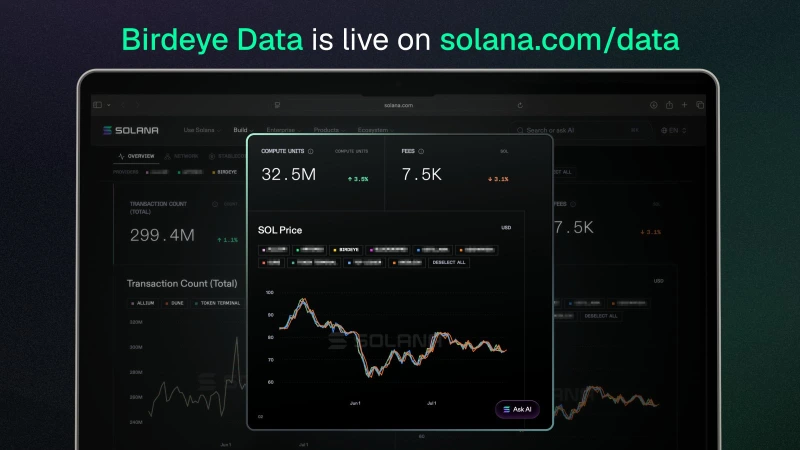
Birdeye was built to turn that fragmented activity into actionable market intelligence. Starting with deep roots in the Solana ecosystem, the platform now aggregates real-time data across hundreds of exchanges and multiple blockchains, combining token analytics, wallet tracking, security signals, alerts, and trading tools in one interface. Its growing role as a data provider, including integration with Solana Data, shows how Birdeye is evolving from a trading dashboard into broader onchain data infrastructure.
What Is Birdeye?
Birdeye is an onchain crypto data and trading platform best known for providing real-time market intelligence across the Solana ecosystem.
The platform aggregates data from hundreds of decentralized exchanges and AMMs, giving traders a unified view of token prices, liquidity, trading volume, transactions, holders, and wallet activity. Instead of checking multiple explorers, DEXs, and analytics tools, users can research markets and monitor activity from a single platform.
While Birdeye became closely associated with Solana, it has expanded into a multichain product supporting Ethereum, Base, Sui, and other networks. Alongside its trader-facing platform, Birdeye Data Services provides APIs and real-time data feeds for developers, wallets, trading applications, and other Web3 products—making Birdeye both a market intelligence tool and an underlying data provider.
Why Solana Traders Use Birdeye
Solana’s speed creates opportunities, but it also produces more market data than traders can realistically track manually.
New tokens can launch, liquidity can move between pools, and wallet activity can shift within minutes. Birdeye brings these signals together in one interface, allowing traders to move from market discovery to deeper analysis without constantly switching between DEXs, explorers, and separate analytics platforms.
The platform is particularly useful for identifying emerging tokens and understanding what is driving activity around them. Traders can compare price action with liquidity, volume, transaction history, holder behavior, and wallet profitability, then use alerts and watchlists to keep monitoring assets after the initial research. This makes Birdeye useful not only for finding opportunities, but also for validating them before making a trading decision.
How Birdeye Turns Onchain Data Into Trading Signals
Birdeye organizes raw blockchain activity into market signals that traders can evaluate quickly.
Instead of presenting price alone, the platform combines multiple layers of information around each token:
- Price Data — Track real-time prices, historical charts, and market movements across supported venues.
- Liquidity — See how much liquidity supports a token and where that liquidity is distributed.
- Trading Volume — Measure market activity and identify sudden increases or declines in demand.
- Transactions — Monitor recent buys, sells, trade sizes, and other onchain activity as it happens.
- Holder Data — Analyze token ownership and identify changes in holder behavior.
- Security Signals — Review potential token risks before interacting with unfamiliar assets.
By combining these signals, Birdeye gives traders a broader view of what is happening behind a price move—helping distinguish genuine onchain activity from movements that may lack meaningful liquidity or participation.
Smart Money and Wallet Tracking
Birdeye helps traders understand not only what the market is doing, but who is driving the activity.
Wallet analytics add another layer to traditional token research by showing how individual addresses perform and interact with the market. Instead of relying only on price charts, traders can investigate profitable wallets, examine their positions, and monitor how experienced participants respond to changing market conditions.
Birdeye provides several tools for wallet analysis:
- Wallet PnL — Review realized and unrealized profit and loss to evaluate historical wallet performance.
- Holdings — See which tokens a wallet currently holds and how its portfolio is distributed.
- Trading Activity — Follow buys, sells, transaction sizes, and recent market activity.
- Smart Money Discovery — Identify wallets with notable trading performance and investigate their strategies.
- Wallet Tracking — Follow selected addresses instead of repeatedly checking them manually.
- Alerts — Receive notifications when watched wallets or tokens meet predefined conditions.
These tools turn public blockchain activity into a research layer that traders can use to validate ideas and monitor how capital is moving across Solana and other supported networks.
Inside the Birdeye Trading Toolkit
Birdeye combines market discovery, research, monitoring, and execution tools within the same platform.
Its trading toolkit is designed to cover different stages of the research process:
- Real-Time Charts — Analyze price action and market activity using continuously updated onchain data.
- Token Discovery — Find trending, newly active, or rapidly moving assets across supported networks.
- Security Check — Review token risk indicators before interacting with unfamiliar assets.
- Watchlists — Build personalized lists of tokens and wallets for ongoing monitoring.
- Custom Alerts — Set conditions around tokens or wallets and receive notifications when they are triggered.
- Trading Tools — Move from market research to execution without leaving the Birdeye ecosystem.
Bringing these features together reduces the need to move between multiple analytics platforms, blockchain explorers, and trading interfaces—particularly in fast-moving markets where information can become outdated quickly.
Birdeye vs Traditional Crypto Trackers
Birdeye goes beyond basic price tracking by connecting market data with real-time onchain activity.
For Solana traders in particular, this creates a more complete research environment. Instead of looking at a token’s price in isolation, users can examine the liquidity, transactions, holders, and wallets behind the market activity before deciding whether an opportunity deserves further attention.
From Solana to Multichain Data
Birdeye’s Solana roots have evolved into a broader multichain data network.
Solana remains central to Birdeye’s identity, but the platform now tracks activity across Ethereum, Base, Sui, and other supported blockchain ecosystems. This expansion allows traders to apply similar research tools across multiple networks without relying on a different analytics platform for every chain.
The shift also reflects how onchain trading itself is changing. Liquidity, users, and new assets increasingly move between ecosystems, making isolated single-chain data less useful for traders operating across Web3. By aggregating multiple networks under a common interface and data infrastructure, Birdeye is positioning itself as a broader market intelligence layer rather than only a Solana analytics platform.
Birdeye Data for Developers
Birdeye turns its market intelligence infrastructure into data that developers can integrate directly into Web3 products.
Through Birdeye Data Services, developers can access the same type of real-time and historical onchain information that powers the consumer platform. This allows wallets, trading bots, analytics products, portfolio trackers, and other applications to build market-data features without creating their own indexing infrastructure from scratch.
Developer access includes:
- REST APIs — Retrieve token prices, market data, trades, OHLCV history, metadata, and other structured information.
- WebSocket Feeds — Stream real-time price and transaction updates for applications that require continuously refreshed data.
- Wallet Data — Integrate holdings, transaction activity, and other address-level analytics.
- Token Data — Access liquidity, trading activity, metadata, and market information across supported assets.
- Multichain Coverage — Build products that consume standardized data across Solana and other supported networks.
This infrastructure layer expands Birdeye’s role beyond individual traders. The same aggregated data can power other applications, making Birdeye part of the underlying data stack used across the onchain economy.
The Future of Onchain Market Intelligence
As more financial activity moves onchain, the ability to interpret blockchain data quickly becomes increasingly valuable.
Solana illustrates the challenge clearly: fast transactions, active DEX markets, constant token launches, and increasingly diverse assets generate enormous amounts of public information. Raw transparency alone does not make that information useful. Traders and developers still need tools that organize blockchain activity into prices, liquidity metrics, wallet behavior, security signals, and actionable market insights.
Birdeye is positioning itself within that layer between raw blockchain data and decision-making. Its evolution from a Solana-focused analytics platform into multichain trading intelligence and developer infrastructure suggests that the next generation of crypto data products will compete not simply on how much data they collect, but on how quickly they can turn that data into useful information.