Best Anonymous Bitcoin Wallets in 2026: Top Privacy-Focused BTC Wallets
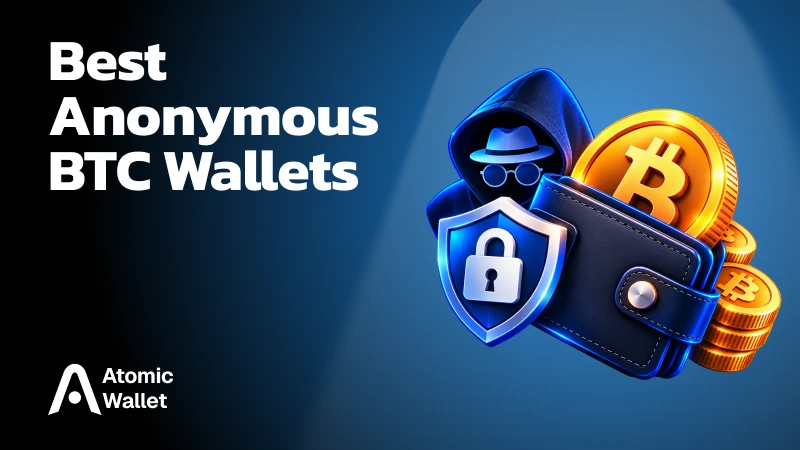
Bitcoin wallets are often called “anonymous” but Bitcoin itself is not anonymous. Every transaction is recorded on a public blockchain, and addresses can sometimes be linked to real identities through exchanges, reused addresses, network metadata, or transaction patterns.
A privacy-focused Bitcoin wallet cannot erase that public history. What it can do is reduce unnecessary data exposure through features such as no-account setup, self-custody, fresh addresses, coin control, Tor, private node connections, and more careful UTXO management.
Best Anonymous Bitcoin Wallets in 2026: Quick Comparison
The best privacy-focused Bitcoin wallets differ in how they protect identity, network metadata, transaction history, and private keys.
No wallet makes Bitcoin transactions invisible. Sparrow and Wasabi provide the deepest Bitcoin-specific privacy controls, while BlueWallet and Electrum offer lighter alternatives. Jade adds stronger key isolation, while Atomic Wallet is better suited to users who want no-account self-custody across Bitcoin and other cryptocurrencies rather than advanced on-chain privacy features.
What Makes a Bitcoin Wallet “Anonymous”?
A Bitcoin wallet becomes more privacy-focused by limiting identity collection, reducing network leaks, and giving users more control over how transactions are constructed.
Four layers matter most:
- No-KYC access: the wallet can be created without submitting an ID or personal details
- Self-custody: the user controls the private keys instead of a centralized provider
- Network privacy: tools such as Tor or a private node can reduce exposure of IP addresses and wallet queries
- On-chain privacy: fresh addresses, coin control, UTXO labeling, PayJoin, and CoinJoin can make transaction links harder to analyze
These protections solve different problems. A wallet can require no KYC and still expose transaction history to a public server. Likewise, a hardware wallet can keep private keys offline while doing nothing to hide on-chain activity.
That is why “anonymous wallet” is better understood as a shorthand for a wallet with stronger privacy controls rather than a guarantee of untraceable Bitcoin.
Atomic Wallet — Best No-Account Multi-Asset Self-Custody Wallet
Atomic Wallet is a no-account self-custody option for users who want to manage Bitcoin alongside other cryptocurrencies without submitting KYC for basic wallet features.
Private keys and the 12-word backup phrase are generated and stored locally on the user’s device rather than held by Atomic. The wallet does not require an account to get started, and Atomic states that it does not collect users’ IP addresses.
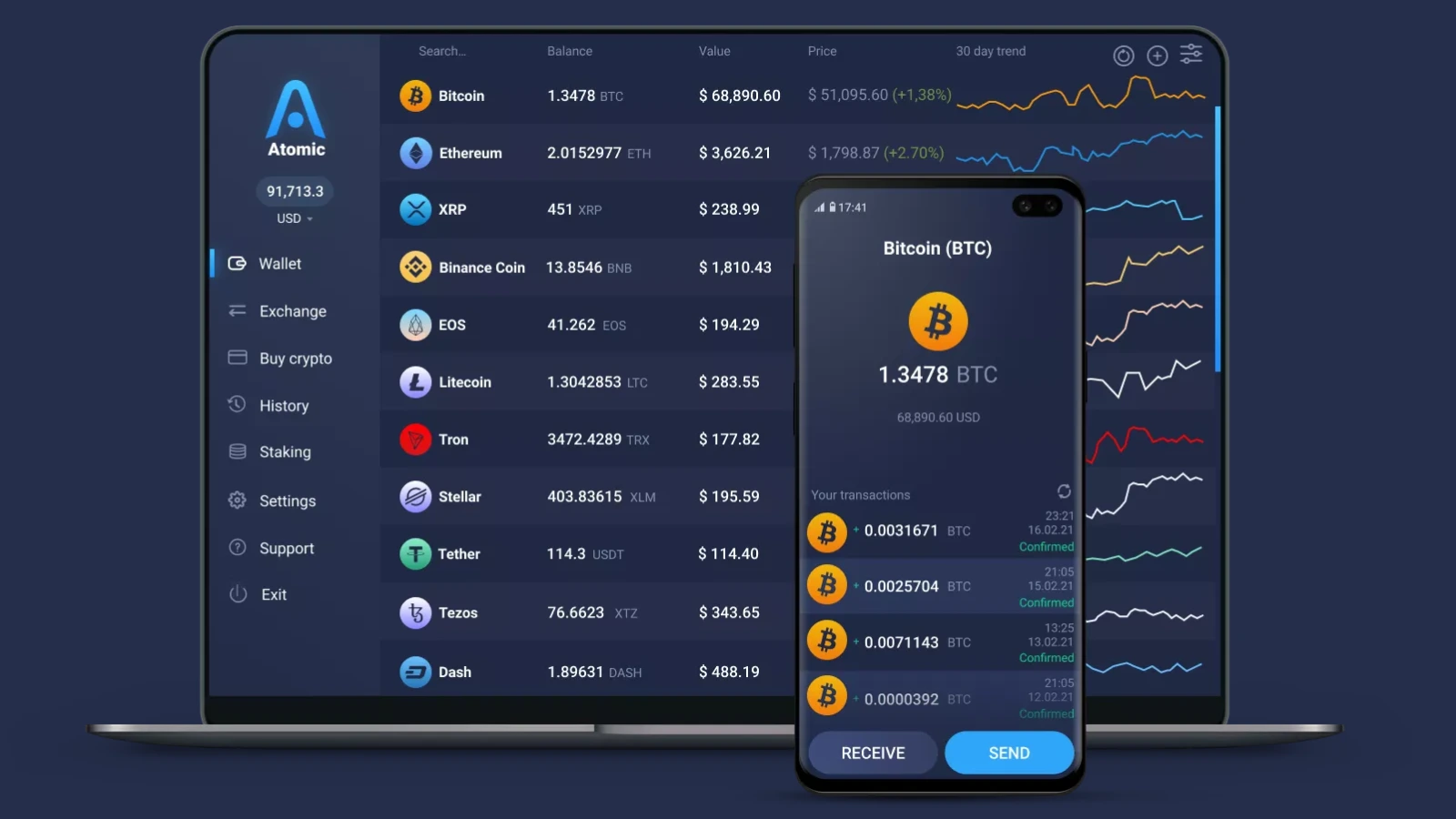
Best for: users who want straightforward self-custody and broad multi-asset support without creating a traditional account.
Why it stands out:
- no account required
- no KYC for basic wallet features
- locally stored private keys
- 12-word self-custody backup
- Bitcoin plus 1,000+ other assets
- desktop and mobile access
- optional anonymous diagnostic logs
Main trade-off: Atomic is not a dedicated Bitcoin privacy wallet. It does not offer the advanced Bitcoin-specific controls found in Sparrow or Wasabi, such as integrated Tor routing, detailed UTXO management, or CoinJoin workflows.
Sparrow Wallet — Best for Advanced Bitcoin Privacy
Sparrow Wallet offers one of the deepest sets of Bitcoin privacy controls for users who want direct control over UTXOs, network connections, and transaction construction.
It is a Bitcoin-only desktop wallet designed for users who want more visibility into what happens behind each transaction. Sparrow can connect to Bitcoin Core or a private Electrum server, supports Tor, and provides detailed coin control rather than automatically choosing which UTXOs to spend.
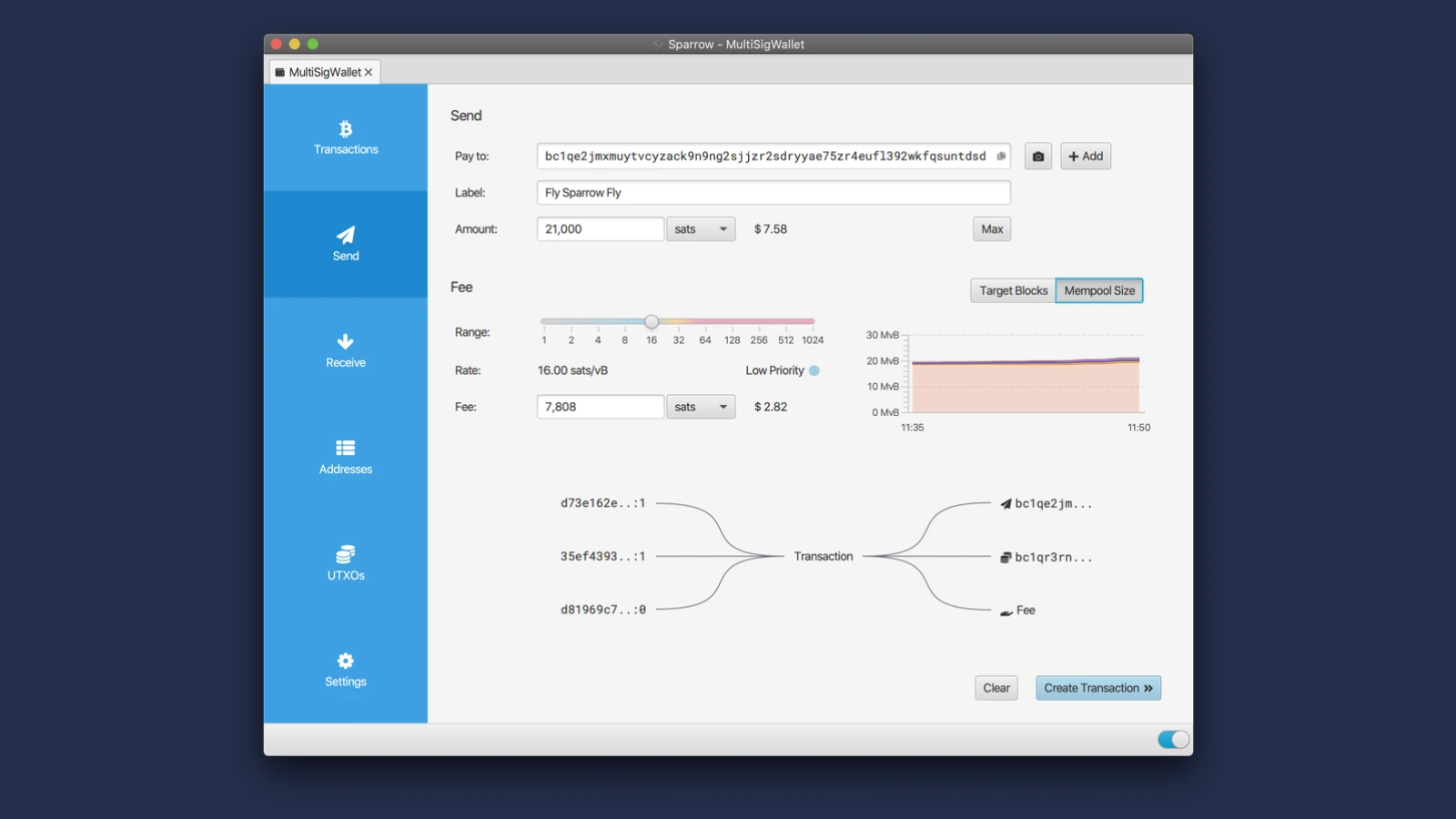
Best for: experienced Bitcoin users who want granular privacy and transaction control.
Why it stands out:
- manual coin control
- UTXO labeling and management
- Tor support
- connection to your own Bitcoin node
- PayNym support
- single-signature and multisig wallets
- hardware-wallet integration
- PSBT and offline-signing workflows
Main trade-off: Sparrow is more technical than mainstream mobile wallets. Its privacy advantages also depend on how it is configured — using public servers or carelessly combining UTXOs can still reveal information about wallet activity.
Wasabi Wallet — Best for Built-In Bitcoin Privacy Tools
Wasabi Wallet is built specifically around Bitcoin privacy, combining Tor, coin control, block filtering, and CoinJoin workflows in one desktop wallet.
Wasabi routes wallet traffic through Tor by default and gives users detailed control over individual UTXOs. Its CoinJoin implementation uses the WabiSabi protocol, allowing users to participate in collaborative transactions designed to reduce obvious links between inputs and outputs.
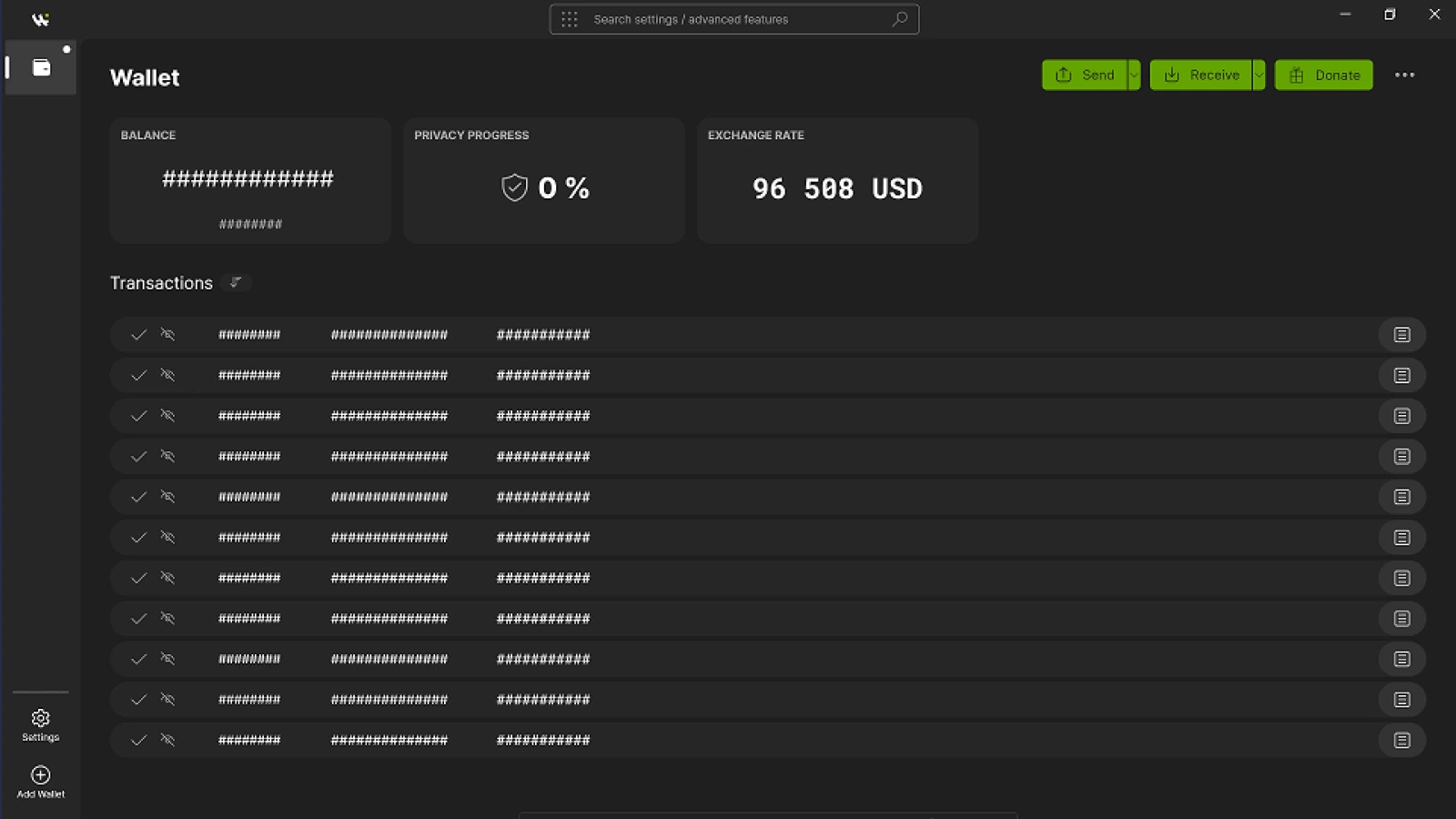
Best for: users who want Bitcoin-specific privacy features built directly into the wallet.
Why it stands out:
- Tor enabled by default
- built-in coin control
- UTXO management
- block-filter-based wallet synchronization
- CoinJoin support through configurable coordinators
- own-node support
- Bitcoin-only design
Main trade-off: CoinJoin requires additional setup and careful post-transaction UTXO management. Privacy gains can be weakened if mixed and unmixed coins are later consolidated carelessly.
BlueWallet — Best Mobile Bitcoin Privacy Wallet
BlueWallet is a strong mobile option for Bitcoin users who want practical privacy controls without moving to a more technical desktop setup.
It supports hierarchical deterministic wallets that generate fresh receiving addresses, helping users avoid unnecessary address reuse. BlueWallet also includes coin control, UTXO labeling, watch-only wallets, multisig, and support for hardware-backed signing workflows.
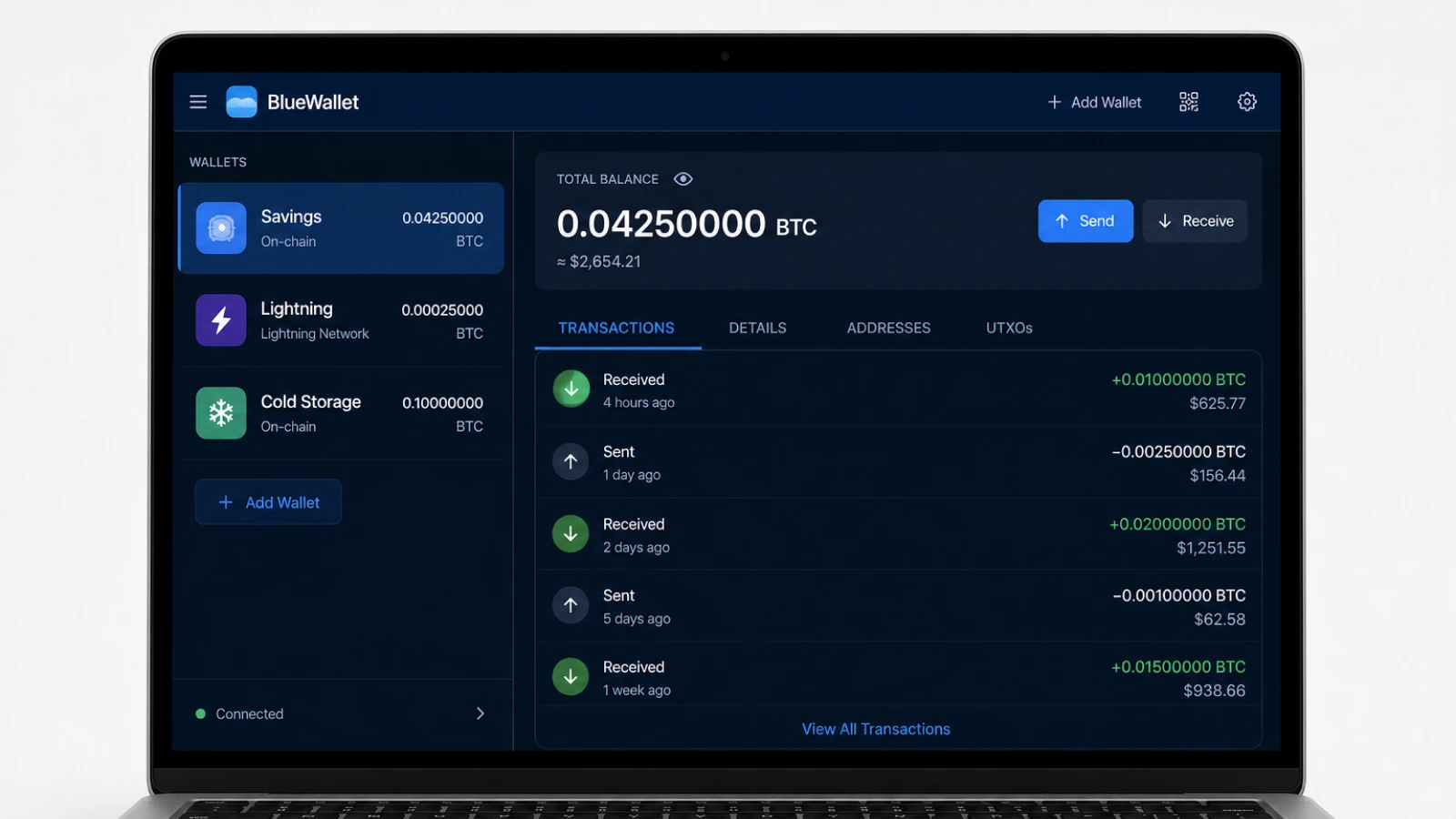
Best for: mobile users who want more Bitcoin-specific control than a typical general-purpose crypto wallet provides.
Why it stands out:
- fresh receiving addresses
- manual coin control
- UTXO labels and coin freezing
- multisig support
- watch-only wallets
- offline and hardware-wallet signing options
- mobile-first Bitcoin experience
Main trade-off: BlueWallet offers useful transaction-level privacy controls, but it does not provide the same depth of network-privacy tooling and node configuration found in wallets such as Sparrow or Wasabi.
Electrum — Best Lightweight Bitcoin Wallet
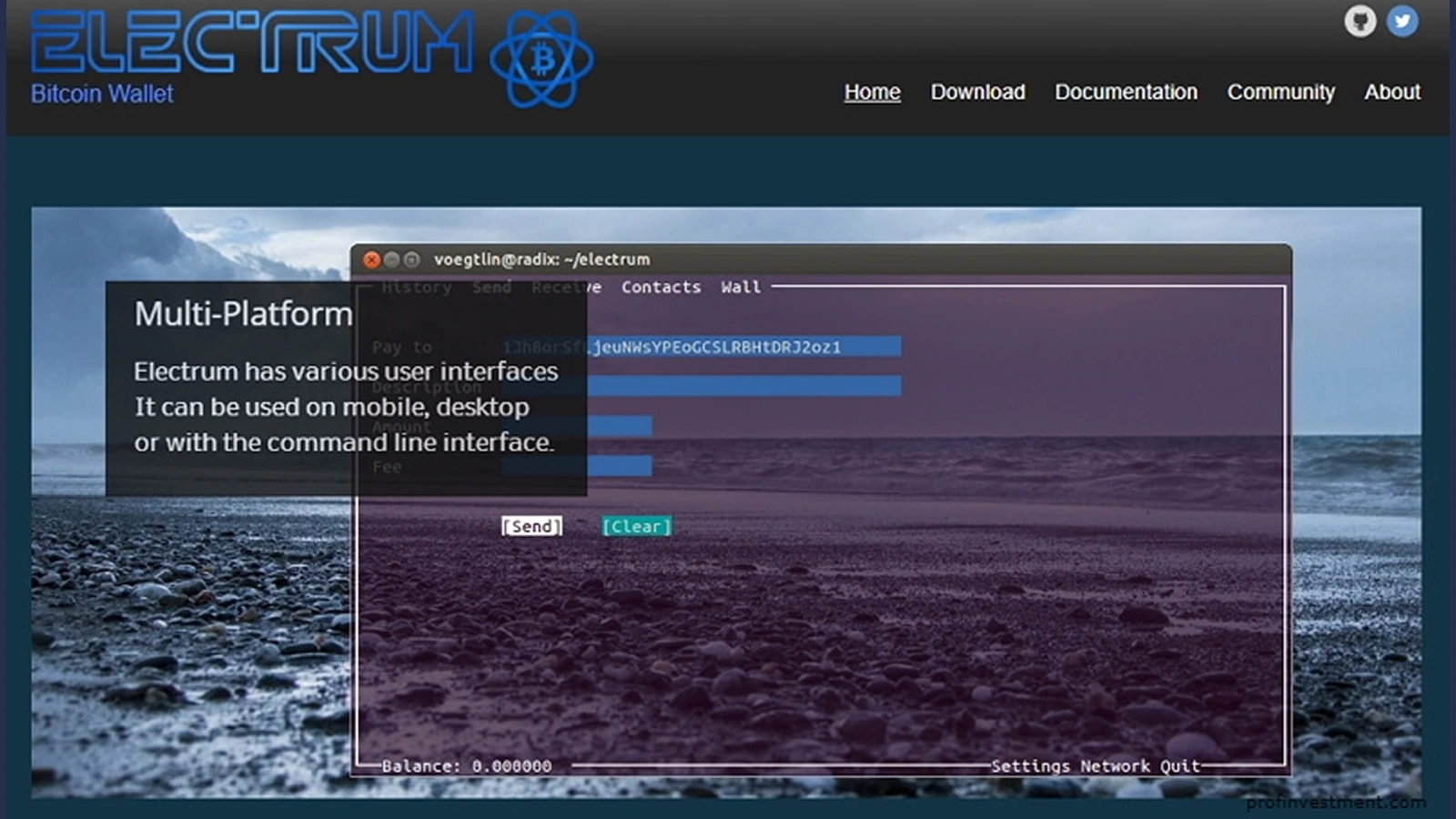
Electrum is a long-running Bitcoin-only wallet that gives users more control over servers, transactions, and hardware integrations than most mainstream wallets.
It is designed to stay lightweight by connecting to Electrum servers rather than downloading the full Bitcoin blockchain. Users can choose their own server, route connections through Tor, manage individual coins, and pair the wallet with supported hardware devices.
Best for: Bitcoin users who want a lightweight wallet with configurable privacy and transaction controls.
Why it stands out:
- Bitcoin-only design
- manual coin control
- Tor support
- configurable Electrum servers
- hardware-wallet compatibility
- multisig support
- watch-only wallets
- advanced fee and transaction controls
Main trade-off: using a third-party Electrum server can reveal information about the addresses and transaction history a wallet is querying. Tor can hide the user’s IP from the server, but stronger privacy generally requires a trusted private server or personal Bitcoin infrastructure.
Blockstream Jade — Best Hardware-Backed Bitcoin Setup
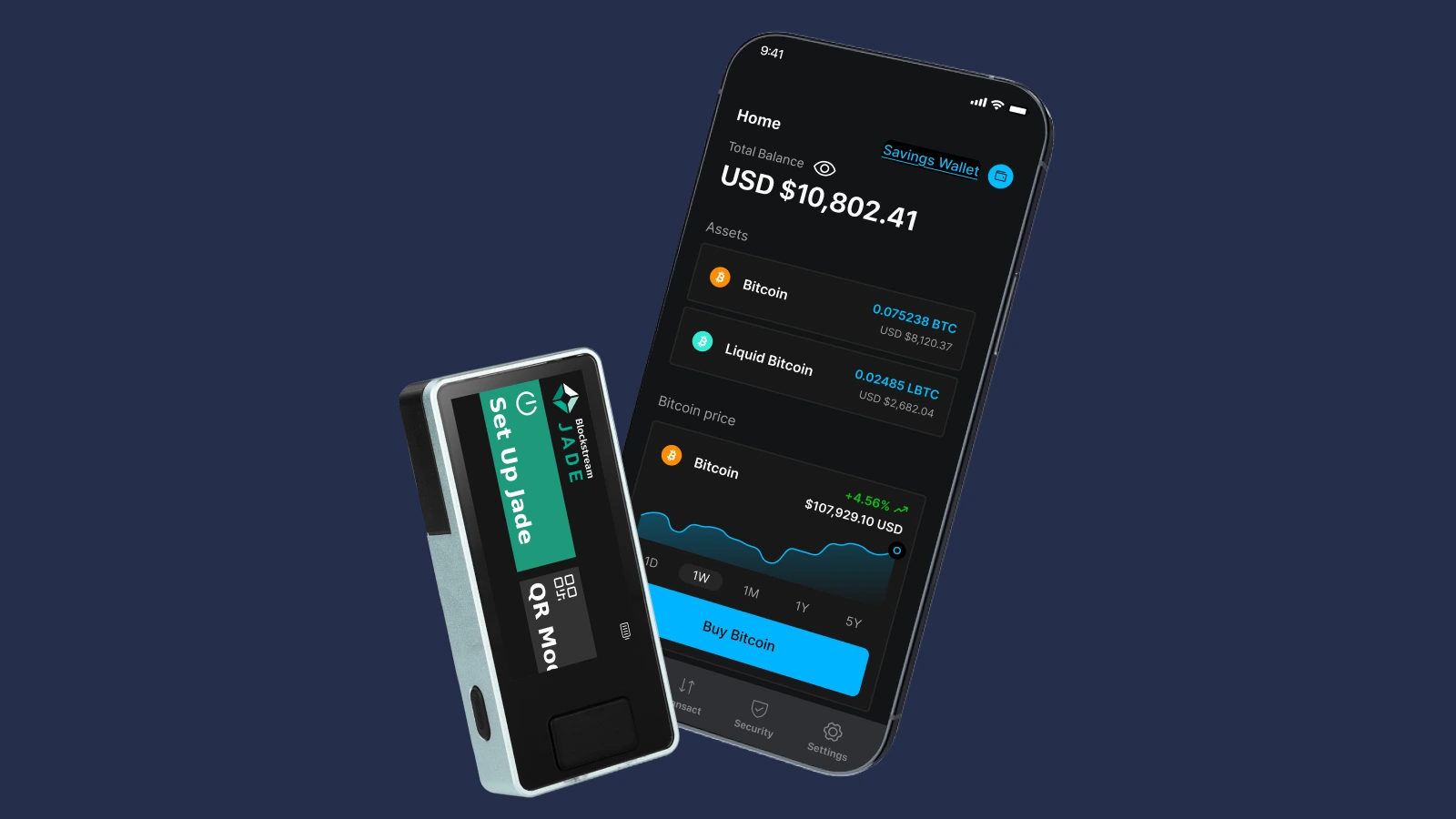
Blockstream Jade protects Bitcoin private keys on dedicated hardware and can be combined with privacy-focused software such as Sparrow for a stronger overall setup.
Jade supports offline signing and QR-based workflows, allowing transactions to be prepared on another device and signed without directly exposing private keys. It can also work with Bitcoin software wallets that offer features such as coin control, Tor, or private-node connections.
Best for: users who want hardware key protection while retaining the flexibility to use dedicated Bitcoin privacy software.
Why it stands out:
- hardware-isolated private keys
- air-gapped QR signing workflows
- compatibility with Sparrow and other Bitcoin wallets
- open-source hardware and software approach
- PIN protection
- Bitcoin-focused security features
Main trade-off: a hardware wallet protects private keys, not transaction anonymity. Address reuse, exchange withdrawals, public servers, and poor UTXO management can still expose connections between transactions even when the keys themselves remain offline.
No-KYC Does Not Mean Anonymous
Creating a Bitcoin wallet without KYC prevents one direct identity link, but it does not make subsequent Bitcoin activity anonymous.
Consider a simple example: you buy BTC on an exchange that verified your identity and then withdraw it to a brand-new no-KYC wallet. The wallet provider may know nothing about you, but the exchange can still associate that withdrawal address with your account.
Other activity can create new links later. Reusing the same Bitcoin address, combining previously separate UTXOs, interacting with identifiable services, or exposing wallet queries to third-party infrastructure can all reduce privacy.
This is why Bitcoin privacy should be evaluated across several layers. No-KYC reduces identity collection at setup; it does not erase blockchain history or existing links between a person and their BTC.
Bitcoin Privacy Features That Actually Matter
The most useful Bitcoin privacy features reduce address reuse, limit unnecessary UTXO links, and minimize the amount of wallet data exposed to third parties.
The features worth paying attention to are:
- Fresh addresses: generating a new receiving address for each payment makes it harder to link separate transactions to the same wallet
- Coin control: lets users choose which UTXOs to spend instead of allowing the wallet to combine them automatically
- UTXO labeling: helps track where coins came from and avoid merging funds associated with different identities or activities
- Tor support: can hide the user’s IP address from wallet servers and other network observers
- Own-node support: reduces reliance on third-party servers that may otherwise learn which addresses and transactions belong to the wallet
- PayJoin: changes the structure of a payment so common blockchain-analysis assumptions become less reliable
- CoinJoin: combines inputs and outputs from multiple participants to make direct transaction links harder to establish
No single feature creates complete anonymity. The strongest privacy usually comes from combining several controls and using them consistently.
Bitcoin Privacy Mistakes to Avoid
Even a privacy-focused Bitcoin wallet can reveal significant information if addresses, UTXOs, or network connections are handled carelessly.
Common mistakes include:
- Reusing Bitcoin addresses: repeated payments to the same address create an obvious public link between transactions
- Combining unrelated UTXOs: spending coins from different sources together can signal that they belong to the same owner
- Using public wallet servers without considering metadata: third-party infrastructure may learn which addresses your wallet is checking
- Assuming Tor solves everything: Tor can protect network metadata, but it does not hide transactions already visible on the blockchain
- Moving BTC directly from a KYC exchange: the exchange may already know which withdrawal address belongs to your verified account
- Mixing privacy-separated coins later: combining previously separated UTXOs can undo earlier privacy work
- Treating hardware storage as anonymity: offline keys improve security, but transaction history remains public
Bitcoin privacy is therefore less about installing one “anonymous wallet” and more about avoiding behaviors that repeatedly reconnect addresses, coins, and identity data.
Hardware Wallet vs. Privacy Wallet
A hardware wallet protects private keys from online exposure, while a privacy-focused wallet is designed to reduce information leaked through transactions, addresses, and network connections.
These are different security layers.
A hardware wallet such as Blockstream Jade can keep signing keys isolated from an internet-connected computer or phone. That lowers the risk of malware stealing the keys, but it does not automatically hide where BTC came from, which addresses are related, or how UTXOs are combined.
A privacy-focused wallet such as Sparrow or Wasabi focuses more heavily on transaction construction and metadata. Features such as coin control, Tor, UTXO labels, and private-node connections can reduce information leakage, but the wallet still needs strong key protection.
For larger holdings, the two approaches can be combined: use privacy-focused software to construct transactions and a hardware wallet to sign them.
What Is the Most Private Bitcoin Wallet Setup?
A stronger Bitcoin privacy setup combines self-custody, careful UTXO management, private network connections, and secure key storage rather than relying on one wallet feature.
A privacy-conscious setup may include:
- A Bitcoin-focused wallet such as Sparrow or Wasabi
- Tor to reduce IP-level exposure
- Your own Bitcoin node or private server to avoid revealing wallet queries to public infrastructure
- Fresh receiving addresses instead of repeatedly using the same address
- Coin control and UTXO labels to avoid unnecessary transaction links
- Hardware signing for larger balances that need stronger key isolation
Even this does not make Bitcoin completely anonymous. Blockchain activity remains public, and previous links created through KYC exchanges, address reuse, or identifiable payments may persist.
For most users, the practical goal is therefore not “perfect anonymity,” but reducing unnecessary identity and transaction links while keeping the wallet setup secure and recoverable.