Binance MiCA Changes: How EU Users Can Transfer Their Crypto
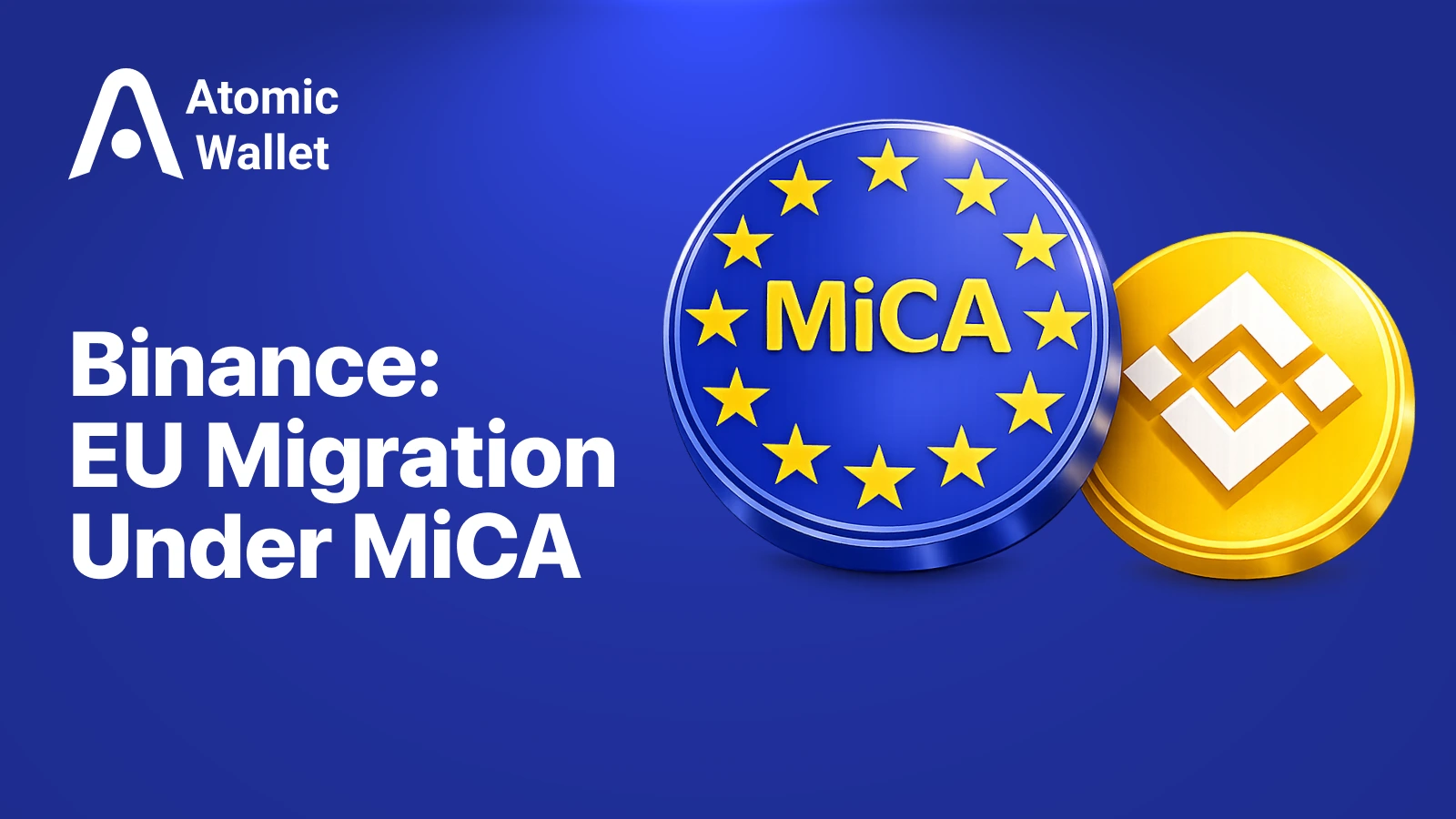
The European crypto market is entering a new regulatory era.
As the Markets in Crypto-Assets (MiCA) framework takes full effect, some Binance users across the European Union are beginning to see changes to the services available in their countries. While headlines have suggested that Binance is leaving Europe, the reality is more nuanced. The changes depend on where users live, how Binance is licensed in that jurisdiction, and how the exchange adapts to MiCA’s new requirements.
For many users, the immediate question is practical rather than political.
Will their account still work? Do they need to move their crypto? And what is the safest way to keep access to their assets if regulations continue to evolve?
This guide explains what is happening, who may be affected, and how EU users can continue managing their crypto securely as the European regulatory landscape changes.
What Is MiCA and Why Does It Matter?
MiCA is the European Union’s first comprehensive regulatory framework for crypto assets and service providers.
Instead of allowing each member state to regulate the industry independently, MiCA establishes a common rulebook across the EU. The objective is to create consistent standards for exchanges, wallet providers, stablecoin issuers, and other crypto businesses while improving consumer protection and regulatory clarity.
For crypto companies, MiCA changes how they operate.
To legally offer services across the European Union, exchanges must obtain authorization under the new framework and meet requirements covering governance, risk management, compliance, and customer protection. Stablecoin issuers also face new obligations designed to ensure transparency and financial stability.
For users, MiCA is less about changing how crypto works and more about changing how crypto companies operate.
The technology remains the same. The rules governing the businesses that provide access to it are what have fundamentally changed.
Which Binance Users Are Affected?
The recent Binance changes do not apply equally across the entire European Union.
The impact depends on how Binance provides services in a particular country. In jurisdictions where the exchange operates through locally licensed entities under the MiCA framework, users may see changes to supported products, account functionality, or migration requirements as the company adapts to the new regulatory environment.
Reports from Binance customer support indicate that countries such as France, Italy, Spain, Poland, Belgium, and Sweden are among those where locally regulated entities are already operating. Other EU jurisdictions may continue using different arrangements while Binance pursues additional licensing across Europe.
This distinction is important.
Not every European Binance user will receive the same notifications or face the same deadlines. Before taking action, users should check official Binance communications specific to their country rather than relying on generalized reports circulating on social media.
What Happens to Your Crypto?
Changes to an exchange do not change ownership of your crypto assets.
One of the biggest misconceptions surrounding the MiCA transition is that users could somehow lose their cryptocurrency if an exchange changes its services or regulatory status.
That is not how the process works.
If your assets are held on a centralized exchange, you generally retain the ability to withdraw them according to the platform’s policies and applicable regulations. If you already use a self-custody wallet, your assets remain under your control regardless of changes affecting a particular exchange.
This is why many experienced crypto users distinguish between owning crypto and storing crypto on an exchange.
A trading platform provides access to markets and custodial services. Ownership of digital assets ultimately becomes much more resilient when users control their own recovery phrase and private keys instead of depending entirely on a third party.
For anyone affected by Binance’s EU changes, understanding that distinction is one of the most important steps in deciding what to do next.
How to Transfer Crypto From Binance
If your Binance account is affected by the MiCA transition, moving your assets is a straightforward process when done carefully.
The exact steps depend on the destination wallet or platform you choose, but the overall process is similar for most cryptocurrencies.
Before confirming any withdrawal, make sure the receiving wallet supports the asset and network you plan to use.
A simple migration checklist looks like this:
- Choose a compatible self-custody wallet.
- Create or restore your wallet.
- Copy your receiving address.
- Select the correct blockchain network.
- Send a small test transaction if possible.
- Transfer the remaining balance.
- Verify that all assets have arrived successfully.
Taking a few extra minutes to confirm wallet addresses and network selection can help avoid irreversible mistakes.
Continue Using Your Crypto With Atomic Wallet
Moving away from an exchange does not mean starting over.
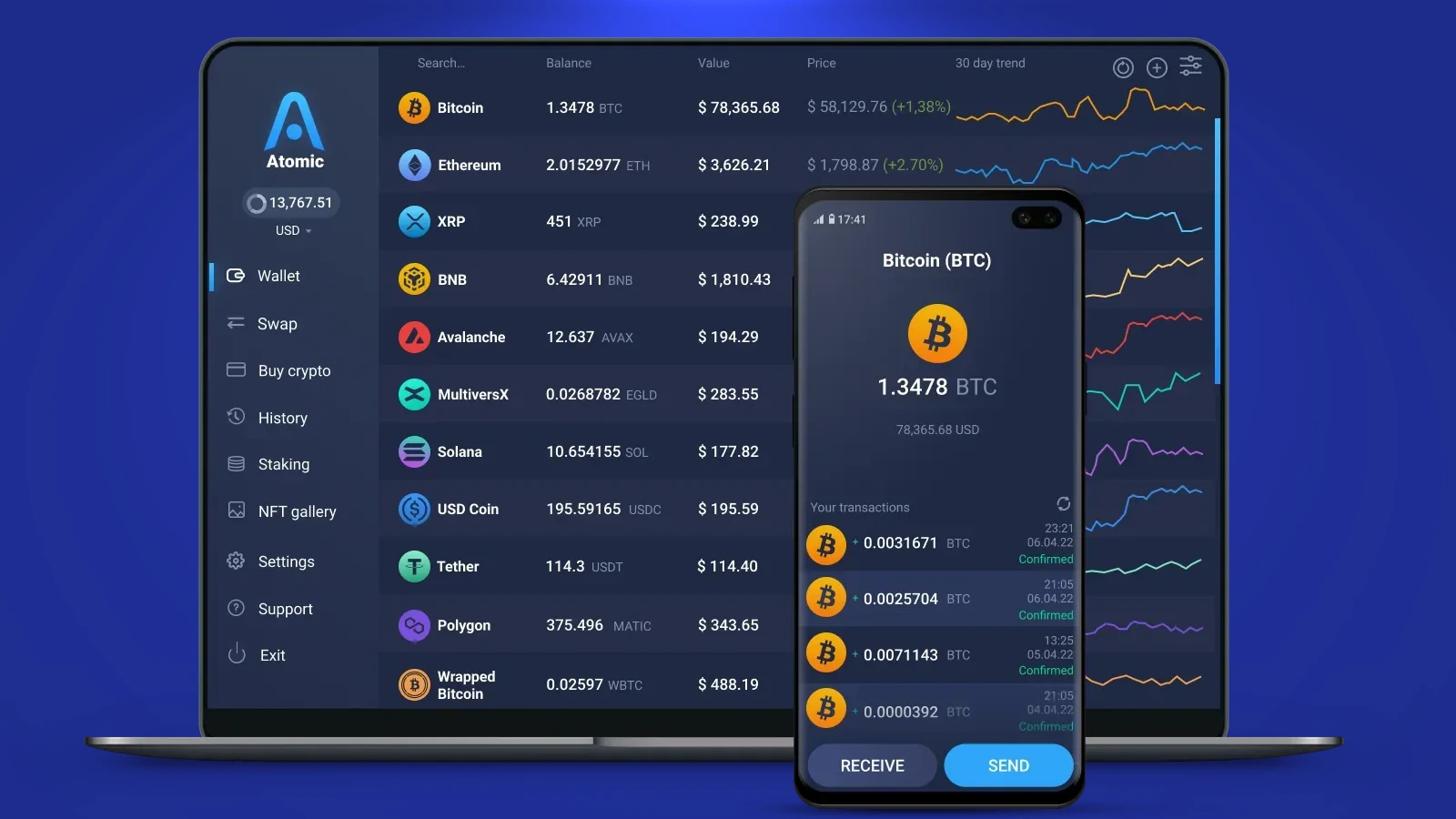
If you already have a recovery phrase for a self-custody wallet, you can restore that wallet in Atomic Wallet without creating new addresses or moving your assets. The recovery phrase recreates access to the same blockchain accounts, so your balances remain exactly where they were.
Getting started only takes a few steps:
- Download and install Atomic Wallet.
- Select Restore Wallet.
- Enter your recovery phrase exactly as it was originally saved.
- Create a new local password.
- Access your existing balances and assets.
For users who are withdrawing funds directly from Binance for the first time, Atomic Wallet also allows you to receive supported cryptocurrencies into a self-custody wallet where you remain in control of your private keys.
The key difference is simple: instead of relying on an exchange to hold your crypto, you control access to it yourself.
Why Self-Custody Matters More Than Ever
The MiCA transition is a reminder that exchanges and wallets serve different purposes.
Centralized exchanges are designed for trading, liquidity, and market access. They operate under local regulations, licensing requirements, and internal policies that can change over time.
A self-custody wallet serves a different role.
Instead of storing assets on behalf of users, it gives individuals direct control over their private keys and recovery phrase. As long as those credentials are securely backed up, access to digital assets does not depend on a specific exchange remaining available in a particular jurisdiction.
The difference can be summarized simply:
For many users, exchanges and self-custody wallets are complementary rather than competing tools. One provides access to the market, while the other provides long-term control over digital assets.
What About USDT Under MiCA?
MiCA is also reshaping the stablecoin landscape across Europe.
Alongside changes affecting exchanges, the new regulatory framework introduces stricter requirements for stablecoin issuers operating within the European Union. As a result, some licensed exchanges have adjusted the availability of certain stablecoins for users in regulated EU markets.
This has drawn particular attention to USDT.
Several regulated platforms have limited or removed support for USDT in specific European jurisdictions as they align with MiCA requirements, while stablecoins issued under the new regulatory framework are becoming more widely available.
For users, the practical takeaway is straightforward.
Stablecoin availability may now differ depending on the exchange, the country of residence, and local regulatory implementation. Before transferring assets or planning future trades, it is worth checking which stablecoins are currently supported by both your exchange and your destination wallet.
These policies may continue to evolve as exchanges adapt to MiCA and additional licenses are issued across the European market.
What’s Next for Binance in Europe?
The current changes are unlikely to be the final chapter of Binance’s European strategy.
Binance has stated that it remains committed to serving the European market and intends to continue pursuing authorization under the MiCA framework. At the same time, the company has begun adjusting how it operates in jurisdictions where local licensing requirements now apply.
The regulatory situation is still evolving.
As additional licenses are granted and national implementations mature, the experience for EU users may continue to change. New services could become available in some countries, while others may face different requirements depending on local regulatory decisions.
For users, the best approach is to rely on official announcements from Binance and monitor updates that apply specifically to their country rather than assuming every change affects the entire European Union.
Conclusion: Stay in Control of Your Crypto
Regulations can change. Exchanges can change. Ownership of your crypto does not have to.
MiCA marks one of the biggest regulatory shifts the European crypto market has seen. For some Binance users, that means changes to available services or account migration. For others, very little may change in the short term.
Regardless of where you live, one principle remains the same.
The more control you have over your own assets, the less dependent you become on the policies of any single exchange. Using a self-custody wallet ensures that access to your crypto is determined by your recovery phrase rather than the licensing status of a trading platform.
For many users, the MiCA transition is simply a reminder of one of crypto’s original ideas: the ability to own and control digital assets directly.