How to Buy Cardano (ADA): Price, News, and Trading Options
Cardano has been around for multiple market cycles and continues to attract attention as a long-term Layer 1 blockchain focused on research, governance, and sustainability.
ADA is not a speculative meme asset. It’s an infrastructure token tied to staking, on-chain governance, and network security. With Cardano entering its governance era and continuing to roll out scaling upgrades, interest in ADA has gradually returned — especially among investors looking for exposure beyond fast-moving DeFi narratives.
In this guide, we break down how to get exposure to Cardano in 2025 — whether through buying ADA directly or using more flexible trading tools like perpetual futures.
What Is Cardano (ADA)?
Cardano is a Layer 1 blockchain designed with a research-driven, peer-reviewed approach. Its development emphasizes formal methods, long-term scalability, and predictable network upgrades rather than rapid experimentation.
ADA is the native coin of the Cardano network and plays several core roles:
- paying transaction fees,
- securing the network through staking,
- participating in on-chain governance.
Unlike Ethereum or Solana, Cardano prioritizes stability and gradual evolution over speed. This makes the ecosystem slower to change, but also more resilient — a key reason why ADA continues to hold relevance across market cycles.
Cardano Price Overview — What Drives ADA Price
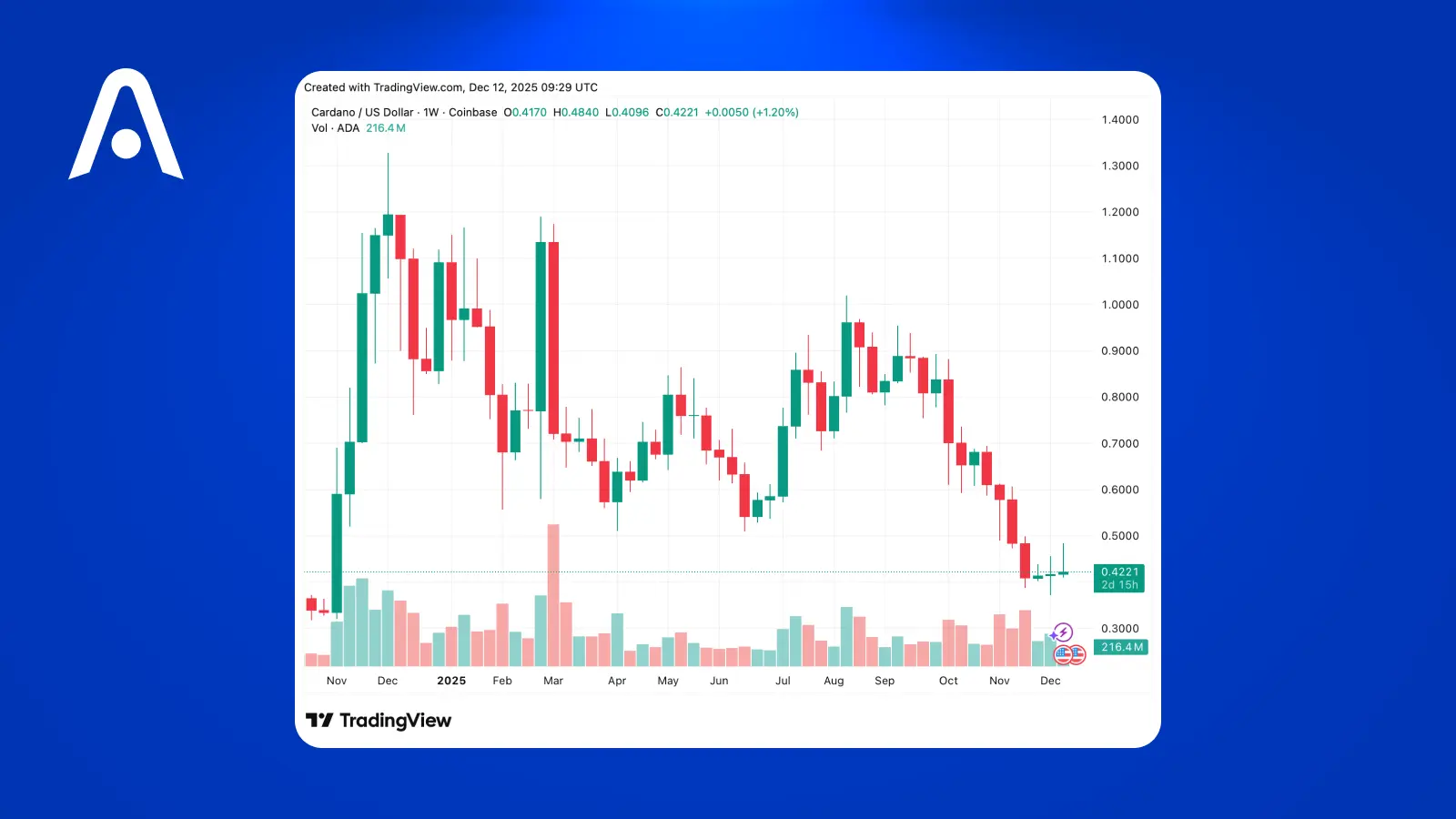
The Cardano price, like most large-cap cryptocurrencies, is heavily influenced by broader market conditions. ADA tends to follow Bitcoin’s macro trend, with stronger moves during risk-on phases and long consolidation periods during sideways markets.
Unlike fast-moving DeFi tokens, ADA price action is often range-bound. This is partly due to high staking participation, which reduces circulating supply volatility, and partly because Cardano adoption grows steadily rather than explosively. Network upgrades and governance milestones tend to affect sentiment over time, not overnight.
For traders, this behavior makes ADA less about sudden breakouts and more about structured market cycles — a factor that becomes important when choosing between spot buying and active trading.
Latest Cardano News — What’s Happening in 2024–2025
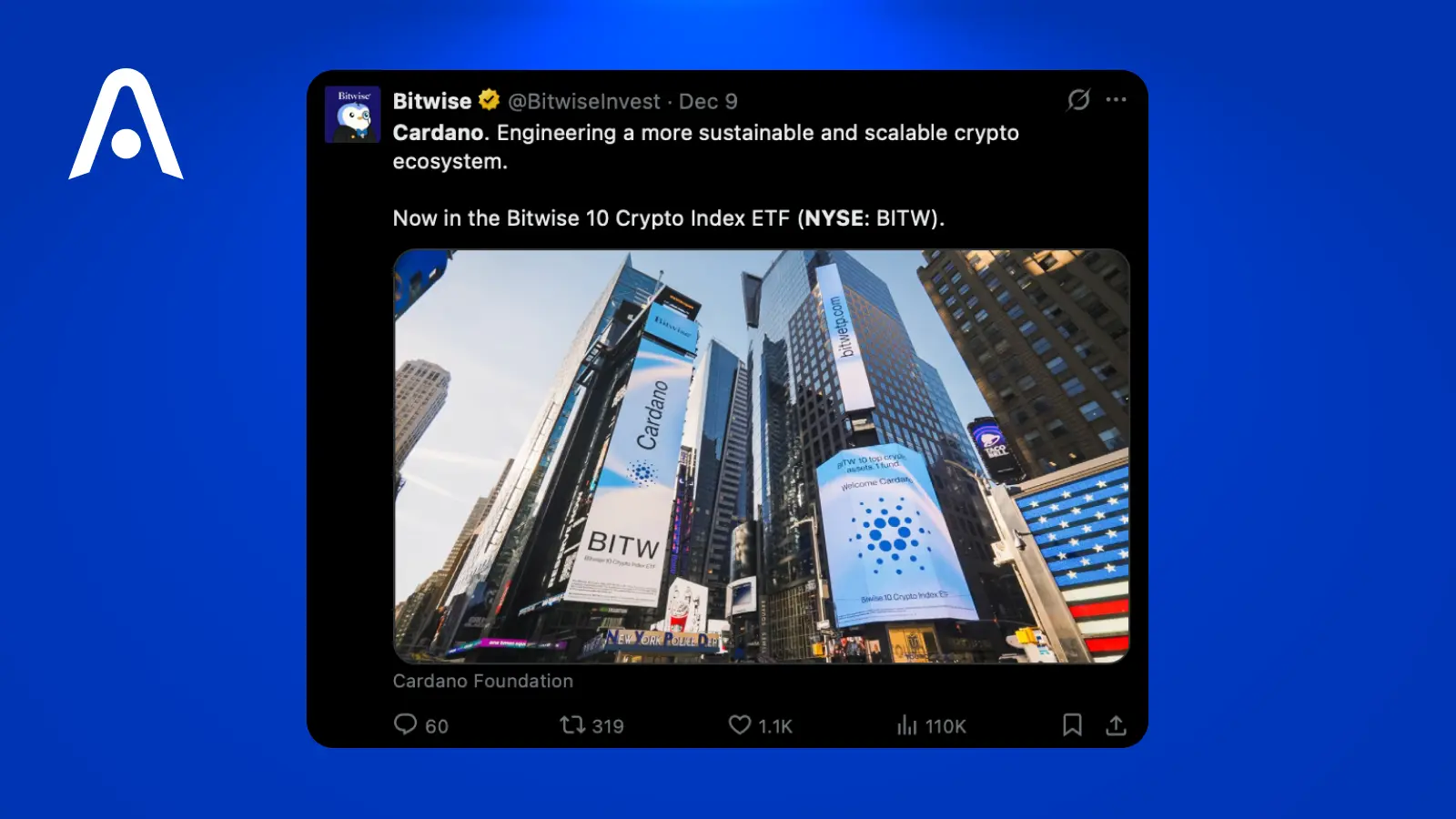
Recent Cardano news has focused on long-term infrastructure rather than short-term hype. The network has entered its governance-focused phase, giving ADA holders more direct influence over protocol decisions through on-chain voting.
Key developments shaping sentiment include:
- the rollout of Cardano’s governance framework (Voltaire era),
- continued progress on scaling solutions like Hydra,
- gradual expansion of DeFi, stablecoins, and real-world integrations.
These updates rarely trigger sharp price spikes, but they reinforce Cardano’s positioning as a long-term, infrastructure-first blockchain — which is exactly why ADA continues to attract patient investors rather than momentum traders.
How to Buy Cardano (ADA) — Spot Purchase Explained
Buying Cardano (ADA) through a spot purchase is the most straightforward way to get exposure to the network. ADA is widely listed on major centralized exchanges and can usually be bought with either fiat currencies or stablecoins like USDT.
The basic process looks like this:
- choose a reputable exchange where ADA is listed,
- deposit fiat or stablecoins,
- exchange them for ADA at the current market price.
Spot buying is best suited for long-term holders who plan to stake ADA or hold through multiple market cycles. However, it also means your capital is fully exposed to price drawdowns and may remain idle during extended periods of sideways movement.
Where to Store Cardano (ADA) Safely
After purchasing ADA, storage becomes an important decision. Keeping funds on an exchange is convenient for active trading, but it comes with custodial risk and limited control over your assets.
Self-custody wallets give users full ownership of their ADA and are often preferred by long-term holders, especially those interested in staking and governance participation. That said, holding ADA long-term also ties up capital, which may not be ideal for users who want more flexibility or short-term exposure to price movements.
Choosing between exchange storage and self-custody depends on whether your goal is long-term participation in the Cardano ecosystem or more active market engagement.
Is Buying ADA the Best Way to Get Exposure?
Buying ADA on the spot market works well for investors who believe in Cardano’s long-term roadmap and are comfortable holding through slow development cycles and extended consolidation phases. For staking-focused users, spot ownership is often the simplest and most familiar approach.
However, spot exposure also has clear limitations. Capital remains locked in a single direction, there is no benefit during sideways markets, and returns depend almost entirely on broader market cycles led by Bitcoin. For many traders, this creates an opportunity cost — especially when ADA spends long periods moving within a narrow range.
This is why some market participants look beyond simple ownership when deciding how to gain exposure to Cardano.
Trading Cardano With Perpetual Futures
Perpetual futures offer a more flexible way to engage with ADA price movements without owning the token directly. Because ADA is highly liquid and closely tied to broader market sentiment, it is well suited for perpetual trading strategies.
Traders often use ADA perps to:
- take long or short positions depending on market conditions,
- hedge spot or staking exposure,
- trade range-bound markets more actively,
- react quickly to Bitcoin-led momentum shifts.
Instead of waiting for long-term appreciation, perpetual futures allow traders to adapt to changing market cycles — making ADA a more dynamic instrument for those focused on active trading rather than passive holding.
Risks to Consider Before Buying or Trading Cardano
Like any crypto asset, ADA carries risks that investors and traders should understand before taking exposure.
Key risks include:
- strong dependence on Bitcoin’s overall market direction,
- slower development and adoption compared to faster-moving L1 competitors,
- long consolidation phases that can test patience for spot holders,
- additional risk from leverage when trading perpetual futures.
Cardano is best approached with realistic expectations — whether through long-term holding or active trading, risk management remains essential.
Trade ADA Perpetual Futures in Atomic Wallet
For traders who prefer flexibility over long-term holding, Cardano perpetual futures are available directly inside Atomic Wallet. This allows you to trade ADA price movements without transferring funds to a centralized exchange.
With Atomic Wallet, you can access ADA perpetual markets in a self-custody environment, keeping full control over your assets while using professional trading tools. Perpetual futures make it possible to go long or short, manage risk dynamically, and stay active during both trending and range-bound markets.

Trade ADA perpetual futures in Atomic Wallet and explore Cardano markets without relying on third-party custodians.