What Is Moonshot AI? Kimi K3 and the Road to IPO
China’s AI race has produced another heavyweight. Moonshot AI, the company behind Kimi, has grown from a young startup founded in 2023 into one of China’s most valuable AI companies, fueled by rapid model development, major funding rounds, and growing global attention around its open-weight technology.
Now the story is moving beyond model benchmarks. With Kimi K3 pushing Moonshot deeper into coding and agentic AI, the company has reportedly reached a valuation of around $30 billion and is laying the groundwork for a potential Hong Kong IPO. If its next funding round pushes the valuation toward the reported $50 billion target, Moonshot could enter the public markets as one of the biggest AI challengers to emerge from China.
What Is Moonshot AI?
Moonshot AI is a Chinese artificial intelligence company best known for developing the Kimi family of large language models.
Founded in 2023, Moonshot quickly emerged as one of China’s leading frontier AI labs. Its strategy combines advanced model research with consumer-facing AI products, allowing the company to compete not only on benchmarks but also for millions of users seeking AI-powered search, reasoning, coding, and agentic tools.
The company’s rise accelerated with increasingly capable Kimi models and major backing from investors, including Alibaba and other prominent Chinese technology and venture groups. With Kimi K3, Moonshot is now pushing beyond the domestic chatbot market toward open-weight frontier AI, strengthening its position in the global competition for more capable and efficient AI systems.
How Kimi Became a Global AI Contender
Kimi evolved from a popular Chinese AI assistant into the foundation of Moonshot AI’s global ambitions.
Moonshot initially gained attention by pushing long-context AI, allowing Kimi to process increasingly large documents and complex prompts. But the company’s ambitions quickly expanded beyond chatbot functionality. Newer generations of Kimi introduced stronger reasoning, coding, and agentic capabilities, while Moonshot increasingly embraced open-weight releases that developers could inspect and deploy independently.
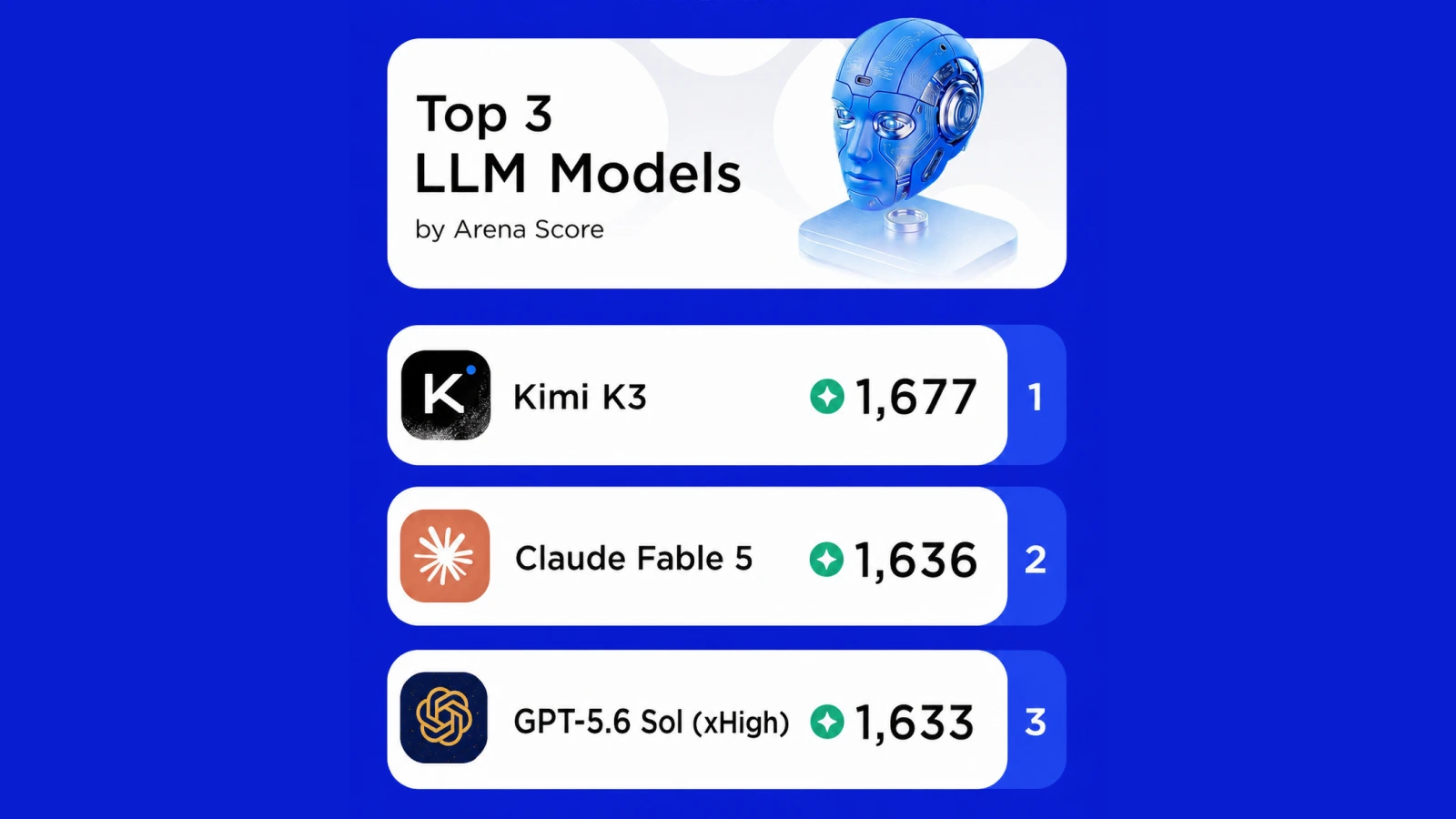
Kimi K3 represents the latest stage of that evolution. Instead of competing only for Chinese consumer users, Moonshot is positioning Kimi against frontier models from leading global AI labs. Strong performance in coding, reasoning, and autonomous tasks has helped turn Kimi from a domestic AI product into one of the most closely watched model families coming out of China.
What Makes Kimi K3 Different?
Kimi K3 combines extreme scale with an architecture designed for coding, reasoning, and agentic workloads.
Several characteristics distinguish the model:
- 2.8 trillion total parameters make K3 one of the largest open-weight AI models released to date.
- Mixture-of-Experts architecture activates only part of the model for each task, reducing the computational cost compared with using every parameter simultaneously.
- 1 million-token context window allows K3 to work with exceptionally large codebases, documents, and multi-step workflows.
- Strong coding capabilities position the model for software development, debugging, and complex technical tasks.
- Agentic performance targets workflows where AI must plan, use tools, and execute multiple steps rather than simply generate an answer.
- Open weights give researchers and developers greater flexibility to inspect, deploy, and build on top of the model.
The result is a model designed not simply to generate better responses, but to handle larger working contexts and increasingly autonomous tasks—two areas becoming central to the next phase of frontier AI competition.
How Attention Residuals Change the Transformer
Moonshot is rethinking how information moves through the layers of a Transformer.
Traditional Transformers rely on fixed residual connections that continuously add each layer’s output to the information already moving through the network. As models become deeper, useful representations from earlier layers can become diluted by everything added later. Moonshot’s Attention Residuals approach makes that process selective rather than automatic.
The architecture introduces several key changes:
- Selective information retrieval allows layers to choose which earlier representations are most useful instead of treating them equally.
- Attention across depth applies attention to information produced by previous layers, not only to tokens within the current sequence.
- Better information preservation helps important representations from earlier stages remain accessible deeper in the model.
- Improved training efficiency can produce stronger model performance without requiring an equivalent increase in compute.
- Low inference overhead allows the technique to improve model architecture without dramatically increasing serving costs.
The concept applies one of the Transformer’s defining ideas—attention—to the depth of the network itself, giving each layer more control over what information it carries forward.
From Startup to a $30B AI Company
Moonshot’s technological momentum has been matched by an extraordinary rise in private-market value.
Founded in 2023, Moonshot began as one of several Chinese startups competing to build frontier large language models. Early backing from major investors helped the company scale quickly, while the success of Kimi turned it into one of the country’s most closely watched AI challengers.
By 2026, Moonshot had reportedly reached a valuation of around $30 billion, representing a dramatic increase from its earlier private-market valuations. The company has attracted backing from major Chinese technology and investment groups, while reports suggest future financing could potentially push its valuation toward $50 billion.
That capital gives Moonshot more resources for model training, computing infrastructure, talent, and international expansion. But it also raises expectations: at valuations measured in tens of billions of dollars, Kimi must increasingly compete not just as an impressive research project, but as a platform capable of turning frontier AI technology into a sustainable global business.
Why Moonshot AI Is Preparing for an IPO
A Hong Kong listing could give Moonshot access to public capital as the cost of competing at the AI frontier continues to rise.
Moonshot is reportedly laying the groundwork for a potential Hong Kong IPO, although no final listing date or valuation has been confirmed. Going public would give the company another source of capital for model training, computing infrastructure, talent, and product expansion while giving early investors a potential path to liquidity.
An IPO would also mark a major transition for Moonshot. The company would move from a fast-growing private AI lab into a publicly scrutinized technology business expected to demonstrate sustainable revenue and defend its valuation. With Kimi competing against models from both Chinese and global AI companies, the listing could become an important test of investor appetite for China’s new generation of frontier AI startups.
Moonshot AI vs China’s AI Giants
Moonshot is competing in an increasingly crowded race for China’s frontier AI market.
Moonshot does not have the distribution infrastructure of Alibaba or Baidu, and it faces intense competition from DeepSeek on model performance and efficiency. Its opportunity lies in moving quickly: using Kimi’s technical momentum, open-weight strategy, and growing developer recognition to establish a strong position before China’s AI market consolidates around a smaller number of major platforms.
The Risks Behind Moonshot’s Rise
Rapid growth does not remove the technological, financial, and geopolitical risks surrounding Moonshot AI.
As Moonshot moves closer to the global AI frontier, it faces many of the same pressures affecting China’s broader AI industry:
- Compute constraints — Training and serving trillion-parameter models requires enormous computing resources, while access to advanced AI chips remains affected by U.S. export restrictions.
- Intense competition — DeepSeek, Alibaba, Baidu, and other Chinese AI labs are competing aggressively on model quality, efficiency, pricing, and developer adoption.
- High capital requirements — Frontier AI development requires continuous spending on chips, data centers, research, and talent, increasing pressure to monetize Kimi at scale.
- Geopolitical exposure — U.S.–China technology restrictions could affect Moonshot’s access to hardware, cloud infrastructure, and international markets.
- Distillation controversy — U.S. officials have alleged that Moonshot used outputs from Anthropic models while developing Kimi K3. The claim remains disputed and should not be treated as an established fact.
- IPO expectations — A public listing would expose Moonshot to greater scrutiny around revenue, profitability, model economics, and the sustainability of its valuation.
Moonshot’s challenge is therefore no longer simply building better models. It must prove that technical breakthroughs can translate into a durable business while operating inside one of the world’s most politically sensitive technology sectors.
Can You Trade Moonshot AI Before the IPO?
Moonshot AI remains a private company, so investors cannot buy conventional publicly listed Moonshot shares today.
Some trading platforms have begun offering pre-IPO markets that provide synthetic exposure to the implied valuation or future share price of private technology companies. These instruments are not the same as owning Moonshot equity: traders typically hold a derivative contract rather than actual shares and do not receive shareholder rights.
Pre-IPO products can also carry substantial risk. Pricing may differ significantly from the valuation eventually established during an IPO, liquidity can be limited, and a listing may be delayed, repriced, or never occur. Until Moonshot completes an official public offering, any market offering exposure to the company should therefore be understood as speculative pre-IPO trading rather than direct ownership of Moonshot AI stock.
The Race to Become China’s Next AI Giant
Moonshot AI has moved from startup challenger to one of the companies shaping China’s frontier AI race.
Kimi’s evolution from long-context assistant to a family of increasingly capable reasoning, coding, and agentic models has given Moonshot something many young AI companies struggle to achieve: technological recognition alongside rapid commercial growth. Kimi K3 and research such as Attention Residuals suggest the company intends to compete at the architectural level rather than simply build products around existing models.
The next test will be turning that momentum into a sustainable business. A potential Hong Kong IPO could give Moonshot additional capital and visibility, but it would also bring greater scrutiny of revenue, compute costs, competition, and valuation. Whether Moonshot ultimately reaches a $50 billion valuation or not, its rise shows how quickly the balance of power in frontier AI can shift as China’s leading labs compete for models, developers, users, and capital.