OpenAI IPO: The Biggest AI Listing Investors Are Waiting For
OpenAI helped ignite the modern artificial intelligence boom. Now, it may be preparing for its next transformation.
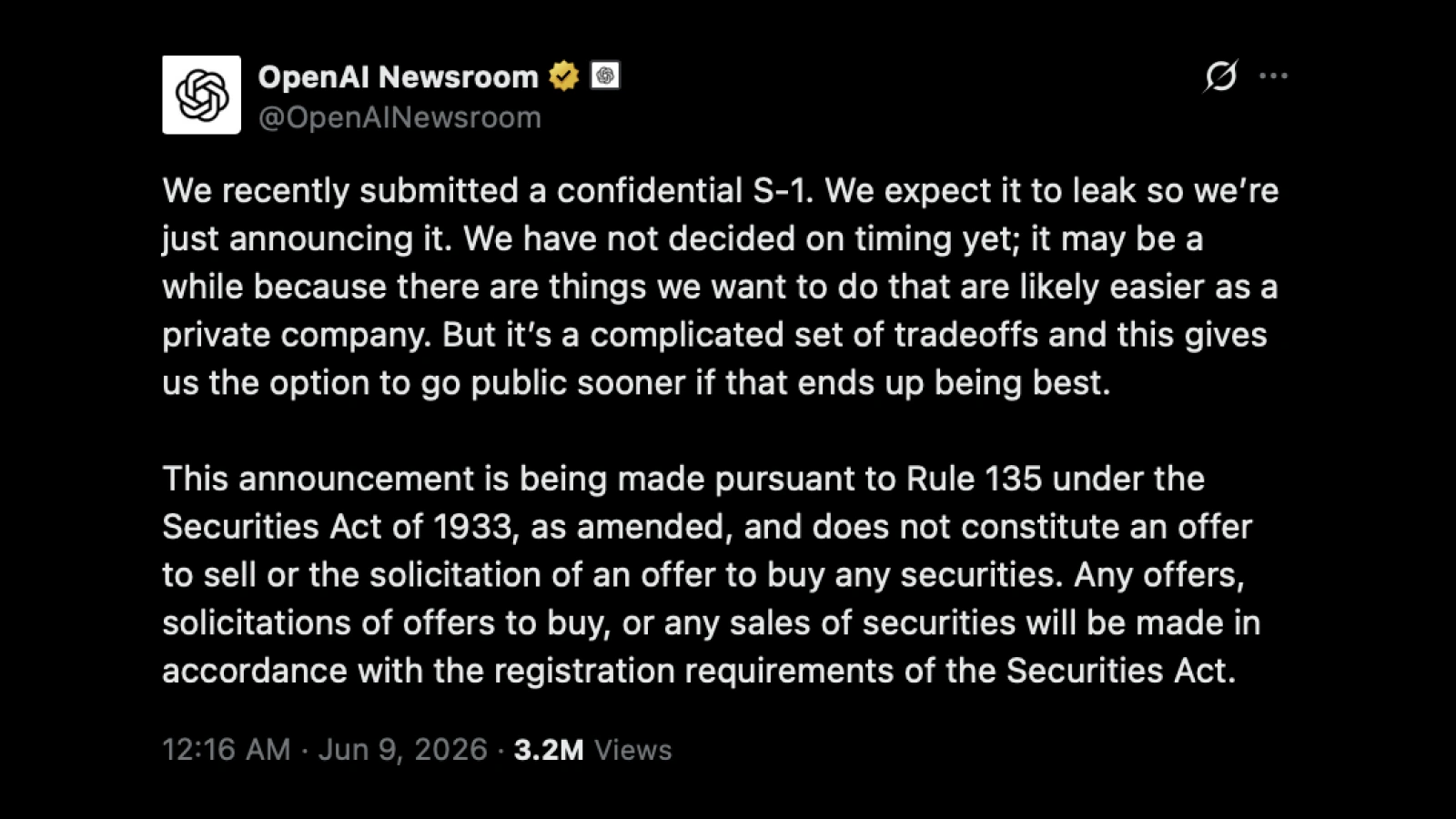
The company behind ChatGPT has officially confirmed that it submitted a confidential draft registration statement to the U.S. Securities and Exchange Commission, taking its first formal step toward a potential initial public offering. While an IPO is not guaranteed and no timeline has been finalized, the filing has intensified speculation around what could become one of the most closely watched listings of the decade.
For investors, the story goes beyond another tech IPO. It represents the possibility of gaining direct exposure to the company that brought generative AI into the mainstream and reshaped the global technology landscape.
Why the OpenAI IPO Is Getting Attention
The OpenAI IPO has quickly become one of the biggest topics in both technology and financial markets.
Few private companies command the same level of public awareness, investor interest, and growth expectations as OpenAI.
Several factors are driving the excitement:
- the global success of ChatGPT
- accelerating AI adoption
- renewed IPO activity in the tech sector
- growing institutional demand for AI exposure
- the potential for one of the largest public listings in recent years
Unlike many private startups, OpenAI already operates products used by hundreds of millions of people and has become synonymous with the generative AI revolution.
That combination of scale, visibility, and market leadership is why many investors view a potential OpenAI IPO as more than a fundraising event. It could become a defining moment for the broader AI investment cycle.
What We Know About the OpenAI IPO So Far
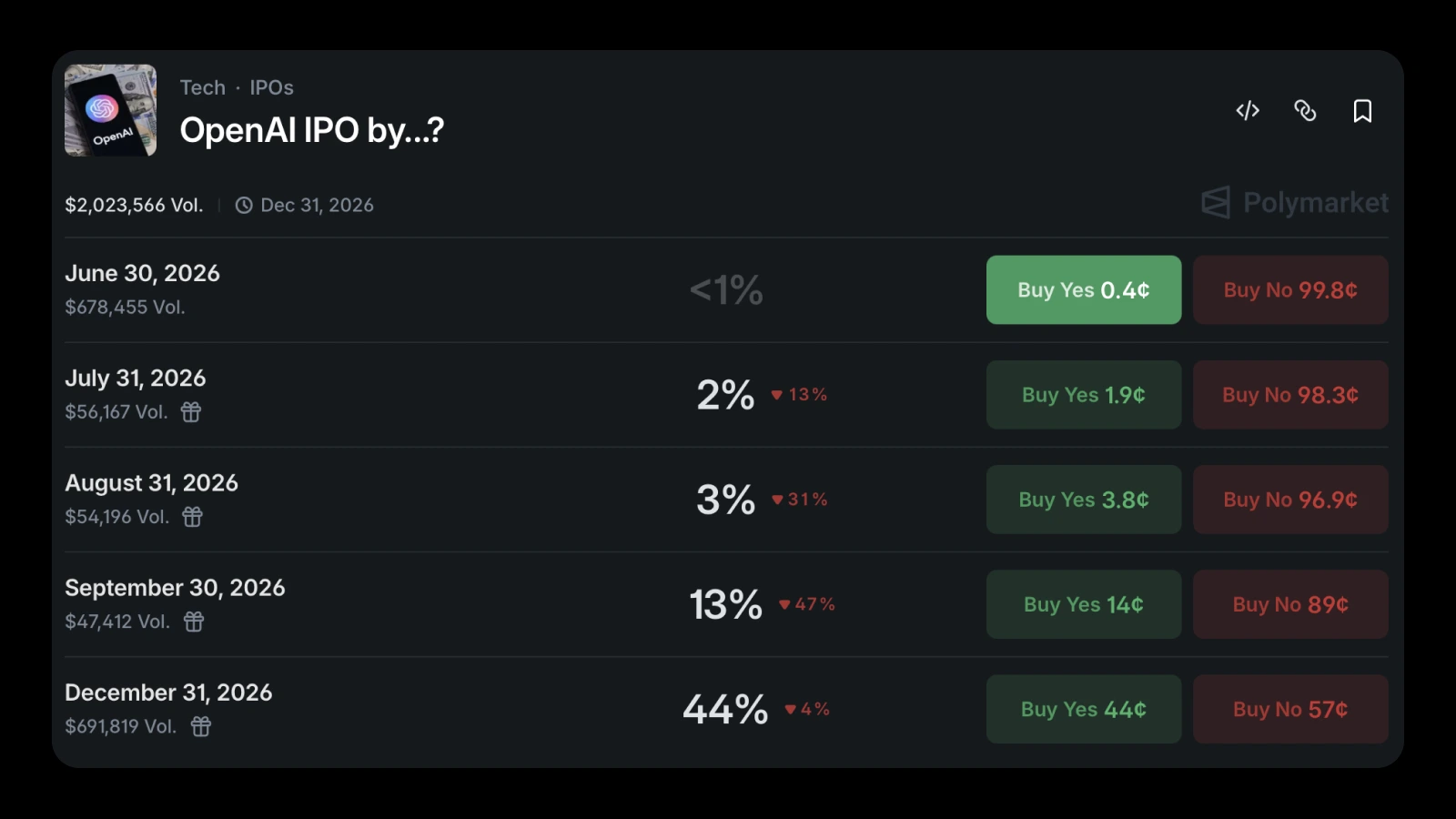
OpenAI has confirmed that it confidentially submitted a draft S-1 registration statement to the SEC, but many details remain unknown.
At this stage, the company has not announced when it plans to go public, how much capital it intends to raise, or what valuation it could ultimately pursue.
What is currently known includes:
- a confidential S-1 filing has been submitted
- no official IPO date has been announced
- the company may remain private for some time
- SEC review must take place before any listing
- the filing gives OpenAI flexibility to access public markets in the future
Importantly, a confidential S-1 does not guarantee that an IPO will happen. It simply allows a company to begin the regulatory process away from immediate public scrutiny.
For now, the OpenAI IPO remains a possibility rather than a certainty — but it is now a possibility backed by an official SEC filing rather than market speculation alone.
Why OpenAI Filed a Confidential S-1
A confidential S-1 allows OpenAI to prepare for a potential IPO without immediately committing to a public listing.
Many high-profile companies choose this route because it provides flexibility during a critical stage of the process.
OpenAI itself stated that it has not decided on the timing of any IPO and may ultimately determine that remaining private is the better option for now.
Filing confidentially offers several advantages:
- flexibility around timing
- the ability to respond to market conditions
- private feedback from the SEC
- reduced public scrutiny during early reviews
- optionality if capital needs change
For a company growing as quickly as OpenAI, preserving strategic flexibility may be just as important as accessing public capital.
The filing should therefore be viewed as the beginning of an IPO process—not confirmation that a listing is imminent.
OpenAI’s Business and Growth Story
OpenAI has evolved from an AI research organization into one of the fastest-growing technology companies in the world.
Founded with a mission to advance artificial intelligence, the company reached mainstream recognition through the launch of ChatGPT, which introduced generative AI to hundreds of millions of users.
Its business now spans multiple areas:
- consumer subscriptions
- enterprise AI solutions
- developer APIs
- coding tools
- multimodal AI products
OpenAI’s products have rapidly expanded beyond simple chat interfaces into broader productivity, automation, and software development workflows.
This growth has helped transform the company from an experimental AI lab into a business increasingly viewed as one of the defining technology leaders of the current decade—one reason why investors are watching its IPO plans so closely.
OpenAI’s Biggest Products Explained
OpenAI’s influence extends far beyond ChatGPT, with a growing ecosystem of products serving consumers, developers, and enterprises.
The company’s rapid adoption has been driven by its ability to turn cutting-edge AI research into practical tools used every day.
Its major products include:
- ChatGPT — conversational AI for consumers and businesses
- OpenAI API — infrastructure that allows developers to integrate AI into applications
- Codex — coding assistance and software development tools
- Enterprise solutions — AI deployments tailored for organizations
- Multimodal models — systems capable of understanding and generating text, images, audio, and more
This diversification has strengthened OpenAI’s business model by creating multiple revenue streams beyond a single flagship product.
As AI adoption accelerates, many investors see the breadth of OpenAI’s ecosystem as one of the key reasons it could command extraordinary interest in public markets.
OpenAI vs Anthropic vs SpaceX IPO
OpenAI is not the only private giant attracting investor attention, but it may be the most recognizable name in the current IPO cycle.
Several high-profile companies are rumored or preparing to enter public markets, each representing a different investment narrative.
Together, these companies could shape the next phase of technology investing.
Anthropic appeals to investors seeking exposure to enterprise-focused AI infrastructure, while SpaceX represents a bet on aerospace, connectivity, and long-term innovation.
OpenAI occupies a unique position between those worlds. It combines mass consumer recognition through ChatGPT with enterprise ambitions that extend across software, productivity, and developer ecosystems—making its potential IPO one of the most anticipated listings in years.
Can Retail Investors Buy OpenAI Stock?
One of the biggest questions surrounding the OpenAI IPO is whether everyday investors will actually be able to participate.
If OpenAI eventually goes public through a traditional IPO, retail investors would likely gain access through brokerage platforms after the stock begins trading. However, the earliest allocations are often reserved primarily for institutional clients and select participants.
Several factors could influence access:
- the structure of the offering
- brokerage participation
- institutional allocation priorities
- post-listing availability
- investor eligibility requirements
For most individuals, the practical reality is that buying shares on the open market after the debut may be easier than receiving IPO allocations at the offering price.
Until OpenAI discloses additional details, exactly how retail participation would work remains uncertain.
Risks Investors Should Know
The excitement surrounding a potential OpenAI IPO does not eliminate the risks associated with investing in high-profile technology listings.
History has shown that even market-leading companies can experience significant volatility after going public.
Some of the major considerations include:
- valuation uncertainty
- intense competition across the AI sector
- profitability challenges
- regulatory developments
- post-IPO price swings
OpenAI also operates in one of the fastest-moving industries in the world, where technological leadership can shift quickly and investor expectations can become difficult to satisfy.
For investors, understanding both the opportunities and the risks may be just as important as the IPO itself.
What the OpenAI IPO Means for the AI Boom
A potential OpenAI IPO could become a defining event for the entire artificial intelligence investment cycle.
For years, most investors have only been able to gain AI exposure indirectly through large technology companies supplying chips, cloud infrastructure, or software. An OpenAI listing would change that dynamic by offering direct exposure to one of the companies most closely associated with the generative AI revolution.
Its impact could extend across several areas:
- broader investor participation in AI growth
- increased competition among public AI companies
- renewed interest in technology IPOs
- shifting capital flows within the market
- stronger validation of the AI sector
Much like earlier landmark listings shaped previous technology cycles, an OpenAI debut could influence how investors think about artificial intelligence as an asset class for years to come.
Managing AI and Crypto Investments Safely
New investment narratives can create excitement, but they should also reinforce the importance of disciplined asset management.
Whether investors are exploring AI-related opportunities, cryptocurrencies, or emerging technologies, diversification and security remain essential.
Good practices include:
- avoiding concentration in a single theme
- understanding the risks behind new narratives
- verifying investment platforms carefully
- maintaining long-term perspective
- using trusted self-custody solutions for digital assets
For crypto investors participating in rapidly evolving markets, Atomic Wallet provides a self-custodial environment that allows users to securely manage thousands of digital assets while retaining control of their private keys and funds.
Conclusion: Will OpenAI Become the Defining IPO of the AI Era?
OpenAI’s confidential SEC filing marks the first official step toward what could become one of the most consequential technology listings in modern history.
The company behind ChatGPT has helped redefine how people interact with software, accelerated the global adoption of generative AI, and reshaped competitive dynamics across the technology industry.
Several factors make this potential IPO unique:
- unparalleled consumer recognition in AI
- rapidly expanding enterprise ambitions
- enormous investor interest
- the possibility of a landmark public debut
- the ability to influence the next phase of the AI investment cycle
Whether OpenAI ultimately lists this year, next year, or decides to remain private longer, the filing itself signals that the company is preparing for a future in which public markets become a realistic option.
For investors, the real story is not simply when OpenAI goes public. It is what direct access to one of the defining companies of the AI era could mean for the future of technology investing.