Robinhood Chain Trading Boom: Memecoins, Pons and Stock Tokens Drive Record Activity

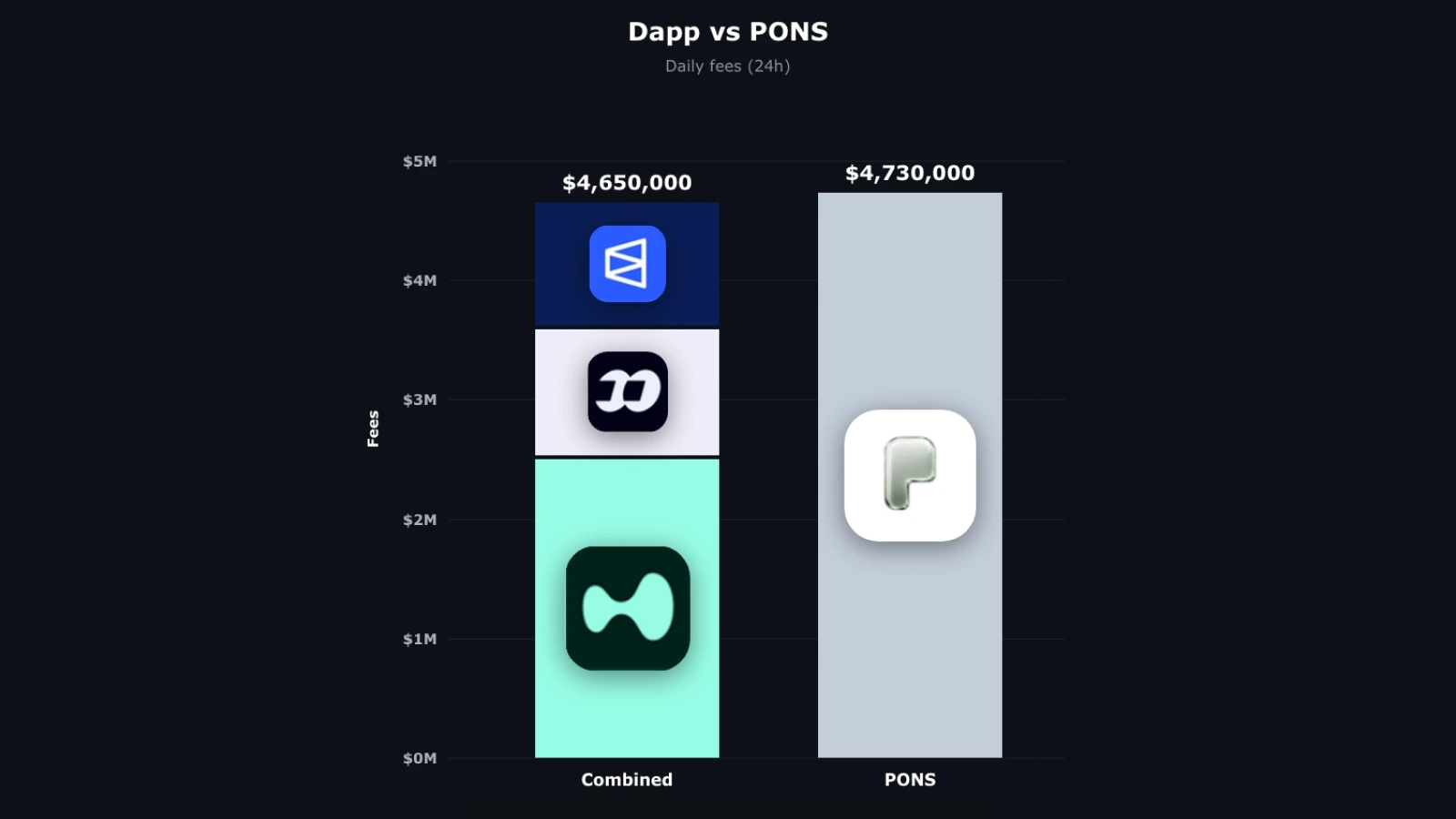
Robinhood Chain is having its first real breakout moment. Daily DEX volume has climbed toward $2 billion, TVL has moved above $800 million, and a wave of token launches, memecoins and stock-token trading is pushing activity to new highs.
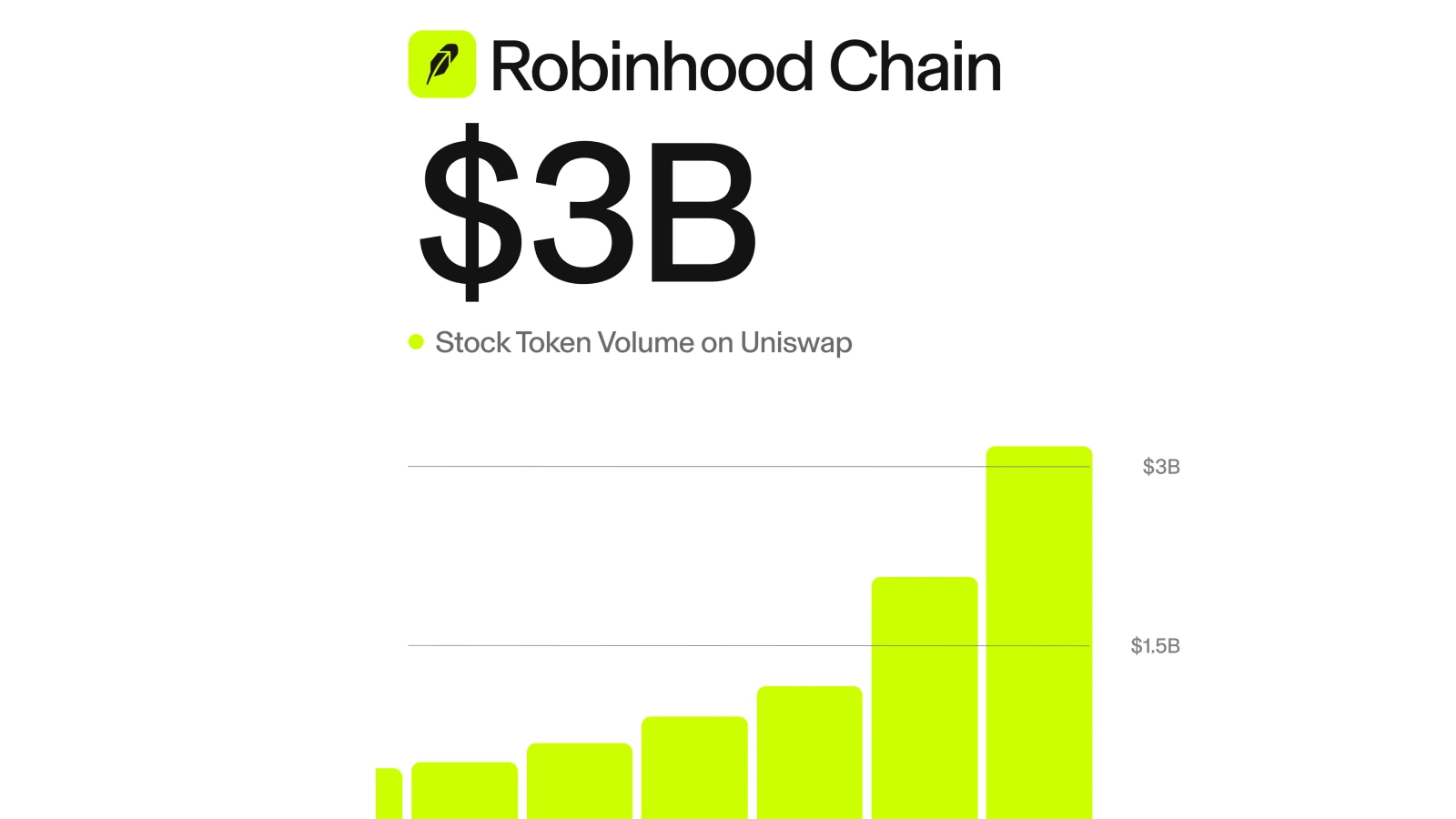
The acceleration has been especially sharp over the past few days. Pons is generating millions of dollars in daily fees, Robinhood Stock Tokens have passed $3 billion in cumulative DEX volume, and new memecoins are turning tokenized equities themselves into trading pairs.
What started as a blockchain built around onchain stocks is quickly becoming something broader: a high-velocity trading ecosystem where RWAs, launchpads and speculative tokens increasingly feed liquidity into one another.
Why Robinhood Chain Activity Is Surging
Robinhood Chain is seeing simultaneous growth across trading, liquidity and user activity rather than a single isolated spike.
DEX volume recently approached $2 billion in a day, while DeFi TVL moved above Polygon and into the roughly $800 million range. Robinhood also reports more than 12 million addresses and hundreds of millions of transactions since the network launched.
Stock Tokens remain a major part of that growth. More than 190 tokenized equities are now live, with cumulative DEX volume above $3 billion. At the same time, launchpads and memecoins are adding a second layer of activity that was barely visible when the chain first went live.
The important shift is where that volume is coming from. Robinhood Chain is no longer relying only on users trading tokenized versions of stocks. Pons, memecoin markets and stock-paired tokens are creating entirely new trading loops on top of the same liquidity base — and that is what has turned the latest growth into a broader ecosystem boom.
Pons Turns Token Launches Into a Volume Machine
Pons has become one of the main engines behind Robinhood Chain’s recent activity surge.
The launchpad has already processed around $4 billion in cumulative trading volume, while more than 167,000 tokenshave been created through the platform. At recent peaks, Pons has accounted for more than 60% of Robinhood Chain launchpad volume, concentrating a large share of the network’s speculative activity inside a single application.
The clearest signal came from fees. Pons recently generated a record $5.95 million in daily fees, briefly ranking among crypto’s largest fee-producing protocols and surpassing Pump.fun on the same 24-hour snapshot. That figure represents fees generated through Pons rather than revenue earned by Robinhood itself, but it shows how much transaction activity one launchpad is now bringing onto the chain.
The result is a rapid token-creation loop: new assets attract traders, trading generates fees and liquidity, and successful launches bring more creators back to the platform. That cycle has helped move Robinhood Chain beyond its original tokenized-stock narrative and into a much more speculative phase.
A Memecoin Season Is Forming on Robinhood Chain
The Pons boom is now spilling into a broader memecoin market across Robinhood Chain.
Trading volume for local memecoins jumped sharply over the past week, while a growing group of newly launched tokens posted triple-digit or even more extreme gains. The moves are increasingly attracting traders who previously had little reason to use Robinhood Chain beyond its Stock Tokens.
Recent standouts include:
- MEME — the AMC-themed token that became the clearest example of the latest frenzy, reaching a nine-figure market cap during its rapid intraday run.
- ROBINCAT — surged more than 500% during the recent rotation into Robinhood-native memes.
- Fatcoin — also posted gains above 500% as liquidity spread beyond the largest launches.
- CHUMP — climbed roughly 180% over a week and reached a market value around $30 million.
- MOO and DINO — joined the broader wave with triple-digit weekly gains.
What makes this different from a few isolated pumps is the speed at which liquidity is rotating between launches. Traders can move from one newly created token to another without leaving the same ecosystem, while Pons continuously supplies fresh assets to speculate on.
But Robinhood Chain’s meme season has another unusual feature. Some of these tokens are no longer trading only against ETH or stablecoins — they are being paired directly with Robinhood’s tokenized stocks. That connection between meme speculation and onchain equities is turning Stock Tokens into infrastructure for an entirely different market than Robinhood originally appeared to be targeting.
Tokenized Stocks Are Becoming Memecoin Liquidity
Robinhood Stock Tokens are increasingly being used as trading pairs for memecoins, adding a new source of volume to the network.
By September 1, researchers had identified 432 pools pairing tokenized equities with other tokens. Those markets already accounted for more than 30% of daily DEX volume across the Stock Tokens analyzed. A day later, stock-paired memecoins generated roughly $217 million in volume, exceeding conventional Stock Token trading in the same snapshot.
That gives Robinhood Chain an unusual mix of RWA and speculative activity. Stocks such as AMC and NVDA are not only being traded as tokenized assets — they are also providing liquidity for new tokens built around their brands, communities and market narratives.
MEME Puts the AMC Controversy at the Center of the Boom
MEME became the most visible example of the trend after the dispute over Robinhood’s tokenized AMC shares erupted publicly.
The token trades against AMC’s tokenized stock and leans directly into the company’s history as one of the defining meme stocks of 2021. Then AMC CEO Adam Aron said the company had neither authorized nor endorsed Robinhood’s AMC token and announced a legal review of the product.
The controversy sent attention toward MEME almost immediately. Its market cap crossed $100 million during the surge, while Lookonchain tracked one $1,491 position climbing above $1.2 million and another $2,972 trade reaching more than $2.1 million within roughly 12 hours.
MEME is still an extreme speculative trade, but its rise captures what has changed on Robinhood Chain in recent days: tokenized equities, launchpads and memecoins are now drawing from the same pool of retail attention and liquidity.
AMC Challenges Robinhood’s Stock Token Model
AMC’s pushback has turned Robinhood’s tokenized stock structure into part of the wider market story.
CEO Adam Aron said AMC never approved or endorsed the AMC Stock Token and asked outside securities counsel to review the product. The criticism matters because Robinhood can tokenize exposure to public companies without those companies participating directly.
Robinhood Stock Tokens are not ordinary shares. They track the economics of underlying stocks but do not give holders ownership, voting rights or direct claims against the companies themselves.
That structure was largely a technical detail when Stock Tokens launched. Now that they are being used across DeFi pools and memecoin markets, the distinction is becoming much harder to ignore.
Can Robinhood Chain Keep the Momentum?
Robinhood Chain now has the volume, liquidity and applications to look like more than a short-lived launch experiment.
DEX volume has climbed into the billions, TVL has moved above $800 million, Pons has built a large token-launch economy and Stock Tokens are finding uses beyond simple equity trading. Memecoin activity has added another layer of liquidity on top.
The weak point is how much of the latest growth comes from speculation. Launchpad volume, extreme token rallies and social-driven trading can disappear quickly once attention moves elsewhere.
Robinhood Chain therefore needs the current surge to produce something more durable: deeper Stock Token markets, recurring DeFi activity and applications that keep users onchain after the memecoin cycle cools.
For users moving between emerging onchain markets, Atomic Wallet offers a self-custodial way to manage supported crypto while retaining control of private keys.
If that broader usage develops, the latest boom could become Robinhood Chain’s real breakout phase rather than another temporary burst of trading activity.