Rumble Stock: How the Growth of ‘Alternative YouTube’ Is Moving RUM

Rumble stock is back on traders’ radars in 2025 as politics, creator platforms, and “free speech” media all collide. Every new election headline, viral clip, or creator migration now tends to echo in rumble stock price — sometimes within minutes. For some, RUM is turning into a kind of sentiment gauge for U.S. politics and alternative media.
This article looks at why interest in the stock has spiked again, why the price is so volatile, and what actually moves RUM beyond the daily noise.

What Is Rumble? (The “Alternative YouTube”)
Rumble is a video platform positioned as a “free speech” alternative to YouTube, TikTok, and mainstream social media. It’s a publicly traded company listed on NASDAQ under the ticker RUM, with a product stack that includes the core Rumble video platform, the Rumble Ads monetization network, and Rumble Cloud infrastructure.
Its audience is heavily skewed toward creators, political commentators, independent journalists, and sports or talk-show style content. In practice, that puts Rumble in direct narrative competition with YouTube and X, but with a brand built around lighter moderation and creator-friendly deals — a positioning that strongly shapes how investors view the stock.
Why Investors Watch Rumble Stock
Rumble has become a high-beta media asset: when political traffic surges, creator controversies trend, or alternative platforms gain momentum, RUM often reacts sharply. Investors track it because it offers:
- Direct exposure to the creator economy outside Big Tech.
- A “media sentiment proxy” during political cycles.
- High-volume speculative opportunities thanks to frequent volatility spikes.
- A differentiated bet on advertising, cloud services, and exclusive creator partnerships.
For traders looking beyond traditional tech stocks, Rumble represents a unique blend of media, politics, and platform economics — which makes its price movements unusually event-driven.
Rumble Stock Price — Recent Performance
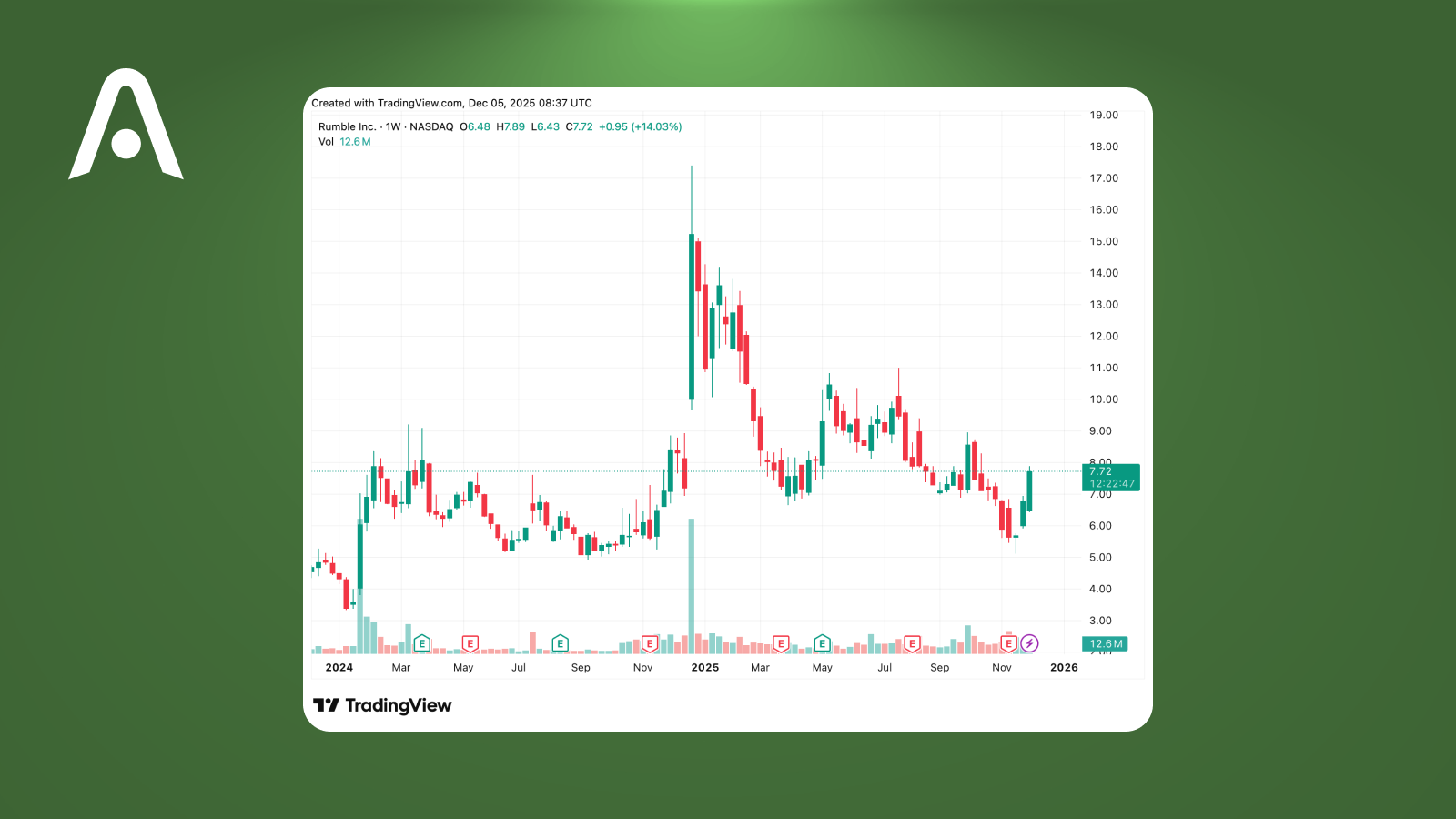
The rumble stock price has seen wide swings through 2024–2025. Its movements often correlate with earnings reports, user-growth updates, policy announcements, and political events that push more viewers toward alternative platforms.
Key dynamics include:
- 52-week range: large fluctuations driven by sentiment rather than fundamentals.
- Spike days tied to major creator deals or exclusive content announcements.
- Earnings reactions where revenue growth lags behind operating costs.
- Movements linked to high-profile political moments (debates, investigations, viral commentary).
Overall volatility remains elevated, with short interest amplifying sharp upside and downside moves — a core reason traders monitor RUM closely.
Business Model: Where Rumble Makes (and Loses) Money
Rumble positions itself as a full-stack video and cloud platform, but its revenue engines are still developing. Most income comes from advertising (Rumble Ads) and creator-driven traffic on its video platform. The company also invests heavily in exclusive content deals, which help attract audiences but significantly increase operating costs.
A longer-term bet is Rumble Cloud, a censorship-resistant cloud alternative meant to compete with AWS and Google Cloud. It’s strategically important but still early in monetization, making profitability a challenge for now.
A key tension remains: revenue is growing, but expenses grow faster — a dynamic investors track closely when evaluating rumble stock.
User Growth — Plateau or Expansion?
User growth is one of the biggest variables shaping the rumble stock price. Monthly active users have shown periodic spikes tied to news cycles, political debates, or viral creator migrations — followed by pullbacks once momentum cools.
This pattern makes Rumble’s audience highly event-dependent. While the platform continues to add creators and expand content categories (sports, commentary, politics), sustained long-term retention remains uncertain. As a result, any slowdown or acceleration in MAUs has an immediate impact on investor sentiment.
Catalysts That Could Move Rumble Stock Price Next
Several upcoming events could act as major price movers for rumble stock. Election-year traffic typically boosts political commentary and debate coverage — categories where Rumble performs well. New creator migrations from YouTube or X could also drive sudden audience inflows.
Potential catalysts include:
- Major exclusive creator or media contracts
- Full-scale rollout of Rumble Ads
- Adoption of Rumble Cloud by high-profile clients
- Viral political or cultural moments that push traffic to alternative platforms
Any one of these could trigger short-term volume spikes or longer-term revaluation.
Risks for Rumble Stock Investors
Rumble carries significant risk, and investors should view it as a high-volatility media-tech play. The company is still unprofitable, and its cost structure—especially creator deals—remains heavy. Competition from X, YouTube, and TikTok limits total addressable market, and regulatory pressure around content moderation always looms in the background.
Key risks include:
- Persistent operating losses
- Strong competition from dominant platforms
- Dependency on political cycles
- Potential changes in regulatory environments
Taken together, these risks explain why rumble stock price can swing sharply on relatively small news events.
Rumble vs Other Media Stocks (DWAC, META, FOX)
Compared with traditional media and social platforms, Rumble sits in its own high-volatility niche. META and FOX operate at massive scale with diversified revenue streams, while DWAC trades almost entirely on political sentiment. Rumble positions itself between these worlds — a creator platform with a strong political audience and a tech stack that it is still scaling.
Key contrasts:
- DWAC: Pure political sentiment play; extreme volatility.
- META: Mature, diversified, algorithm-driven; far more stable.
- FOX: Traditional media with predictable revenue cycles.
- RUM: High-growth, high-risk platform tied to creator migration and political spikes.
This makes Rumble attractive to traders seeking momentum, but riskier for long-term conservative investors.
Price Outlook: What Analysts Expect for RUM
Analysts generally view Rumble as a high-risk, event-driven stock heading into 2025. Much of its potential upside hinges on election-year engagement, the success of Rumble Ads, and whether Rumble Cloud can become a meaningful revenue contributor.
Short-term spikes are likely in response to political debates or high-profile creator signings, while long-term performance depends on sustainable user growth and narrowing losses. Investors should expect continued volatility rather than a smooth trend.
How to Buy and Store Crypto if You Want Direct Exposure
If you want exposure to the broader digital-asset ecosystem without taking on the volatility of Rumble stock, holding crypto directly can be a cleaner alternative. Assets like BTC, ETH, or USDC offer transparent pricing, deep liquidity, and 24/7 markets — without relying on creator cycles or election-year momentum.
With Atomic Wallet, you can securely store, swap, and manage these assets in full self-custody. No centralized intermediaries, no account freezes — just direct control over your portfolio while keeping your risk separated from high-volatility media equities.