What Is IDOS? Token Launch, CCA Sale and the Web3 Identity Network
idOS is a decentralized identity infrastructure designed for Web3 applications, focused on making user identity portable across platforms while keeping personal data under the user’s control. Instead of repeatedly submitting identity documents to different services, users can store encrypted credentials once and share access with applications when required.
The network is designed to support financial and stablecoin-based services where identity verification is often necessary. By enabling reusable credentials and self-custodial data storage, idOS aims to reduce onboarding friction while maintaining user ownership of personal information.
Key characteristics of the idOS network include:
• decentralized identity infrastructure for Web3
• portable KYC credentials across applications
• encrypted self-custodial data storage
• chain-agnostic design compatible with many ecosystems
• infrastructure aimed at financial and stablecoin services
Why Web3 Needs an Identity Layer
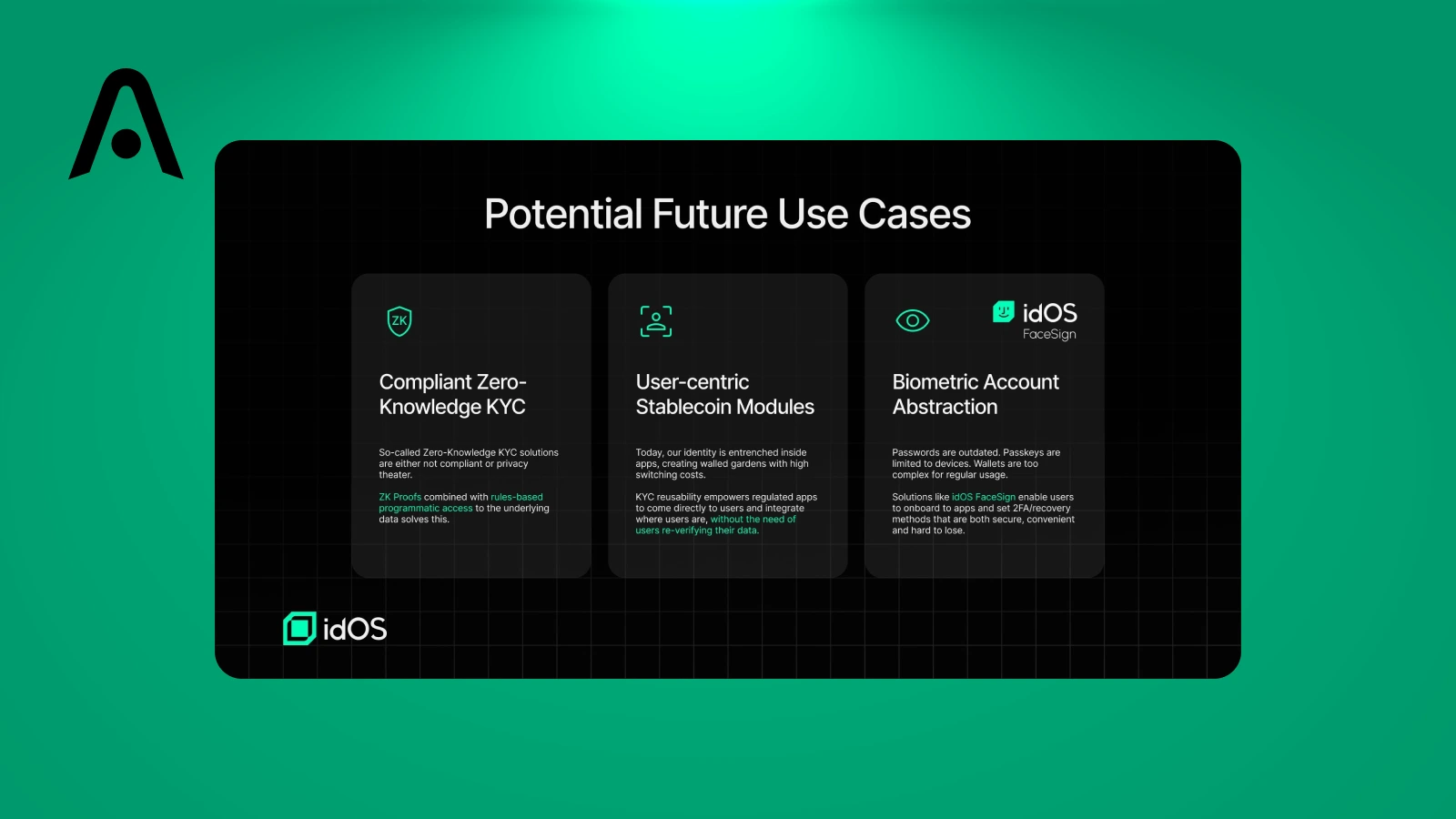
As Web3 applications expand into payments, trading, and financial services, identity verification is becoming more common across platforms. However, the current ecosystem still relies on fragmented onboarding processes where users must repeatedly submit the same information.
Many services require KYC or user verification, yet each platform typically manages this process independently. This creates friction for users and leads to the same sensitive data being stored across multiple systems.
An identity layer aims to address this problem by allowing verified credentials to be reused across applications. Instead of repeating verification for every service, users can maintain portable identity credentials and grant access when interacting with different platforms.
How idOS Works
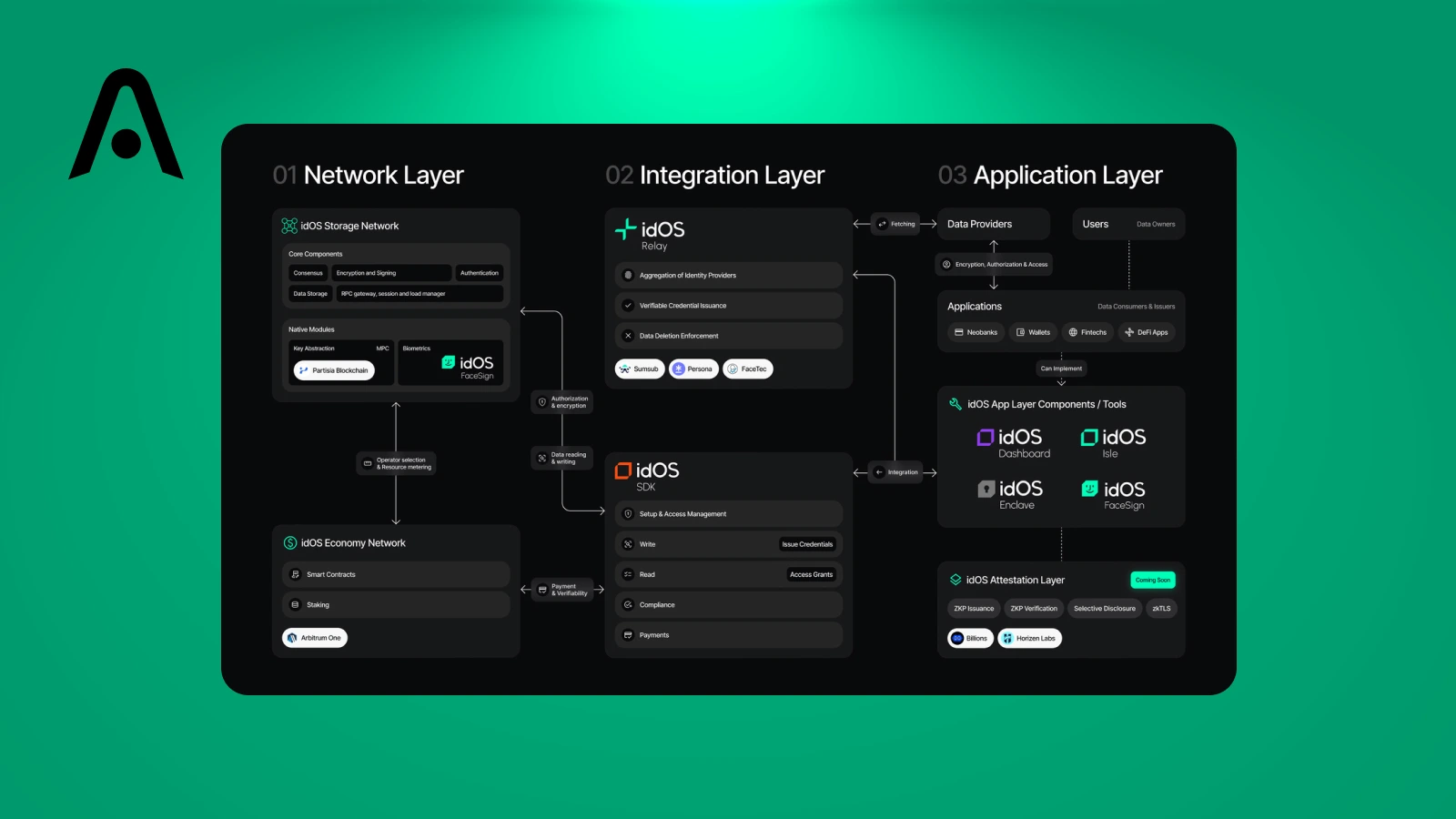
The idOS architecture separates identity storage from the economic layer that manages how data is accessed and used. This design allows users to maintain control over their encrypted identity data while applications interact with the network through standardized permissions.
At the core of the system is a storage layer that holds encrypted user credentials and a separate network responsible for managing access permissions and economic incentives. Applications integrate with idOS through developer tools that allow them to request verified attributes without directly storing user data.
Core components of the idOS architecture include:
• idOS Storage Network — decentralized storage for encrypted user identity data
• idOS Economy Network — smart contract layer governing data access and permissions
• Access grants — user-controlled permissions allowing applications to read specific data
• Developer SDK — tools enabling applications to integrate identity verification
• Self-sovereign identity model where users retain ownership of their credentials
This separation between storage and access control is designed to ensure that identity data remains private while still being usable by applications that require verification.
Why idOS Is Built Around the Stablecoin Economy
Stablecoins are increasingly used as the settlement layer for payments, trading, and financial applications in the Web3 ecosystem. Many of these services require some level of identity verification, particularly when interacting with regulated financial infrastructure.
Today, users often repeat the same onboarding steps across multiple stablecoin platforms, exchanges, and financial applications. Each service collects identity information separately, creating friction and slowing user onboarding.
idOS is designed to reduce this friction by enabling portable identity credentials that can be reused across different financial applications. Instead of completing KYC multiple times, users can share verified identity attributes with services when needed.
By focusing on financial applications and stablecoin infrastructure, idOS positions itself as an identity layer designed specifically for Web3 payments and global digital finance.
The IDOS Token Explained
The IDOS token functions as the utility asset of the idOS network, coordinating economic activity across the identity infrastructure. While the protocol itself focuses on decentralized data storage and identity portability, the token supports network participation, ecosystem incentives, and long-term development of the platform.
IDOS is implemented as an ERC-20 token and was first deployed on the Arbitrum network. The total supply is fixed at 1 billion tokens, designed to support long-term ecosystem growth and participation across the network.
Key characteristics of the token include:
• utility token for the idOS identity network
• ERC-20 asset initially deployed on Arbitrum One
• fixed total supply of 1,000,000,000 IDOS
• used to support network participation and incentives
• aligned with the growth of the idOS ecosystem
Rather than representing ownership of the protocol itself, the token is designed to support the economic layer of the identity network as applications integrate idOS infrastructure.
IDOS Tokenomics and Supply Distribution
The token distribution model of idOS allocates a large portion of the supply to community participation, ecosystem growth, and long-term network security. The design places particular emphasis on incentives for users, developers, and participants who contribute to the identity infrastructure.
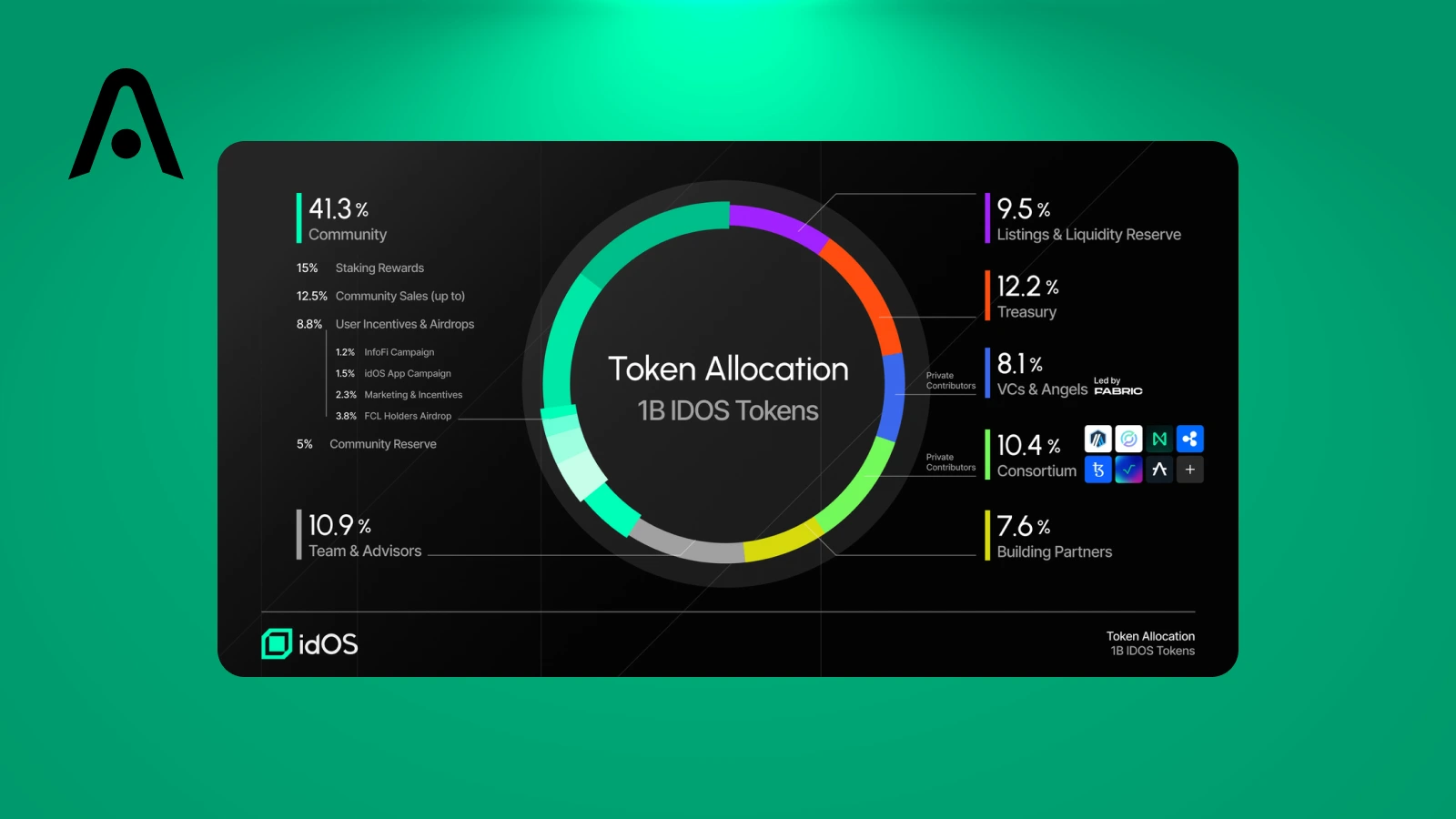
The allocation of the 1 billion IDOS supply includes several major categories:
• Community — 41.3% of the total supply
• Staking rewards — 15% distributed over a long-term schedule
• Community sales — up to 12.5% allocated through public distribution events
• User incentives and airdrops — 8.8% for ecosystem growth programs
• Team and advisors — 10.9% with long-term vesting schedules
• Building partners — 7.6% supporting early integrations and infrastructure
• Private contributors — 18.5% total including early strategic supporters
• Liquidity and listing reserve — 9.5% for exchange liquidity and market access
A notable element of the design is the extended 10-year release schedule for staking rewards, intended to support long-term network participation and security as the identity infrastructure expands.
The IDOS Token Launch — Uniswap CCA Sale
The IDOS token launch uses Uniswap’s Continuous Clearing Auction (CCA), a distribution mechanism designed to discover a fair token price through onchain demand rather than fixed allocations. Instead of selling tokens at a predetermined price, the auction aggregates bids from participants and determines the final clearing price based on market demand.
This model aims to improve transparency in token distributions. All contributions and allocations occur onchain, allowing participants to see how the price forms during the sale. The mechanism also helps bootstrap liquidity for the token immediately after the distribution event.
The idOS team selected this model to emphasize open participation and price discovery rather than traditional private rounds or fixed-price public sales.
How Uniswap’s Continuous Clearing Auction (CCA) Works
Uniswap’s CCA protocol distributes tokens through a dynamic auction process where participants submit bids based on how much they are willing to contribute and the maximum price they are willing to pay per token.
The mechanism operates in several steps:
- Participants submit bids specifying the amount they want to contribute and their maximum acceptable token price.
- Contributions are distributed across blocks during the duration of the auction.
- A clearing price evolves over time depending on overall demand.
- Bids are executed only if the clearing price remains below the participant’s maximum price.
- Once the auction ends, a final clearing price determines the token distribution.
Unlike traditional token sales, this system does not rely on a single fixed price. Instead, the final allocation depends on the relationship between demand and the clearing price discovered during the auction.
Key Dates of the IDOS Launch
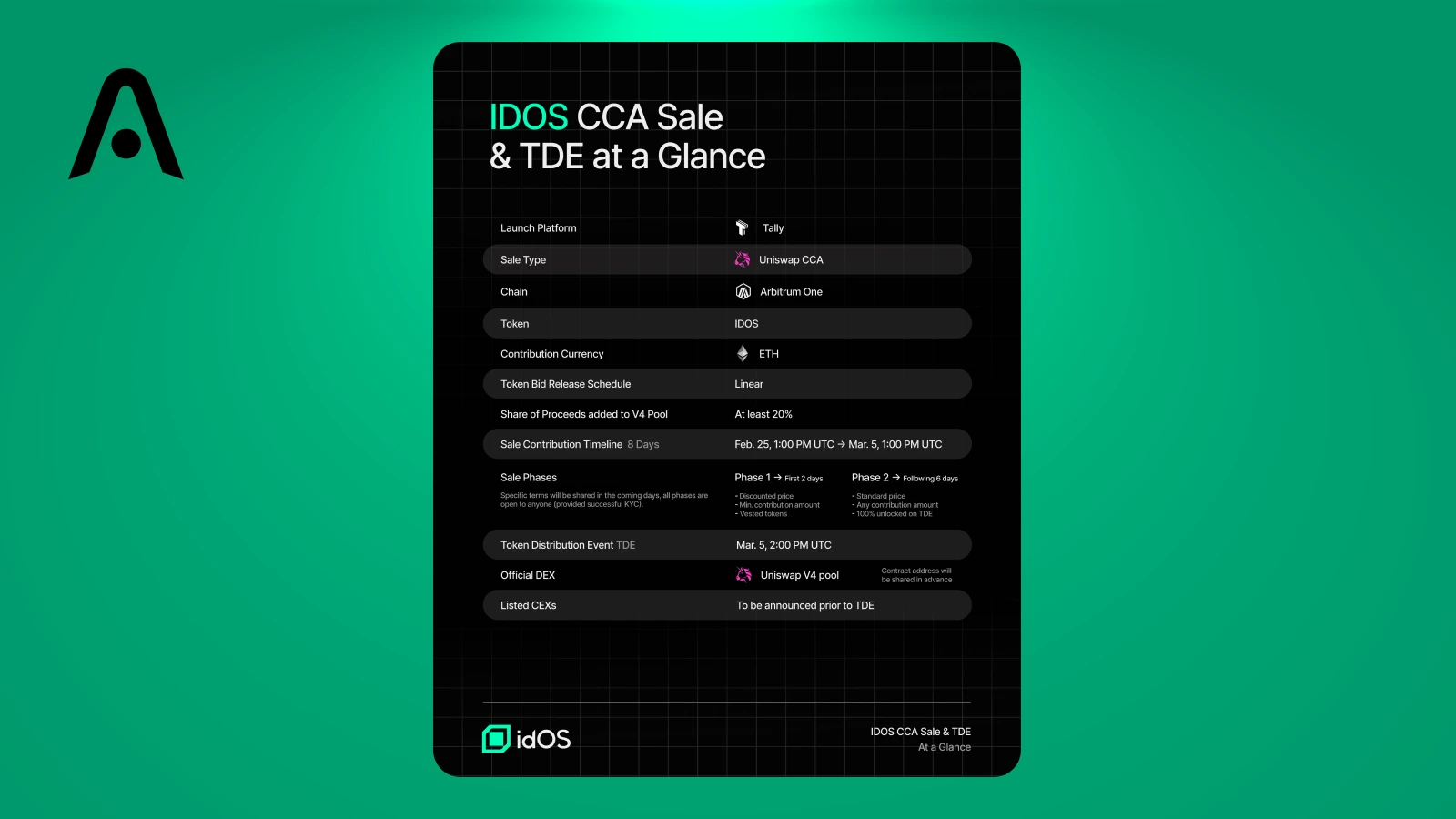
The IDOS token distribution is structured around a multi-day auction period that determines the final clearing price before the Token Distribution Event (TDE). The sale takes place through Uniswap’s CCA mechanism and is followed immediately by the token launch.
Important milestones in the launch timeline include:
• February 25 — Continuous Clearing Auction (CCA) sale begins
• February 27 — Phase 2 of the auction starts
• March 5 — CCA sale concludes
• March 5 — Token Distribution Event (TDE) and initial token distribution
After the TDE, the IDOS token is expected to become available on decentralized exchanges, with additional listings potentially following as liquidity develops.
How to Participate in the IDOS CCA Sale
Participation in the IDOS token auction requires completing the onboarding steps established by the idOS ecosystem and accessing the sale through the official platform used for the distribution.
The process generally includes the following steps:
- Complete idOS KYC Basic or KYC Plus verification.
- Access the token sale interface through the Tally platform, which hosts the CCA auction.
- Connect a self-custody wallet compatible with the network used for the sale.
- Prepare ETH on Arbitrum One to cover both contributions and transaction fees.
- Submit a bid specifying the amount to contribute and the maximum token price you are willing to pay.
Once a bid is submitted during the auction, it cannot be withdrawn while the sale remains active, so participants typically review the terms carefully before confirming their contribution.
Important Risks to Understand Before Participating
Token auctions and early-stage token launches can involve several uncertainties. While mechanisms like Continuous Clearing Auctions aim to improve transparency, participation still carries risks related to price discovery, liquidity, and market conditions.
Because the auction determines the final clearing price dynamically, participants may receive different allocations depending on how demand evolves throughout the sale. In addition, early trading after a token launch can introduce volatility as liquidity forms and markets adjust to the newly circulating supply.
Some of the main risks participants typically consider include:
• bids submitted during the auction cannot be withdrawn until the sale ends
• partial allocations are possible if clearing prices move above a bid limit
• the final token price is determined only after the auction concludes
• liquidity conditions may change quickly after the token launch
• smart contract or infrastructure issues may affect participation
Understanding these mechanics is important before engaging in any onchain token distribution event.
What idOS Signals About the Future of Web3 Identity
Identity infrastructure is becoming an increasingly important layer of the Web3 ecosystem. As decentralized applications expand into financial services, payments, and regulated markets, the ability to verify users while preserving privacy is becoming a key technical challenge.
Projects like idOS attempt to address this by introducing portable identity credentials that can move across applications in the same way digital assets move between wallets and protocols. If such systems become widely adopted, identity verification could shift from isolated platform-specific processes to shared infrastructure across multiple services.
In this scenario, identity networks could support faster onboarding for financial applications, reusable compliance credentials, and more efficient interactions between users and decentralized services. For platforms built around stablecoin payments and global financial access, portable identity layers may become an increasingly relevant component of Web3 infrastructure.
idOS vs Other Web3 Identity Projects
Web3 identity is an emerging sector with multiple approaches to verification and user credentials. While many projects fall under decentralized identity, they often target different problems such as reputation systems, proof-of-personhood, or privacy-preserving credentials.
Access Web3 Token Launches Securely
Participating in token launches like IDOS requires interacting with onchain applications, auctions, and smart contracts. Using a secure non-custodial wallet ensures that you keep full control of your assets when connecting to DeFi platforms and token distribution events.
Download Atomic Wallet to securely manage your crypto assets and access Web3 applications across networks like Ethereum, Arbitrum, and BNB Chain.