STRK on Solana: How Starknet Uses NEAR Intents to Expand Access
Solana, Starknet, and STRK are suddenly being discussed in the same breath — not because one “killed” the other, but because a viral meme collided with a real interoperability update. The result looks chaotic on the surface, but the underlying story is more nuanced. This is an explainer about context, architecture, and distribution — not a price call or a meme recap.
What follows breaks down why Starknet became a punchline overnight, what actually changed with STRK’s availability on Solana, and why the long-term implications matter more than the tweet that started it all.
Why Starknet Became a Meme Overnight
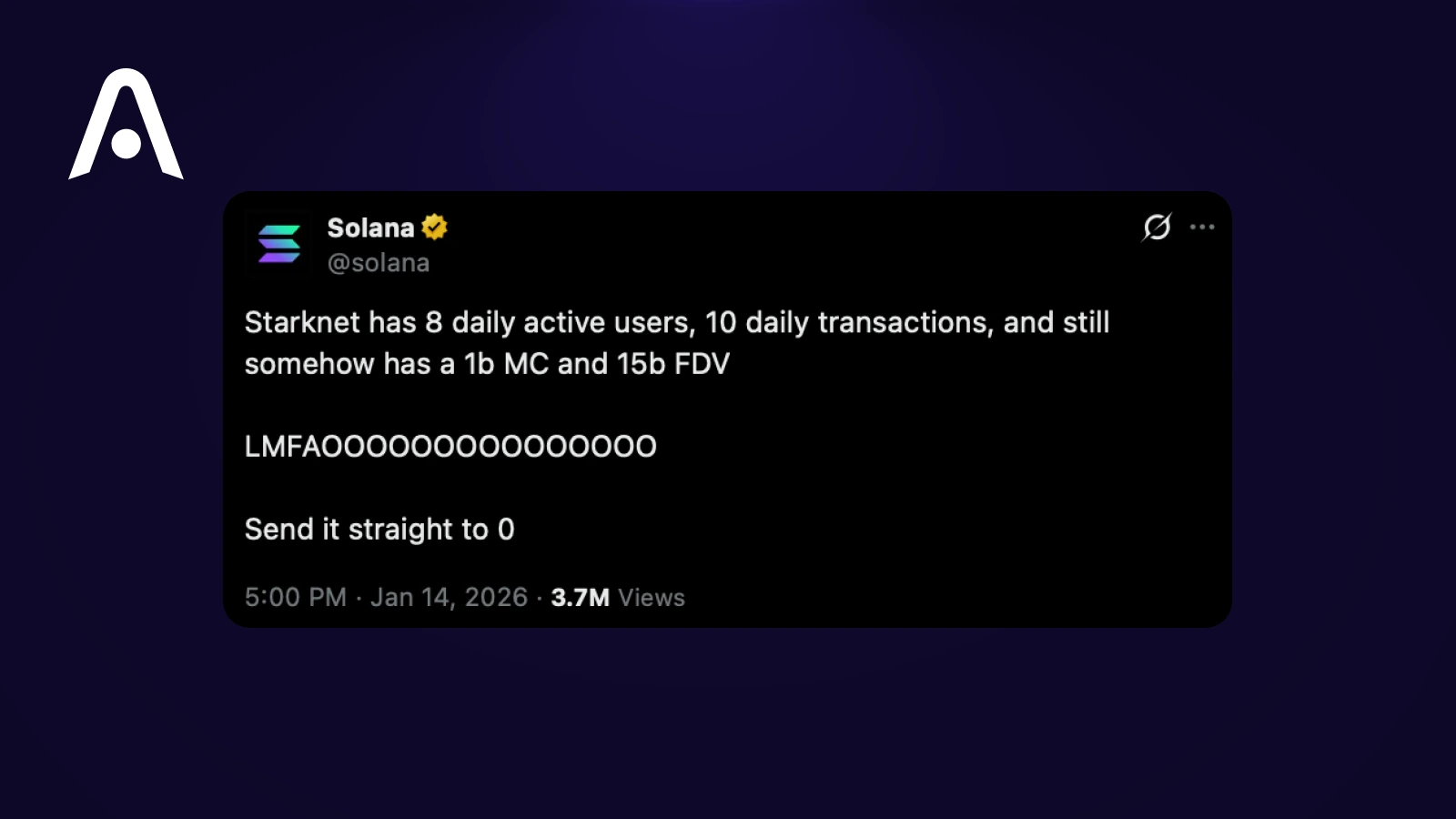
A single viral post turned Starknet into a meme by compressing a complex L2 into three shock numbers: “8 daily active users, 10 daily transactions, $1B market cap, $15B FDV.” The contrast was tailor-made for engagement — and it worked.
Why it spread so fast:
- A stark contrast between visible onchain activity and headline valuation
- Fatigue around high-FDV Ethereum L2s with uneven retail traction
- The ongoing Solana vs Ethereum L2 narrative that rewards simplicity over nuance
- Meme culture’s preference for screenshots over context
The post wasn’t a careful analysis; it was a punchline. But it landed because it tapped into a real market tension—one that Starknet has struggled to explain in public metrics.
Are the Starknet Usage Numbers Actually Fair?
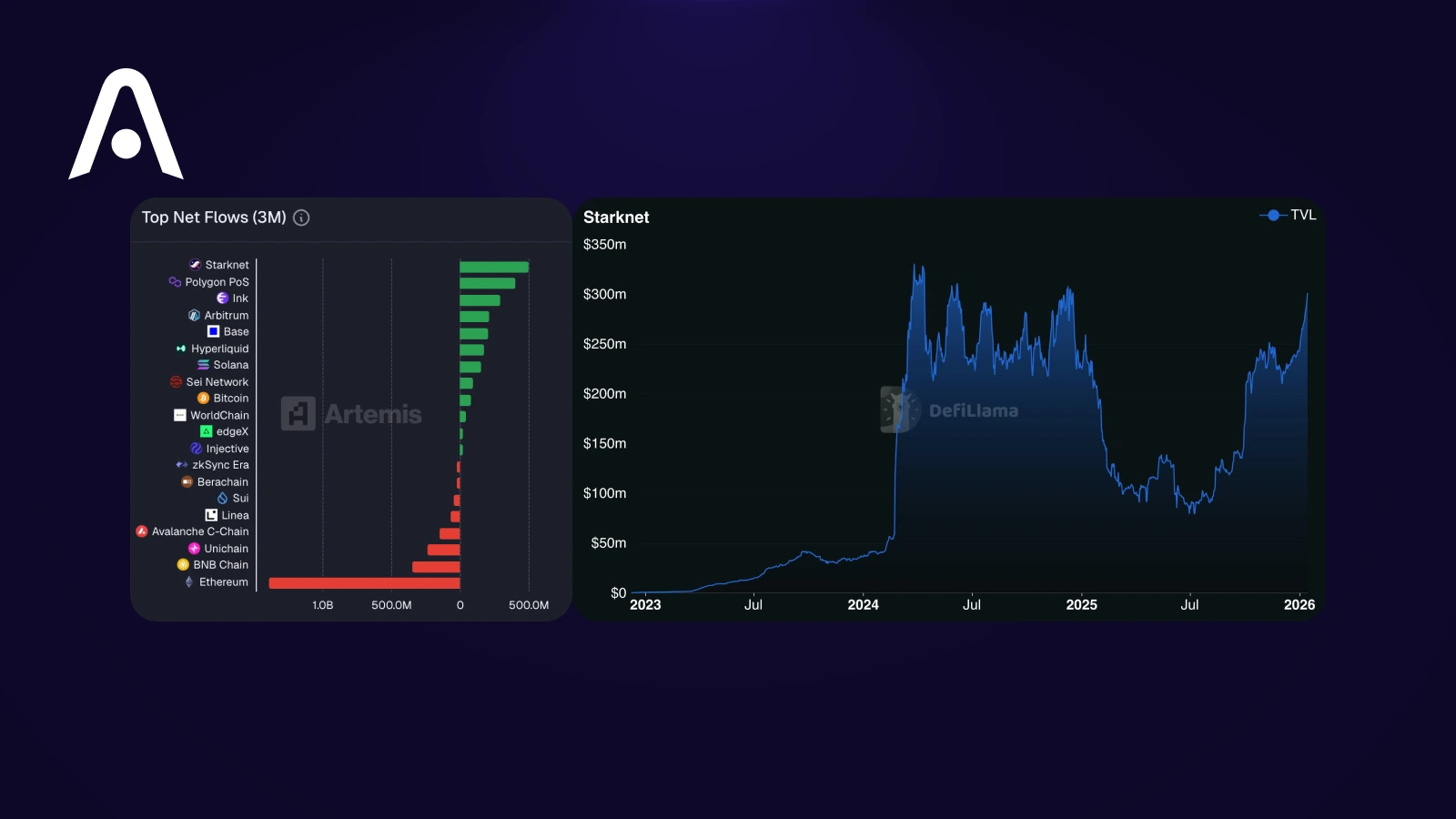
Onchain metrics tell part of the story, but not the full one. Starknet’s visible activity has often looked low compared to retail-driven chains, especially when measured by daily active users or raw transaction counts. Taken at face value, those numbers make the network look underutilized.
However, Starknet has been built with a different priority set. As a developer-focused ZK rollup, much of its progress has happened in tooling, language design, and protocol-level work rather than high-frequency consumer usage. Networks optimized for builders and long-term infrastructure tend to show uneven activity until applications mature and distribution catches up. In this context, low DAU does not automatically mean lack of relevance—it reflects where Starknet has spent its time and resources so far.
What Is Starknet and What Does STRK Do?
Starknet is a zero-knowledge rollup built on Ethereum that uses STARK proofs to scale onchain applications. Instead of relying on the EVM directly, it introduces Cairo, a purpose-built language designed for provable computation and high-performance execution.
At the center of the ecosystem is the STRK token, which plays several roles:
- Used for network fees and economic coordination
- Designed for governance as the protocol decentralizes
- Intended to support long-term network security and incentives
- Positioned as an infrastructure token rather than an application asset
STRK is meant to reflect the health and usage of the Starknet network over time, not short-term retail activity.
Why STRK’s Valuation Looks High to the Market
STRK’s valuation has drawn criticism because it reflects expectations about future usage rather than current activity. With a relatively high fully diluted valuation compared to visible onchain demand, the token has become an easy target during a market phase that is increasingly skeptical of long-term promises.
The gap comes from how Starknet has been positioned from the start. It is priced as infrastructure that aims to support complex applications at scale, not as a chain optimized for immediate retail throughput. That framing assumes adoption arrives later, which the market is willing to challenge—especially when simpler chains show faster user growth. The backlash is less about STRK being uniquely expensive and more about patience wearing thin across the L2 landscape.
STRK Is Now Live on Solana — What Actually Happened?
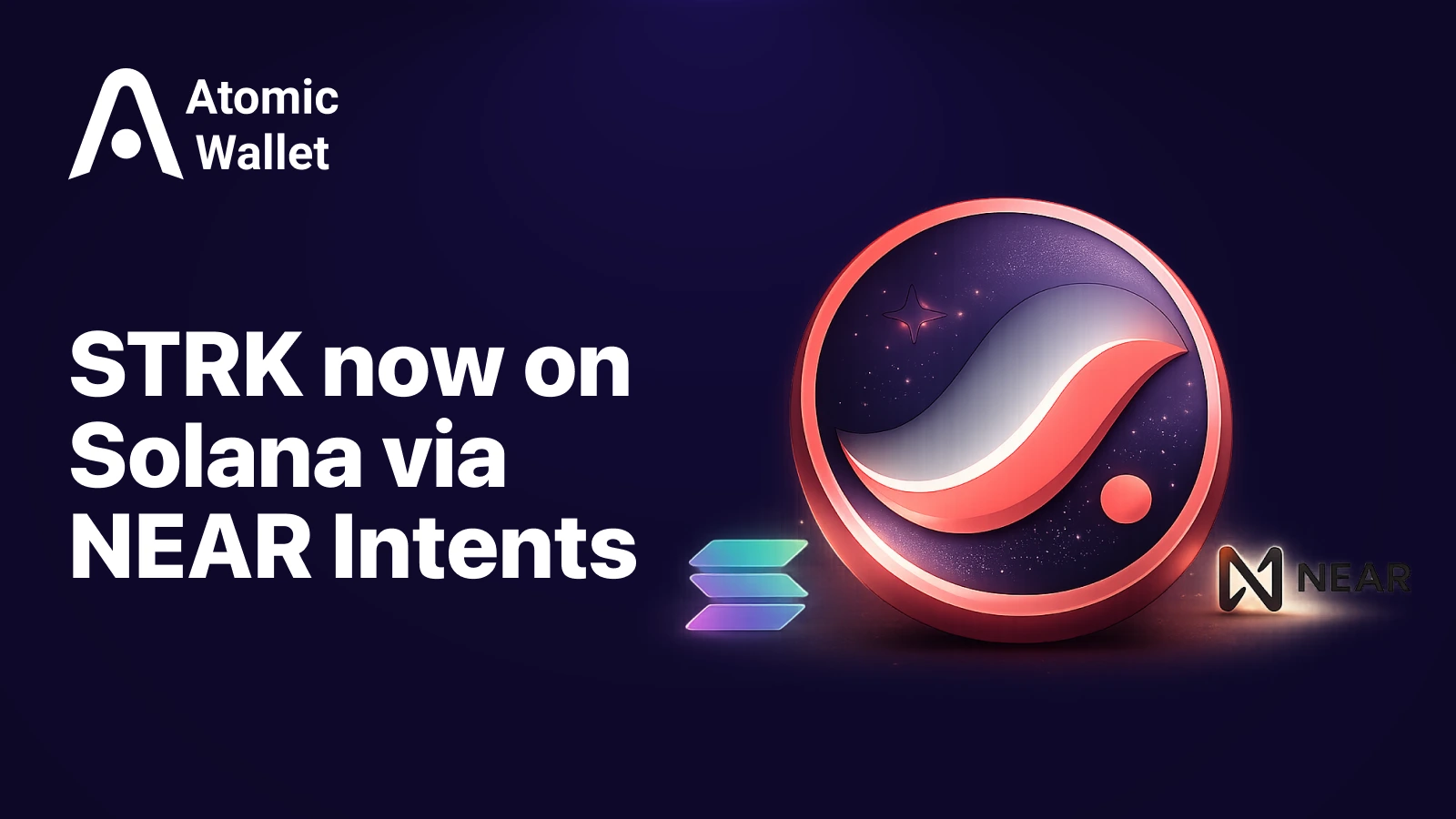
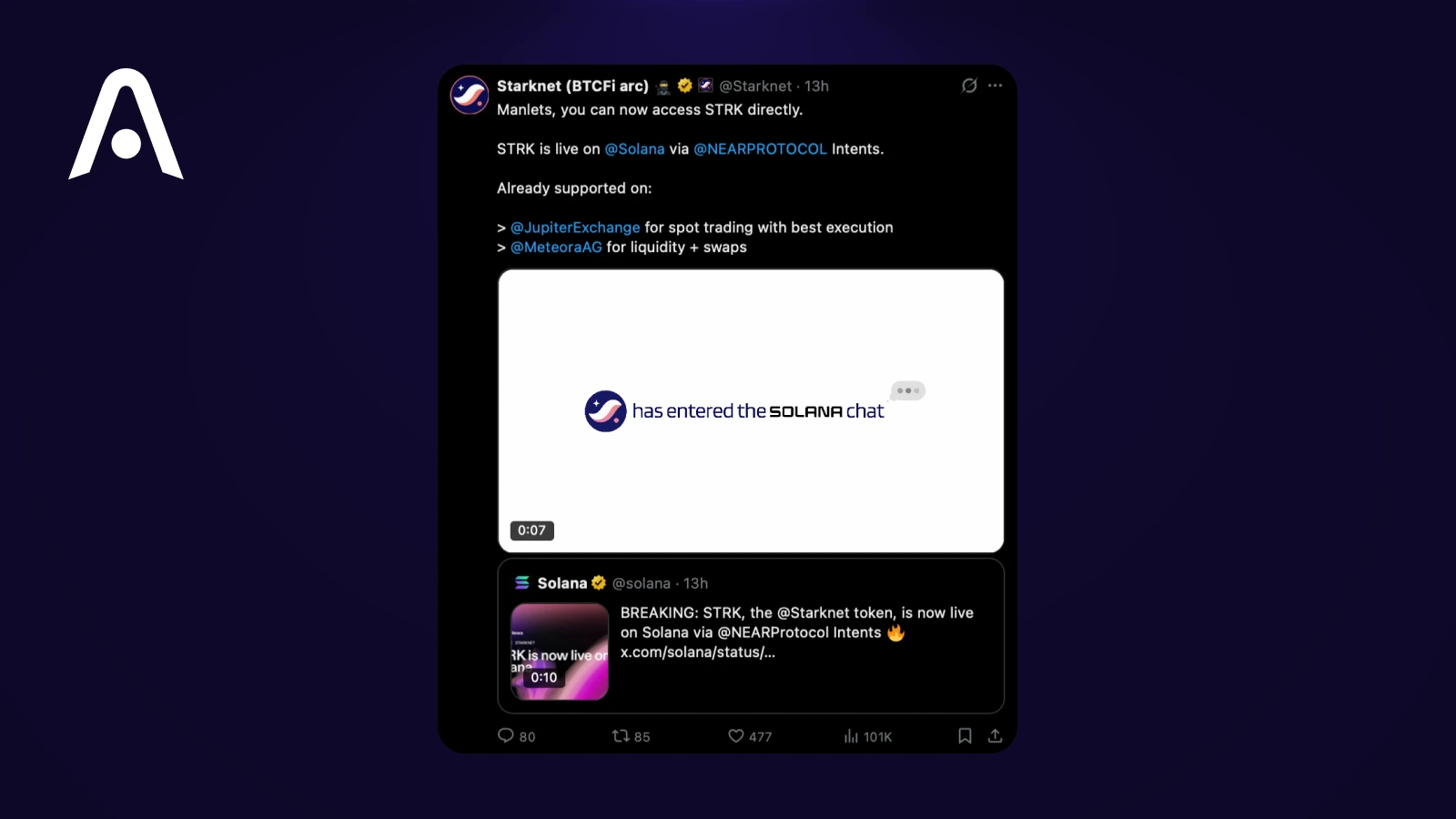
The announcement that STRK is now live on Solana does not mean Starknet migrated, relaunched, or abandoned Ethereum. What changed is access. Through an intent-based interoperability layer, STRK can now be used by Solana users without forcing them into Ethereum L2 tooling.
In practical terms, this means the STRK becomes reachable from outside its original environment. Execution happens where users already are, while Starknet remains the origin network. It is a distribution shift, not a chain war—and it directly addresses one of the main critiques behind the meme.
How NEAR Intents Connect Starknet and Solana
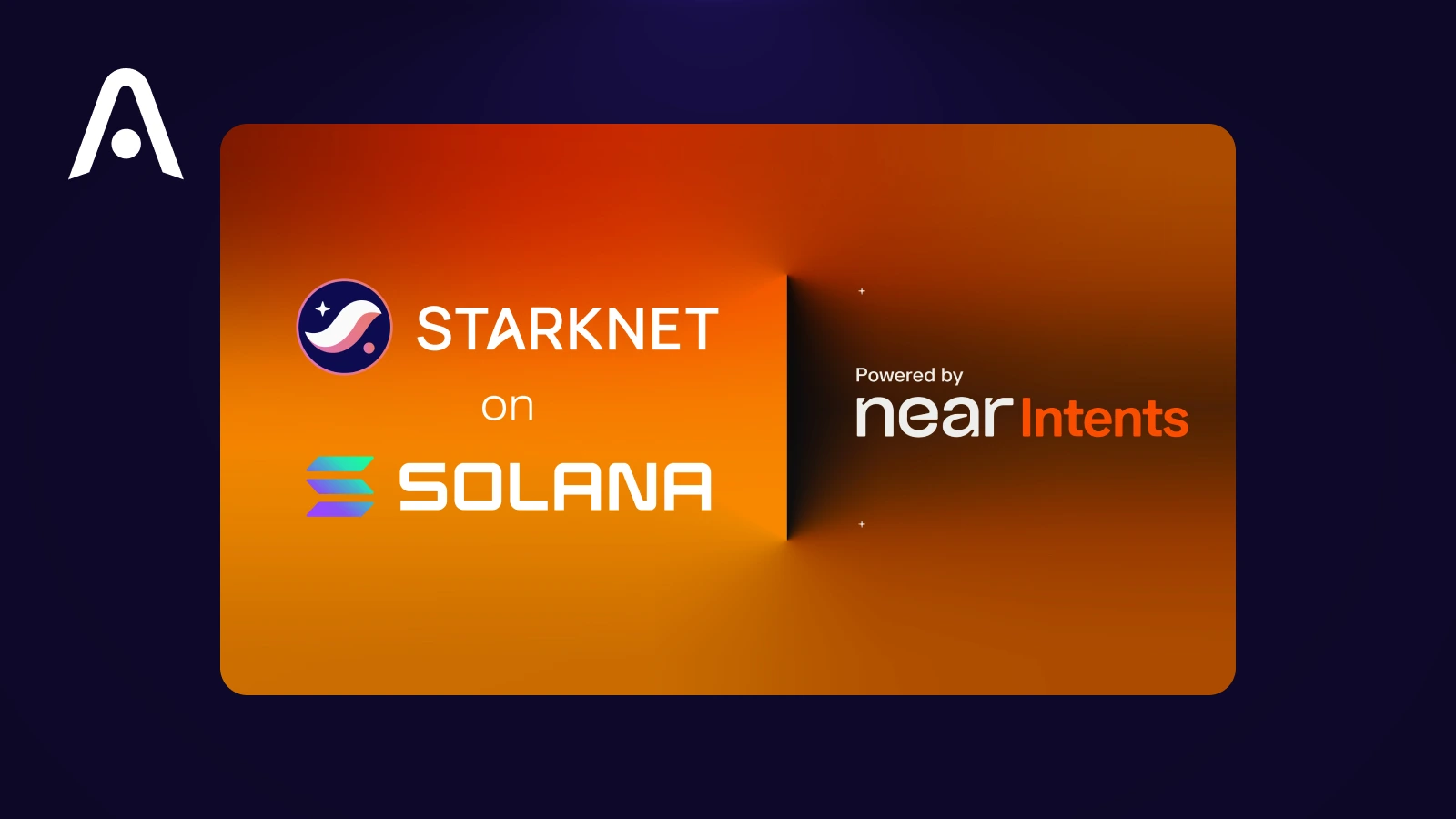
The bridge between Starknet and Solana in this case is not a traditional bridge, but an intent-based model built by NEAR Protocol. Intents allow users to express what they want to do—swap, transfer, interact—without caring where the liquidity or execution actually lives.
NEAR acts as an interoperability layer that routes these intents across ecosystems. For Solana users, this removes the need to understand Ethereum L2 UX, bridges, or Cairo-specific tooling. For Starknet, it means access to users and liquidity without forcing a change to its core architecture. The complexity is abstracted away, which is exactly where Starknet has historically struggled.
Why This Matters More Than the Meme
The meme focused on who was using Starknet yesterday. This update is about who can use it tomorrow. By making STRK accessible from Solana’s execution environment, Starknet expands its distribution surface without abandoning its ZK-first design.
This directly weakens the “nobody uses Starknet” argument. Usage is no longer constrained by Ethereum-only UX or developer-native flows. Instead of competing with Solana for users, Starknet can now tap into Solana’s liquidity and activity while continuing to build infrastructure in the background.
Starknet vs Solana — Not a Zero-Sum Game
Solana and Starknet address different challenges within the blockchain stack. Rather than competing for the same role, they specialize in separate layers that can work together as cross-ecosystem interoperability becomes more common.
Managing STRK Across Ecosystems
As tokens move across ecosystems, self-custody and asset control become more important, not less. Managing STRK alongside assets from different networks requires tools that support multi-chain access without locking users into a single execution environment.
Atomic Wallet provides a non-custodial way to manage STRK and other multi-ecosystem assets, helping users interact with emerging interoperability models while maintaining full control over their funds.