What Is a Honeypot in Crypto? How to Spot a Honeypot Token
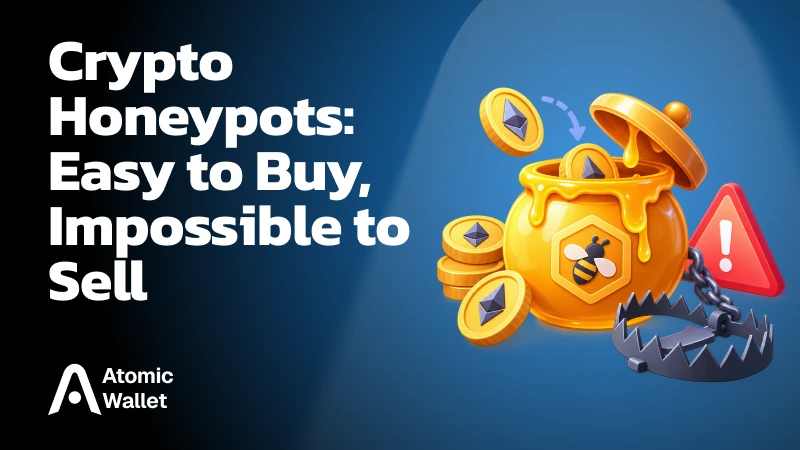
A honeypot in crypto is a scam designed to let users buy a token or deposit funds while making it impossible — or deliberately expensive — to get their money back out.
The most common version is a honeypot token. Its smart contract allows normal wallets to buy, but selling may fail, trigger an extreme fee, or work only for privileged addresses controlled by the scammer. Its the same basic pattern: users can enter the position, but the contract or wallet mechanics prevent a normal exit.
That makes honeypots different from an ordinary token crash. The defining problem is not that the price falls — it is that the exit itself is manipulated.
How Does a Crypto Honeypot Work?
A token honeypot creates an asymmetric market: buying works normally, while selling follows different rules.
A scammer launches a token and provides enough liquidity for trading to begin. Buyers can swap ETH, BNB, SOL, or another asset for the token, so the market initially appears functional.
The problem only becomes obvious when they try to leave. Malicious contract logic may reject the sell transaction, blacklist the buyer after purchase, or impose a sell tax so high that almost nothing can be recovered. Some contracts exempt the deployer or selected wallets from those restrictions, allowing the scammers to sell while everyone else remains trapped.
Honeypot scams can operate like automated factories. CertiK traced one operation that funded 979 wallets used to deploy honeypot tokens in just over two months, with some scam campaigns creating a new contract as often as every 30 minutes.
And seeing a few successful sells onchain does not necessarily prove the token is safe. Those transactions may come from the deployer, whitelisted addresses, or other wallets that are exempt from the restrictions.
The key question is therefore not “Has anyone sold this token?” but “Can an ordinary wallet buy it and then sell it under the same rules?”
How Honeypot Tokens Block You From Selling
Honeypot tokens usually trap buyers by using smart-contract permissions that treat selling differently from buying.
The exact mechanism varies by token and blockchain, but four patterns are especially common:
- Sell blocking — The contract detects transfers to a liquidity pool or DEX router and causes the transaction to fail
- Blacklist or whitelist rules — Ordinary buyers can be blocked from selling while the deployer or selected wallets remain exempt
- Extreme or changeable sell taxes — A sale may technically succeed, but a 90–100% fee leaves the holder with almost nothing; mutable settings can also let the owner raise the tax after trading begins
- Transfer controls — Pauses, transaction limits, cooldowns, or other conditions can make a normal exit effectively impossible
CertiK has documented honeypots that use blacklist logic as well as more unusual balance-manipulation techniques designed to make holders’ tokens unsellable.
The implementation also depends on the blockchain. On EVM networks such as Ethereum or BNB Chain, malicious restrictions are often embedded directly in token-contract logic. On Solana, relevant controls can include freeze authorityor Token-2022 extensions such as transfer hooks and configurable transfer behavior. These features are not inherently malicious, but they are important permissions to understand before buying an unfamiliar token.
How to Spot a Honeypot Before Buying
The best time to detect a honeypot is before the first swap, by checking whether an ordinary wallet can exit and whether the token owner can change the rules later.
Use several checks together:
- Verify the exact contract or mint address — Token names and tickers can be copied, so confirm the address through an official project source
- Simulate a buy and sell — A honeypot checker can test whether a normal round trip succeeds without risking real funds
- Inspect privileged permissions — Look for owner functions that can change taxes, blacklist wallets, pause transfers, mint supply, or upgrade contract logic
- Check real seller activity — Look for unrelated wallets that bought and later sold successfully, not just deployer or privileged addresses
- Review liquidity and holder concentration — A token can pass a sell test and still carry separate rug-pull risk if insiders control most of the supply or liquidity
A single green signal is not enough. A verified contract, visible liquidity, successful sells, or a clean scanner result each answer only part of the question.
Even the holder list can be manipulated. Ethereum.org documented a scam token that sent about 16% of its supply to the real Arbitrum Foundation deployer address, making its holder distribution appear more legitimate.
The goal is not merely to prove that selling works now — it is to understand who can change whether selling works tomorrow.
Can Honeypot Checkers Be Trusted?
Honeypot checkers are useful screening tools, but a clean result only shows that the token passed the checks performed under its current contract state.
A typical checker simulates a buy and sell, estimates transaction taxes, and looks for restrictions that would prevent an ordinary wallet from exiting. If the simulated sell fails, that is an obvious warning sign.
The harder problem is what can happen after the scan. A token owner may still be able to:
- Increase the sell tax
- Blacklist new wallets
- Pause or restrict transfers
- Change privileged contract parameters
- Upgrade contract logic through a proxy
- Activate external logic that was not triggered during the simulation
This means a result such as “Not a honeypot” is not a permanent safety certificate. It means the scanner did not detect a honeypot under the conditions it tested at that moment.
Use a checker as one layer of due diligence, then inspect owner permissions, contract upgradeability, liquidity, and real buy-to-sell activity separately.
Honeypot vs. Rug Pull
A honeypot primarily traps holders by restricting their exit, while a rug pull extracts value by removing liquidity, dumping insider supply, or abusing privileged control.
The two scams can overlap. A malicious project can prevent ordinary holders from selling and later withdraw liquidity or dump insider-controlled tokens.
A useful shorthand is: a honeypot locks the exit; a rug pull removes the value behind it.
For a deeper breakdown of liquidity pulls, insider dumps, and contract-based rugs, see our guide to rug pulls in crypto.
What Is a Crypto Wallet Honeypot?
A wallet honeypot tricks users with a seed phrase or private key for a wallet that appears to contain valuable crypto, then steals the gas they send in trying to withdraw it.
A typical version looks surprisingly tempting: someone publicly posts the recovery phrase for a wallet containing USDT or another valuable token. Anyone can import the wallet and see the balance, but there is not enough ETH, BNB, or another native asset to pay the transaction fee.
The victim sends a small amount of crypto for gas. That deposit is then automatically swept to another address, often before the victim can make the intended transfer. Other variants use multisig requirements or token restrictions that make the displayed assets impossible to move. Binance documents all of these patterns in its current honeypot guidance.
The trap works because the exposed seed phrase creates the illusion of access. In reality, a seed phrase posted publicly should be treated as compromised from the start — not as free money waiting to be claimed.
What to Do If You Bought a Honeypot Token
If you are trapped in a honeypot, stop sending more funds and focus on protecting the rest of your wallet rather than trying to force the token to sell.
Take these steps:
- Do not buy more tokens — Adding funds will not fix malicious sell restrictions
- Do not pay an “unlock,” “tax,” or recovery fee — Scammers may use the trapped position to demand another payment
- Stop interacting with suspicious dApps or contracts — Do not sign new transactions promising migration, refunds, or withdrawals
- Check token approvals — If you approved a suspicious contract to spend other assets, revoke permissions that are no longer needed
- Save evidence — Keep the contract address, transaction hashes, wallet addresses, screenshots, websites, and messages
- Report the scam — Reporting addresses and domains can help warning systems, platforms, and investigators identify related activity
Disconnecting a wallet from a website is not the same as revoking an approval. Ethereum.org notes that an existing token allowance can remain usable until it is explicitly revoked, potentially even years later.
Be especially cautious after the loss. The FTC warned again in August 2026 that recovery scammers actively target previous scam victims, often posing as government agencies, law firms, or recovery specialists and asking for an upfront fee.
If someone says they can definitely recover trapped crypto after you pay them first, that is another major warning sign.
Managing unfamiliar tokens starts with keeping control of your own keys. Get Atomic Wallet to manage crypto in one self-custody wallet — and always verify a token before you swap or interact with it.