What Is a Rug Pull in Crypto? Meaning, Red Flags and How to Avoid One
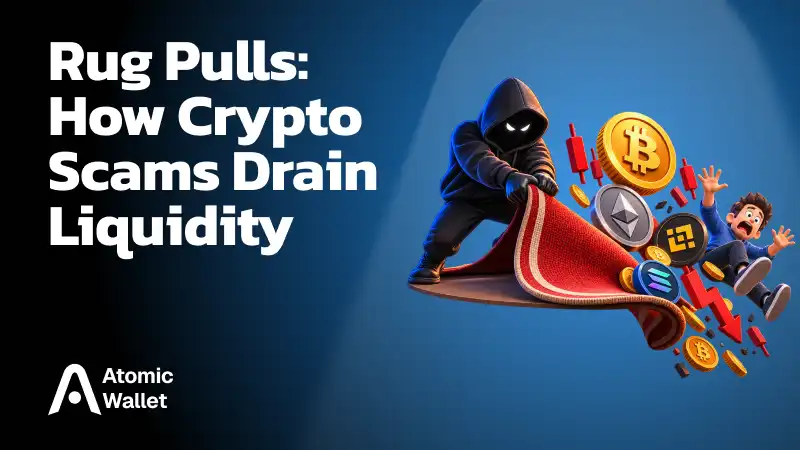
A rug pull is a crypto scam in which insiders use control over a token, its liquidity, supply, or contract rules to extract value from buyers and leave them with an asset that may be difficult or impossible to sell.
The important distinction is intent. A token losing 90% of its value does not automatically make it a rug pull. Markets can collapse because demand disappears, liquidity dries up, or a project simply fails. The term applies when insiders deliberately use privileged control to take value from other holders.
Rug pulls are especially associated with new tokens and decentralized exchanges, where a token can be created and paired with assets such as ETH or BNB without the same listing process used by centralized exchanges. The exit can happen suddenly through drained liquidity or malicious contract code, or more gradually as insiders unload a concentrated token supply.
What Is a Rug Pull in Crypto?
A crypto rug pull happens when the people behind a project create or exploit an exit route that benefits insiders at the expense of other token holders.
A common setup starts with a new token and a liquidity pool on a decentralized exchange. Buyers swap a valuable asset such as ETH for the new token, increasing the assets held in the pool. If the creators still control the liquidity, they may later withdraw those assets and leave holders with tokens that have little or no usable market.
But draining liquidity is only one form of a rug pull. Developers may also control a large share of the supply and dump it into the market, create new tokens through hidden minting permissions, or use smart-contract rules that restrict other holders from selling.
Rug pulls are often divided into two broad categories:
- Hard rug pull — Malicious functionality is built into the smart contract, such as blocking sells, creating unlimited tokens, or giving insiders a direct way to withdraw funds
- Soft rug pull — The contract itself may work normally, but insiders use their token allocation or market control to sell aggressively and extract liquidity from other holders
That difference matters because a token can have clean-looking code and still carry serious rug-pull risk if a few connected wallets control most of the supply or liquidity.
How Do Crypto Rug Pulls Work?
Rug pulls usually extract value in one of three ways: removing liquidity, dumping insider-controlled supply, or using contract rules that prevent other holders from exiting normally.
The mechanics differ, but the advantage is the same: insiders control something ordinary buyers do not.
A token can also combine several mechanisms. For example, insiders can hype a token, restrict normal holders from selling, and later withdraw the remaining liquidity.
This is why one reassuring signal is never enough. Locked liquidity may prevent a classic liquidity pull, but it does not stop insiders from dumping a concentrated token supply or abusing contract permissions.
Some rug pulls barely survive a trading session. In CertiK’s Ethereum dataset, 55% of identified rug-pull tokens completed their lifecycle in less than three hours.
Rug Pull vs. Honeypot vs. Pump and Dump
Rug pulls, honeypots, and pump-and-dumps can produce similar charts, but they describe different ways buyers become trapped or lose value.
A honeypot can also be part of a rug pull. Some malicious contracts let the price keep rising because buyers can enter while ordinary wallets cannot sell; the scammers can then exit under rules that do not apply equally to everyone.
The distinction matters because a collapsing price alone is not evidence of a rug pull. Poor execution, disappearing demand, or a failed product can destroy a token without deliberate insider extraction. A rug pull describes the mechanism behind the loss, not simply how far the chart fell.
How to Spot a Rug Pull Before Buying
The strongest rug-pull warning signs usually appear in liquidity control, token distribution, and smart-contract permissions — not in the price chart itself.
Before buying an unfamiliar token, check several layers of risk rather than relying on one reassuring signal:
- Can holders actually sell? — Honeypot contracts may allow purchases while blocking sells or applying extreme sell fees
- Who controls the liquidity? — Check whether LP tokens are locked or burned, how much liquidity is covered, and when any lock expires
- Who controls the supply? — A few team or connected wallets holding a large share of tokens can dump into public liquidity
- Can more tokens be created? — Active mint permissions can allow insiders to increase supply and dilute other holders
- Can transfers be restricted? — Admin functions may allow wallets to be blacklisted, frozen, or subjected to changing transaction rules
- Does the contract match the project’s claims? — A verified contract address is useful, but verified code does not mean the token is safe
- Has the contract been independently reviewed? — An audit can expose technical risks, but it cannot prevent insiders from abusing powers that were intentionally left in the contract
Liquidity locks deserve particular attention. They can make a classic liquidity pull harder, but locked liquidity does not protect against every rug-pull mechanism. A team with a concentrated token allocation may still dump into the pool, while privileged contract functions can create entirely different exit routes. Binance similarly lists unlocked liquidity, concentrated holdings, and malicious contract permissions as separate risk factors.
The practical rule is simple: one green flag does not make a token safe. A long liquidity lock, an audit, a doxxed team, or a large holder count should be treated as one piece of evidence, not proof that a project cannot rug.
Real Rug Pull Example: SQUID Token
The 2021 SQUID token showed why a rapidly rising price can be meaningless when ordinary holders cannot freely exit the market.
SQUID launched at around $0.01 and attracted enormous attention by borrowing the theme of Netflix’s Squid Game, despite having no official connection to the show. Within days, the token climbed into the hundreds of dollars and eventually appeared to reach $2,861.80.
There was a major warning sign before the collapse: CoinMarketCap had already received reports that holders were unable to sell SQUID on PancakeSwap. The project used an “anti-dumping” mechanism that required another token, Marbles, to unlock selling, leaving many buyers effectively trapped while the displayed price continued rising.
On November 1, 2021, SQUID fell from about $2,861.80 to $0.0007926 in roughly five minutes — a drop of more than 99.99%. The project’s website and social channels subsequently went offline or inactive, and CoinMarketCap described the event as a classic sign of a rug pull.
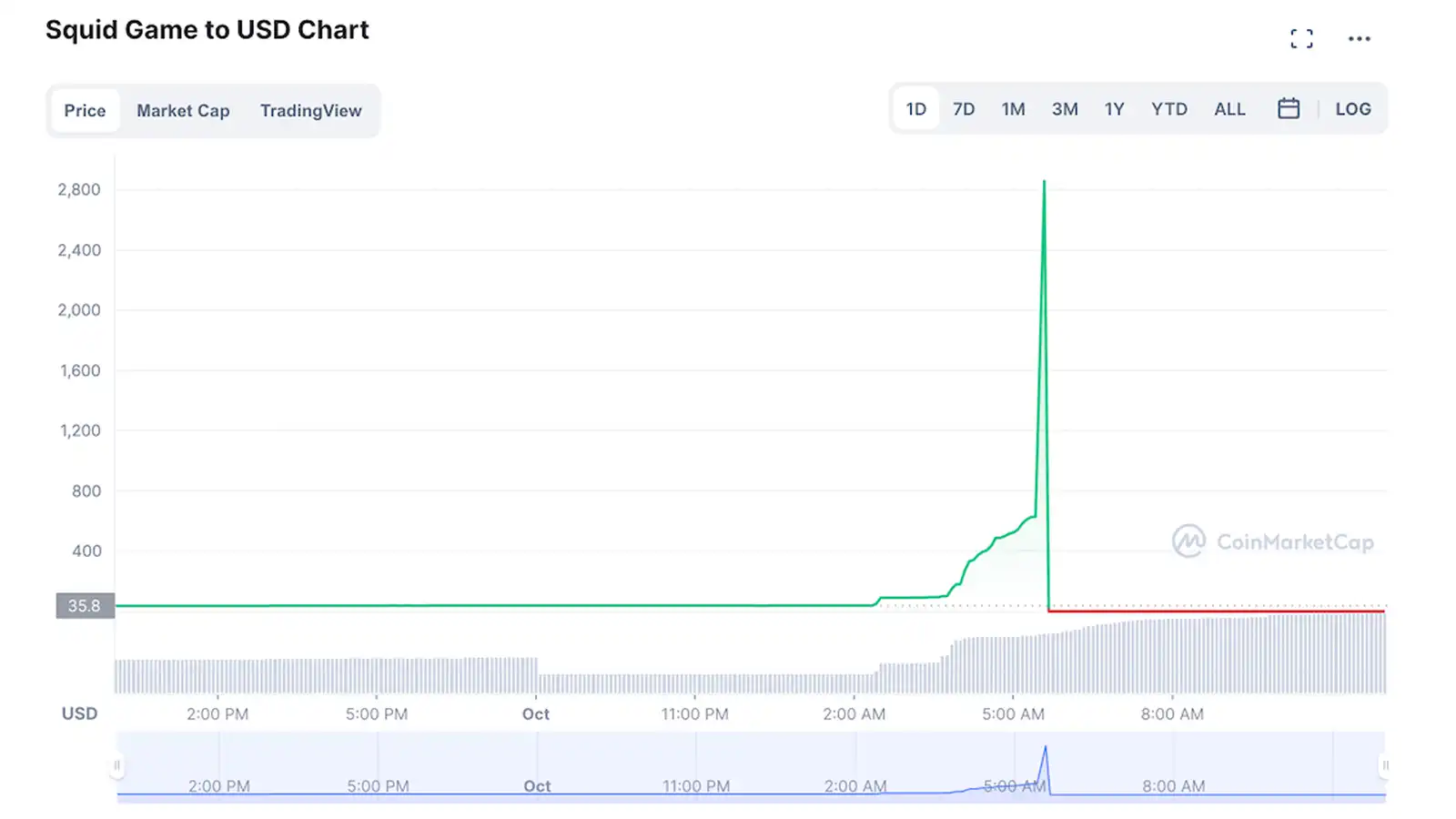
The lesson is more useful than the headline price move: a chart can keep rising even when the market underneath it is broken. Before treating price, volume, or social hype as evidence of demand, buyers need to know whether the token can actually be sold under normal conditions.
What to Do If You Get Rug Pulled
Crypto sent into a completed rug pull may be difficult or impossible to recover, but acting quickly can still help protect the rest of your wallet and preserve evidence.
If you suspect a project has rugged:
- Stop interacting with the token or project website — Do not sign new transactions, connect to “migration” pages, or follow recovery links posted in compromised channels
- Check and revoke token approvals — If you granted the project’s contracts permission to spend other assets, revoke unnecessary allowances. Simply disconnecting a wallet from a dApp does not remove existing token approvals.
- Save on-chain evidence — Keep transaction hashes, contract addresses, wallet addresses, screenshots, and links to project communications
- Report the scam — Depending on your jurisdiction, reports can be submitted to relevant law-enforcement, financial, or consumer-protection authorities
- Watch for recovery scams — Fraudsters often approach previous scam victims promising to retrieve lost crypto for an upfront fee
That last risk is especially important. In August 2026, the U.S. Federal Trade Commission again warned that scammers specifically target people who have already lost money and may impersonate government agencies, law firms, or recovery services. The FTC advises against paying anyone who unexpectedly promises to recover lost funds for a fee.
Revoking approvals cannot reverse a completed rug pull, but it can matter if a malicious contract still has permission to move other tokens from your wallet.
A secure wallet is only one part of crypto safety. Self-custody gives you control over your private keys, but it cannot make a malicious token or smart contract safe.
With Atomic Wallet, you can manage crypto without giving a third party custody of your funds — but unfamiliar tokens should still be researched and verified before you swap, hold, or interact with them.