What Is a Seed Phrase? How to Protect Your Crypto Wallet
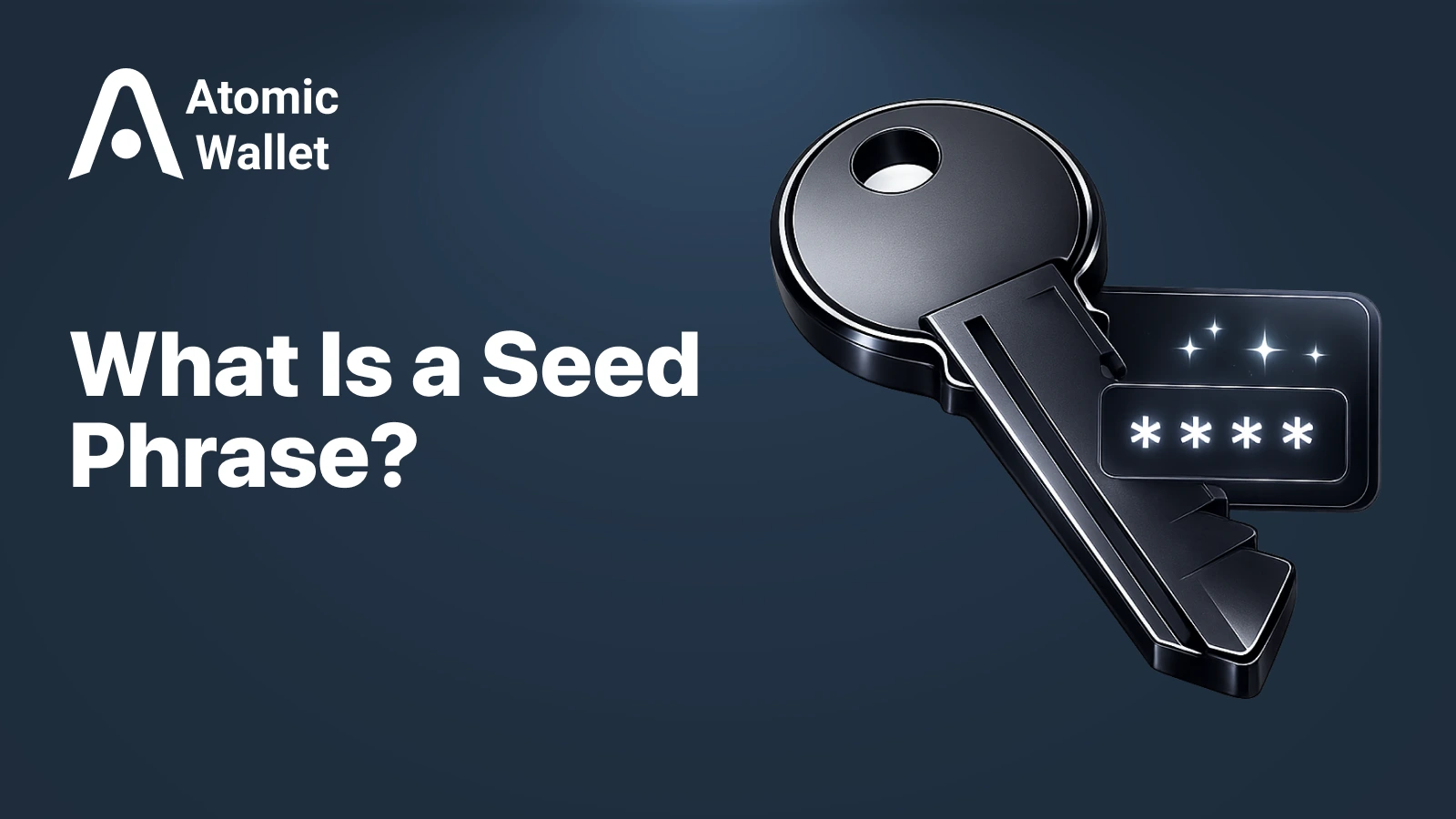
Every self-custody crypto wallet is built around one critical element: the seed phrase.
Whether you own Bitcoin, Ethereum, stablecoins, or thousands of other digital assets, your seed phrase is the master key that protects your wallet. It is the only backup that can restore access to your funds if your device is lost, damaged, or replaced. At the same time, anyone who obtains your seed phrase can gain complete control of your crypto.
Understanding how a seed phrase works is one of the most important steps toward keeping your digital assets secure.
This guide explains what a seed phrase is, how it works, how it differs from a private key, and the best practices for storing and protecting it.
What Is a Seed Phrase?
A seed phrase is the master backup for your entire crypto wallet.
Also known as a recovery phrase or mnemonic phrase, a seed phrase is a sequence of 12 to 24 randomly generated words created when you set up a self-custody wallet. Rather than storing your cryptocurrencies directly, it represents the master secret from which all of your wallet’s private keys are generated.
Because every wallet address and private key is derived from this phrase, entering the same seed phrase into another compatible wallet recreates the exact same accounts, balances, and transaction history. It doesn’t matter whether your phone is lost or your computer stops working—your seed phrase allows you to restore access from virtually any compatible wallet.
Some of the key characteristics of a seed phrase include:
- also called a recovery phrase or mnemonic phrase
- generated automatically when creating a crypto wallet
- used to recover access to your wallet and funds
- represents all associated private keys
- must always be kept private and stored securely
How a Seed Phrase Works
One short list of words is enough to recreate your entire wallet.
Although a seed phrase looks simple, it is the starting point for all of the cryptographic keys that control your digital assets. When a wallet is created, it generates a random seed phrase that is mathematically converted into a master seed. From that master seed, the wallet derives every private key and public address you use across supported blockchains.
Because this process is deterministic, the same seed phrase will always generate the same wallet. This is why entering your recovery phrase into a compatible wallet restores your balances and addresses exactly as they were before.
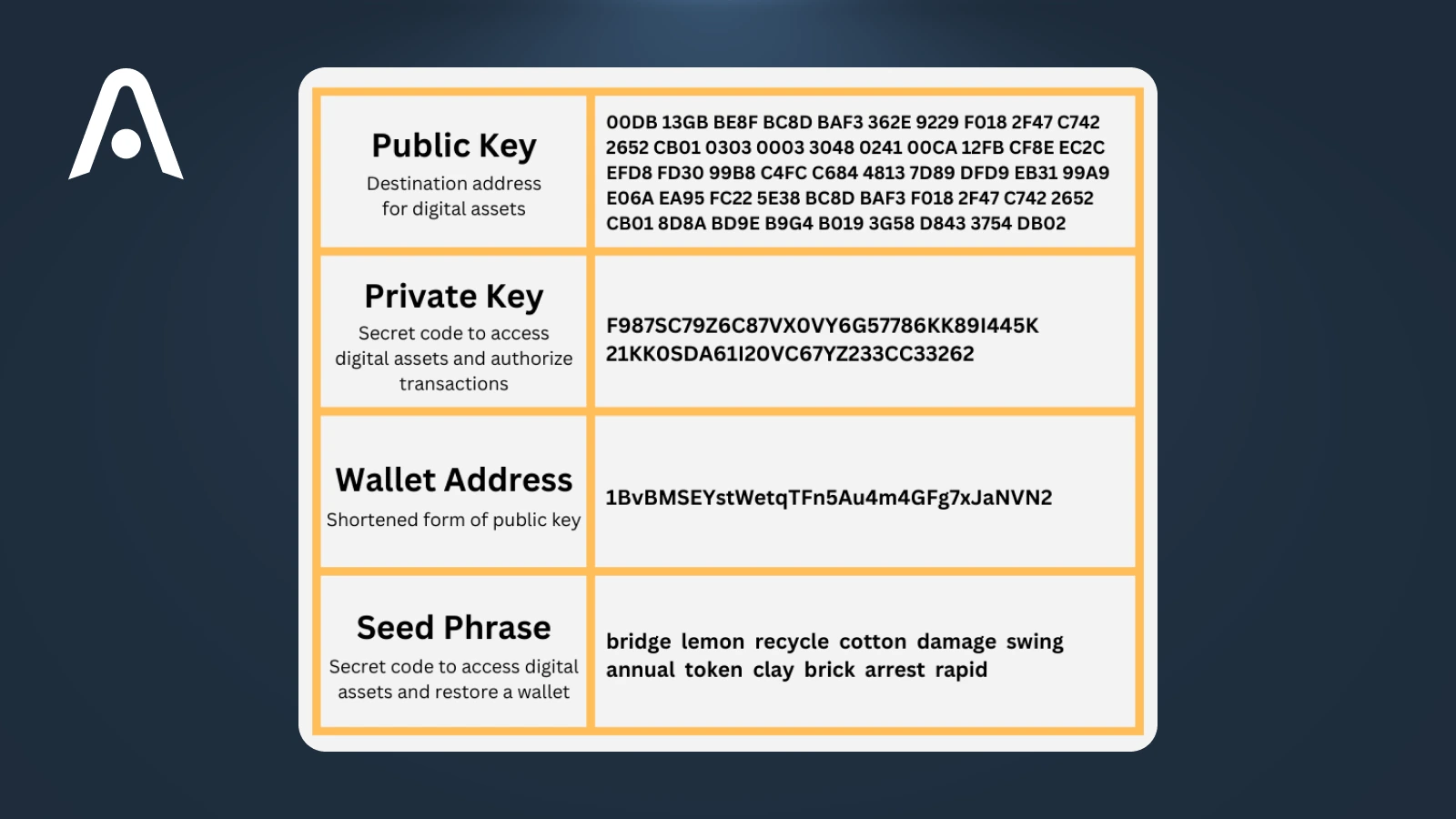
Seed Phrase vs Private Key
A seed phrase and a private key are closely related, but they are not the same thing.
Many beginners assume these terms are interchangeable. In reality, a seed phrase acts as the master backup for the entire wallet, while private keys control individual blockchain addresses and authorize transactions.
The difference is easier to understand side by side:
In simple terms, your seed phrase protects your entire wallet, while private keys protect individual accounts within that wallet. Most modern wallets manage private keys automatically, allowing users to back up everything with a single recovery phrase.
Why a Seed Phrase Is Important
Your seed phrase is the only backup that truly matters.
Unlike passwords, email recovery, or two-factor authentication, a seed phrase gives you complete ownership of your crypto wallet. As long as you have your recovery phrase, you can restore access to your funds from a compatible wallet—even if your phone is lost, your computer fails, or the wallet application is no longer available.
This is one of the defining features of self-custody.
Instead of relying on a company to manage your assets, you remain in full control. That freedom comes with responsibility, because there is no central authority that can recover your wallet if the seed phrase is lost.
A seed phrase is important because it:
- enables wallet recovery if your device is lost or damaged
- gives you full ownership and control of your funds
- works across compatible wallet applications
- removes dependence on centralized services
- protects long-term access to your crypto
What Happens If You Lose Your Seed Phrase?
Without your seed phrase, there is usually no way to recover your wallet.
Many newcomers assume they can reset a recovery phrase like an email password. Cryptocurrency wallets do not work that way.
If you lose your seed phrase but still have access to your wallet, you should immediately create a secure backup. However, if both your wallet and your recovery phrase are lost, your crypto is effectively inaccessible forever.
This is because blockchain networks are decentralized.
There is no customer support team, password reset process, or central organization capable of restoring access to your wallet. The seed phrase is the only universal backup for your digital assets.
For that reason, creating and protecting a reliable backup should be one of the very first steps after setting up any self-custody wallet.
What Happens If Someone Gets Your Seed Phrase?
Anyone who knows your seed phrase can control your wallet.
A seed phrase is not simply a backup—it is the master key to your crypto assets. If another person obtains it, they can import your wallet onto their own device, access all associated addresses, and transfer your funds without needing your password or physical phone.
Blockchain transactions are generally irreversible.
Once stolen assets have been moved to another wallet, they usually cannot be recovered. That is why protecting your seed phrase is far more important than protecting the device you use every day.
Never share your recovery phrase with:
- customer support representatives
- websites asking you to “verify” your wallet
- airdrop or giveaway pages
- messaging apps or social media contacts
- anyone claiming they need it to solve a technical problem
A legitimate wallet provider will never ask for your seed phrase.
How to Store a Seed Phrase Safely
The safest seed phrase is one that stays offline and under your control.
Because your recovery phrase provides complete access to your wallet, storing it securely is just as important as creating it. The goal is to protect it from theft, accidental loss, fire, water damage, and hardware failure.
Good security practices include:
- writing the seed phrase on paper and storing it offline
- using a metal backup plate for fire and water resistance
- keeping backup copies in separate secure locations
- storing the phrase in a safe or safety deposit box
- ensuring only you or trusted heirs can access it
The fewer digital copies that exist, the lower the risk of malware, phishing attacks, cloud breaches, or unauthorized access exposing your wallet.
What NOT to Do With Your Seed Phrase
Most seed phrase compromises happen because users unknowingly expose them.
Convenience often creates unnecessary risk. Saving a recovery phrase on an internet-connected device may seem harmless, but it significantly increases the chances of theft through malware, phishing, or unauthorized access.
To reduce that risk, avoid the following practices:
- do not store your seed phrase in cloud storage or email
- do not take screenshots or photos of it
- do not save it in your phone’s notes app
- do not share it with anyone, including people claiming to be customer support
- do not paste it into websites, forms, or unknown applications
If your seed phrase is ever requested online, you should assume something is wrong.
Common Seed Phrase Scams
Most crypto theft doesn’t begin with hacking—it begins with deception.
Scammers know that stealing a recovery phrase is often easier than breaking modern cryptography. Instead of attacking the blockchain, they target users through fake websites, social engineering, and convincing impersonation attempts.
Some of the most common scams include:
- phishing websites that imitate popular wallet providers
- fake airdrops asking you to “connect” or “verify” your wallet
- impersonators pretending to be customer support
- malicious browser extensions and fake wallet apps
- direct messages claiming your wallet needs to be restored or repaired
The safest rule is simple: your seed phrase should only ever be entered into a trusted wallet during the legitimate wallet recovery process. If anyone or anything else asks for it, treat it as a scam.
Can You Recover or Change a Seed Phrase?
A seed phrase cannot be reset or changed like a password.
Many first-time crypto users assume they can generate a new recovery phrase for an existing wallet. In reality, the seed phrase is permanently tied to the wallet created from it.
If you still have your seed phrase, you can restore your wallet on another compatible device at any time. However, if you believe your recovery phrase has been exposed, the safest solution is to create a brand-new wallet with a new seed phrase and transfer all of your assets to the new addresses.
Without the original seed phrase, recovery is generally impossible.
Protect Your Crypto with Secure Wallet Storage
Your seed phrase protects your wallet—but your security habits protect your seed phrase.
Keeping your recovery phrase offline, creating reliable backups, and never sharing it with anyone are among the most effective ways to safeguard your digital assets.
A trusted self-custody wallet gives you complete control over your crypto, while following seed phrase best practices helps ensure that control remains yours for years to come.
Conclusion
In crypto, ownership comes with responsibility.
Banks can reset passwords. Online services can recover accounts. A self-custody wallet works differently.
Your seed phrase is the single piece of information that gives you complete control over your crypto assets. Protect it carefully, store it securely, and never share it with anyone.
By understanding how seed phrases work and following proven security practices, you greatly reduce the risk of losing access to your wallet or falling victim to common crypto scams.
The best security starts with protecting the one thing that protects everything else: your seed phrase.