What Is Grass? The DePIN Network Powering AI Data
Millions of people use the internet every day, but most never realize they’re paying for a resource they rarely use to its full capacity: unused internet bandwidth.
Grass turns that unused bandwidth into something valuable. Instead of letting it sit idle, users can contribute a portion of their connection to the Grass Network and earn rewards while helping build decentralized infrastructure for artificial intelligence.
As AI companies demand more high-quality web data, Grass is positioning itself as one of the largest Decentralized Physical Infrastructure Networks (DePIN), connecting millions of users with the growing AI economy.
What Is Grass?
Grass is a DePIN project that rewards users for sharing unused internet bandwidth with a decentralized network.
After installing the Grass app on a desktop or mobile device, users contribute only the bandwidth they are not actively using. That bandwidth allows verified organizations to access publicly available web content from different geographic locations, helping them collect data for AI models, market research, and other enterprise applications. Grass states that it does not access users’ browsing history, passwords, files, or other personal data.
Participants earn Grass Points for contributing to the network, which may translate into ecosystem rewards. At the center of the protocol is the GRASS token, which supports staking, governance, network incentives, and future onchain settlement as the ecosystem expands.
How Does Grass Work?
Grass transforms unused internet bandwidth into valuable data infrastructure for AI.
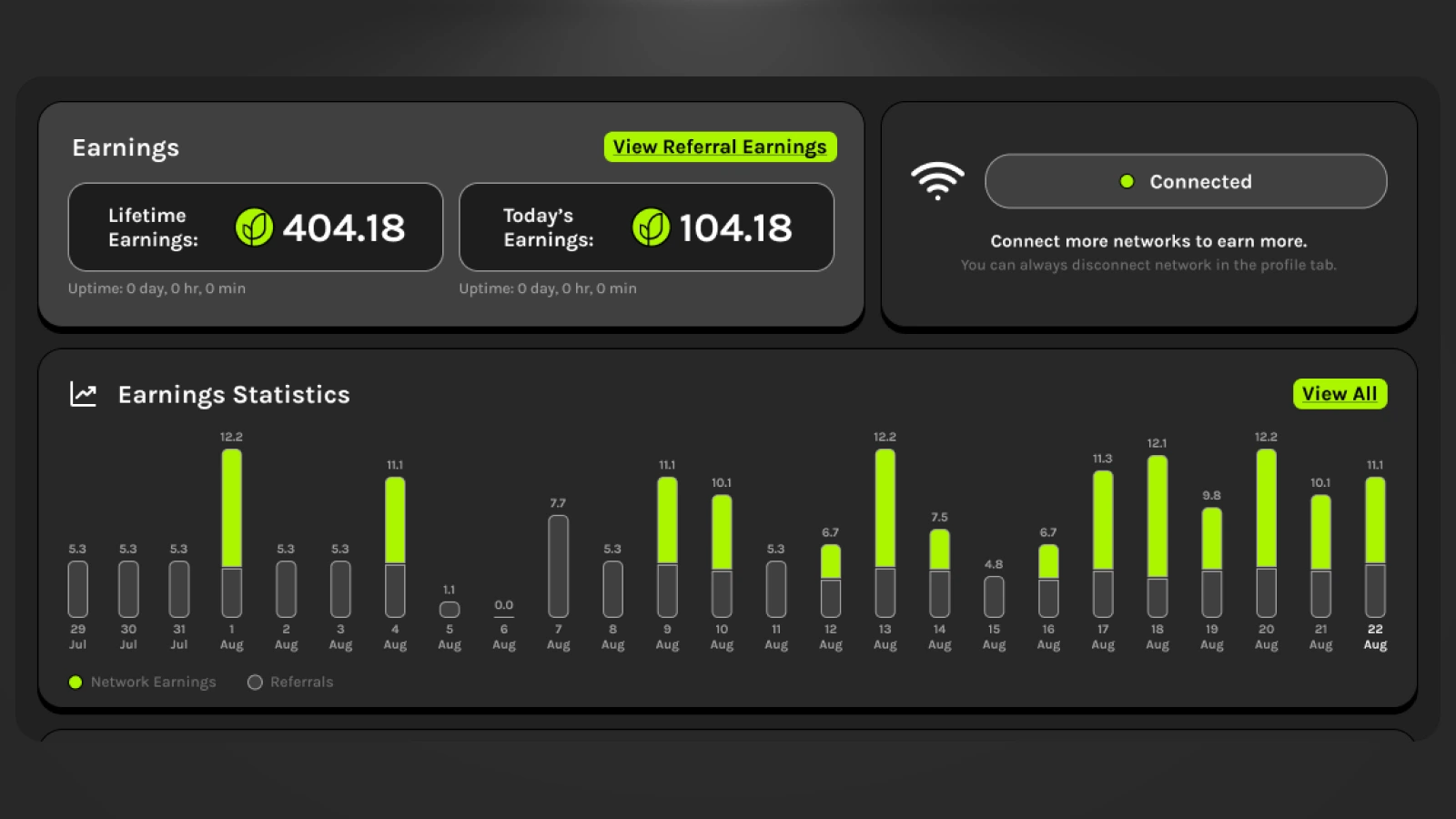
After installing the Grass app, users share only the portion of their internet connection that would otherwise remain idle. Verified organizations use that bandwidth to access publicly available web content from different locations around the world. The collected data is then organized into structured datasets that support AI training, research, search technologies, and enterprise applications.
Your participation is tracked through Grass Points, which measure your contribution to the network. These points are one of the factors used when determining future GRASS token distributions. Grass states that it never accesses your browsing history, passwords, files, or other personal information.
Why AI Companies Use Grass
AI models require enormous amounts of fresh, high-quality data—and Grass helps deliver it at scale.
Instead of relying on a handful of centralized providers, Grass gives organizations access to a globally distributed network capable of collecting publicly available web data from many regions simultaneously. This makes it easier to build diverse datasets while improving transparency around data provenance.
Grass is expanding beyond traditional web scraping into broader AI infrastructure. The network is developing Live Context Retrieval (LCR), designed to provide AI systems with real-time web context, while continuing to grow its multimodal data repository for next-generation AI models.
What Is the GRASS Token?
GRASS is the native utility token that powers the Grass ecosystem.
The token is designed to align incentives between users, routers, validators, and organizations using the network. As Grass evolves, GRASS is expected to play an increasingly important role in securing the infrastructure and settling network activity onchain.
GRASS is used to:
- power network transactions and future Live Context Retrieval services
- stake tokens to routers and earn network rewards
- participate in protocol governance
- support incentive programs across the Grass ecosystem
Network customers can pay for services using supported currencies, while the protocol converts revenue into GRASS to reward network participants, creating a direct link between network usage and token utility.
GRASS Tokenomics
GRASS has a fixed supply of 1 billion tokens designed to support long-term network growth and participation.
The allocation balances community incentives with ecosystem development while introducing vesting schedules for early investors and contributors. A significant share of the supply is reserved to reward users who help expand and secure the network over time.
Community tokens are further allocated to future incentives, router rewards, and airdrop distributions, reinforcing Grass's goal of rewarding active network participants.
The Grass Ecosystem
Grass has grown far beyond a simple browser application.
Today, the ecosystem includes multiple products and infrastructure components that work together to collect, process, and deliver AI-ready web data at scale.
The ecosystem includes:
- Grass Desktop App for contributing unused internet bandwidth
- Grass Mobile App, allowing users to earn rewards from mobile devices
- GRASS Token for staking, governance, and network incentives
- Routers and Validators that help secure and operate the network
- Live Context Retrieval (LCR), an upcoming real-time data layer for AI applications
- Grass Wallet, a built-in non-custodial wallet for managing digital assets
As the network continues to expand, Grass is evolving into a complete AI infrastructure platform where users, developers, enterprise customers, and token holders all contribute to the ecosystem's growth.
Grass Wallet: What’s New?
Grass is introducing a built-in non-custodial wallet, making it easier for users to manage their digital assets without leaving the platform.
Every Grass account will include its own wallet, eliminating the need to install a separate application. Users will be able to hold, send, and receive GRASS and other supported digital assets directly from the Grass dashboard.
The wallet is designed with self-custody in mind. Access is protected using a passkey such as Face ID or a fingerprint, or through email verification, while users retain full ownership of their private keys and recovery phrase. Private keys can also be exported at any time.
Additional features include:
- built directly into the Grass app
- support for sending and receiving crypto
- self-custody with user-controlled private keys
- passkey authentication for improved security
- withdrawals to bank accounts, Venmo, and PayPal through MoonPay
Why Grass Has Grown So Quickly
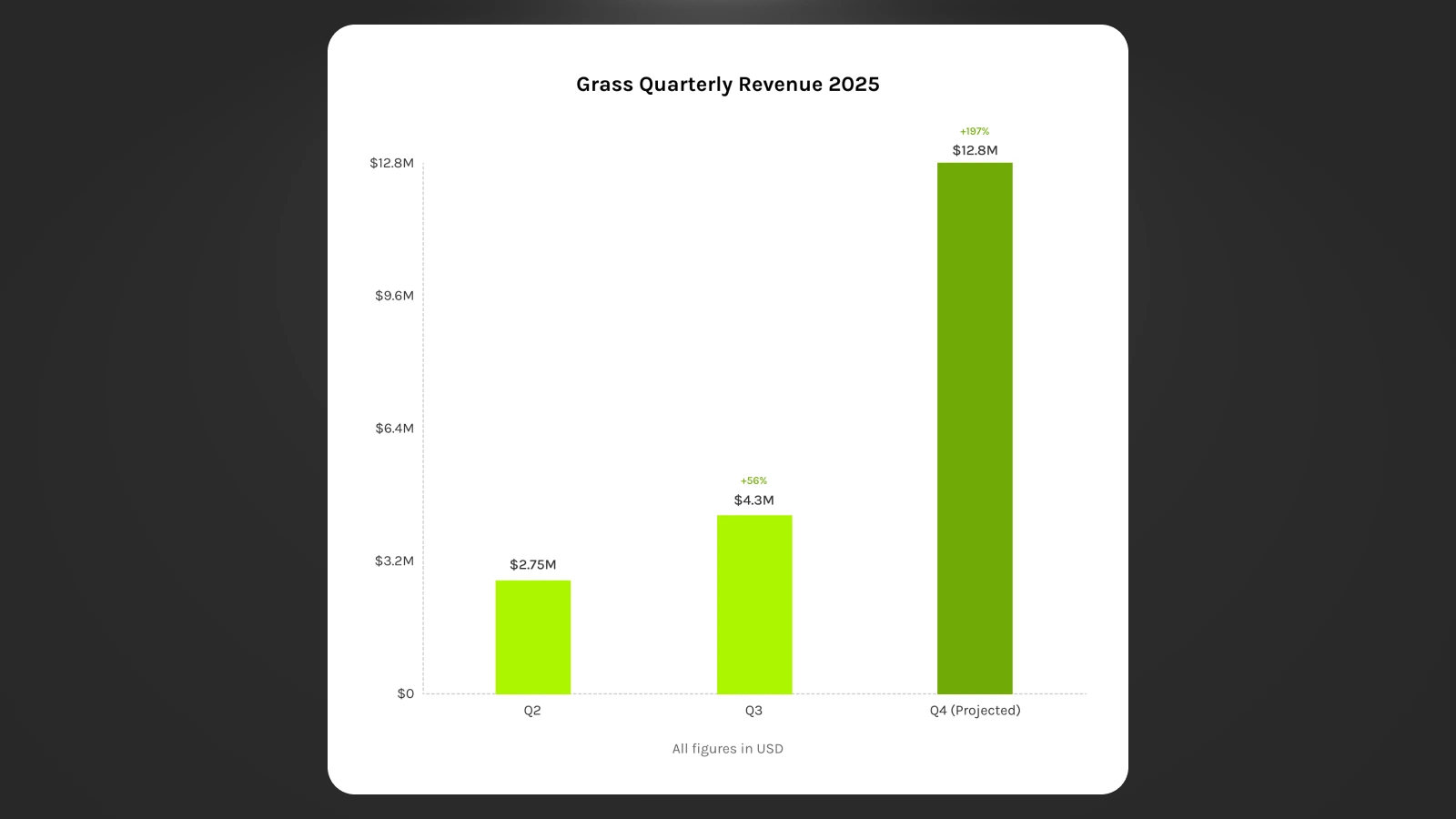
Grass has rapidly evolved from a community-driven project into one of the largest DePIN networks supporting AI infrastructure.
The network now serves millions of active participants while expanding its commercial relationships with AI labs and enterprise customers. As demand for high-quality training data continues to increase, Grass has positioned itself as a provider of large-scale, ethically sourced public web data.
Several factors have contributed to its growth:
- millions of users contributing bandwidth worldwide
- strong adoption across desktop and mobile devices
- growing demand from AI and enterprise customers
- expanding multimodal datasets for AI training
- continued investment in network infrastructure and ecosystem development
Rather than focusing solely on token incentives, Grass is building a business around real-world demand for AI data, giving the network utility beyond the crypto ecosystem.
Community Concerns Around Rewards
Grass has built one of the largest communities in DePIN, but recent reward distributions have also sparked debate.
Following the latest rewards campaign, some long-term participants questioned how allocations were calculated, with users reporting significantly smaller rewards than they expected based on their activity and accumulated points. The discussion highlighted the importance of transparency in incentive programs for community-driven networks.
In response, the Grass team has outlined plans to improve future reward mechanisms. Upcoming distributions are expected to integrate the new native wallet and place greater emphasis on long-term participation as the network continues to evolve.
Managing GRASS Securely
A secure self-custody wallet helps you keep full control of your GRASS tokens.
As the Grass ecosystem expands with staking, governance, and new wallet functionality, protecting your assets becomes increasingly important. A non-custodial wallet allows you to store, send, and manage GRASS while remaining in control of your private keys and recovery phrase.
When managing your GRASS, remember to:
- back up your recovery phrase offline
- never share your private keys or seed phrase
- verify wallet addresses before sending tokens
- keep your wallet software up to date
- stay alert to phishing websites and fake support accounts
Atomic Wallet provides a simple way to securely manage GRASS alongside thousands of other digital assets from a single application, giving you full ownership of your crypto while keeping your private keys under your control.
Conclusion: Why Grass Matters
Grass is building more than a rewards platform—it's creating decentralized infrastructure for the AI economy.
By connecting millions of users who contribute unused internet bandwidth with organizations that need high-quality public web data, Grass introduces a new incentive model where participants are rewarded for supporting AI infrastructure.
As the network continues to expand with new products, enterprise partnerships, and additional utility for the GRASS token, its long-term success will depend on balancing technological growth with a transparent and sustainable ecosystem for its community.