What Is Odos? A Guide to the Odos Trading App and Smart DeFi Routing
Odos is a decentralized exchange (DEX) aggregator designed to optimize on-chain token swaps through smart routing technology. Unlike a centralized exchange, Odos does not hold user funds or operate order books. Instead, it scans liquidity across multiple decentralized protocols to find efficient trade execution paths. This guide explains what Odos is, how its trading app works, and why smart routing plays a key role in modern DeFi infrastructure.
What Is Odos?
Odos is a DEX aggregator built to improve trade execution in decentralized finance. Rather than acting as a standalone exchange, it routes transactions across multiple liquidity sources to help users execute swaps more efficiently.
• Operates as a DEX aggregator
• Uses a smart order routing engine
• Supports multiple blockchain networks
• Enables non-custodial DeFi trading
• Does not function as a centralized exchange
By aggregating liquidity and optimizing routes, Odos aims to reduce slippage and improve execution quality while keeping users in control of their assets.
What Is the Odos Trading App?
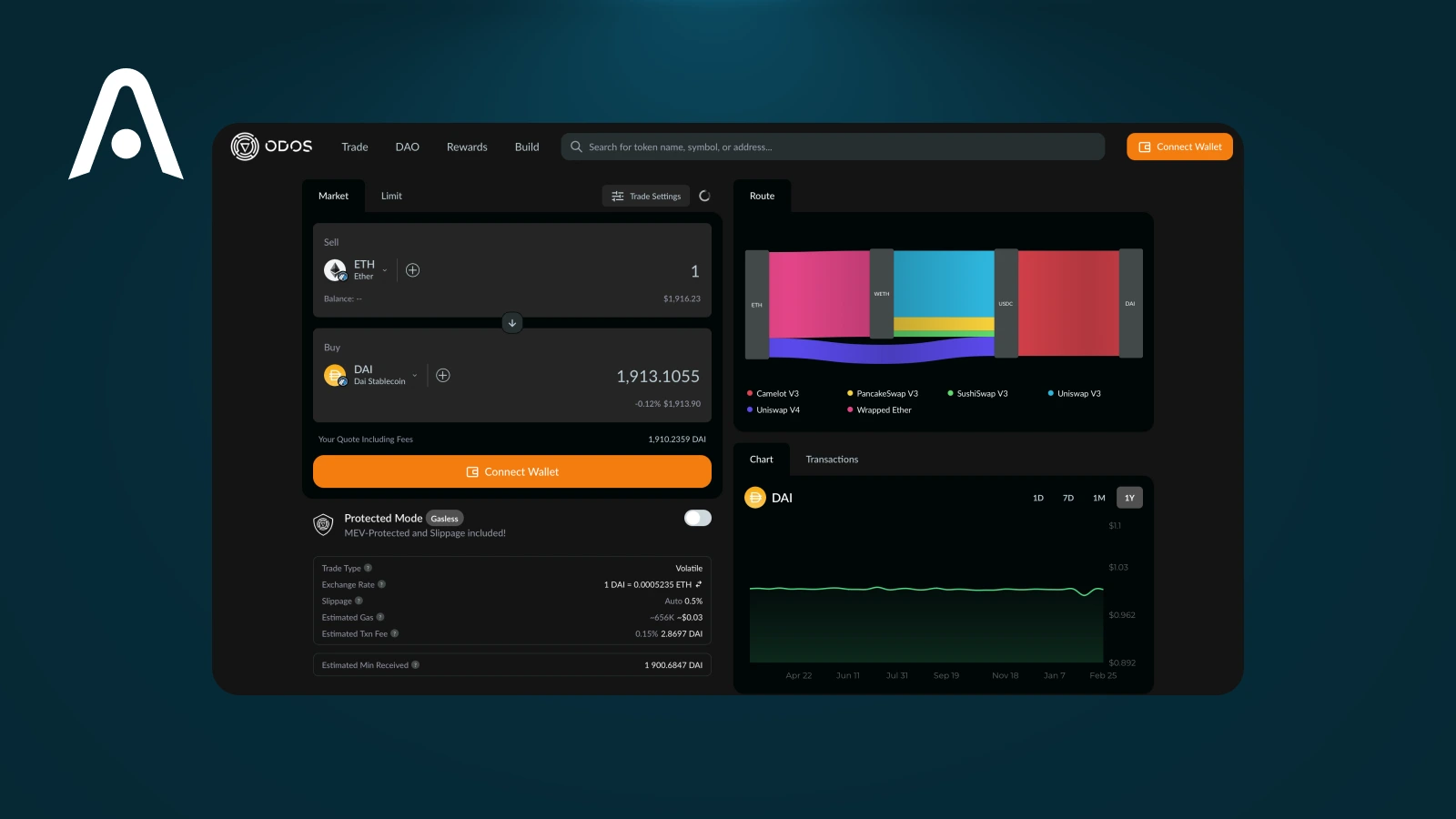
The Odos Trading App is the web-based interface that allows users to interact with the Odos routing engine. Accessible at app.odos.xyz/market, it provides a non-custodial trading environment where users can connect their wallets and execute on-chain swaps.
Key features of the trading app include:
• Web-based DeFi trading interface
• Portfolio-aware routing for optimized execution
• Multi-token swaps in a single transaction
• Split execution across multiple liquidity pools
• Gas-aware optimization for cost efficiency
The app acts as the user layer, while the routing logic operates in the background to determine how trades are executed across decentralized exchanges.
How Smart Routing on Odos Works
Smart routing is the core mechanism behind Odos. Instead of sending a trade to a single DEX, the routing engine analyzes liquidity across multiple platforms to determine an efficient execution path.
It works by:
• Scanning liquidity across various DEX protocols
• Splitting trades across multiple pools when beneficial
• Optimizing for both price impact and gas costs
• Aggregating fragmented liquidity sources
• Executing transactions fully on-chain
This approach allows Odos to handle both small swaps and larger trades that might otherwise face higher slippage on a single liquidity pool.
Why Aggregators Matter in DeFi Trading
DFi liquidity is fragmented across dozens of decentralized exchanges, pools, and AMMs. Aggregators like Odos exist to optimize routing across this fragmented landscape, automating price comparison and execution.
Multi-Token Swaps and Portfolio Rebalancing
One of Odos’s distinguishing features is support for multi-token swaps, allowing users to convert a single asset into multiple tokens within one transaction. This is particularly useful for portfolio rebalancing or structured allocations.
With this functionality, users can:
• Swap one token into multiple assets simultaneously
• Rebalance an entire portfolio in a single transaction
• Reduce gas costs compared to multiple separate swaps
• Execute more advanced allocation strategies
Instead of performing sequential trades, users can adjust portfolio composition efficiently, which can be especially valuable in volatile markets.
Is Odos Custodial?
Odos operates under a non-custodial model. This means users retain control of their private keys and assets at all times.
When trading on Odos:
• Users connect their own Web3 wallet
• Funds remain in the wallet until transaction execution
• Trades are executed through smart contracts
• Odos does not hold user balances
This model differs fundamentally from centralized exchanges, where users deposit funds into platform-controlled accounts. With Odos, transaction approval and signing occur directly from the user’s wallet.
How to Connect to Odos With Atomic Wallet Extension
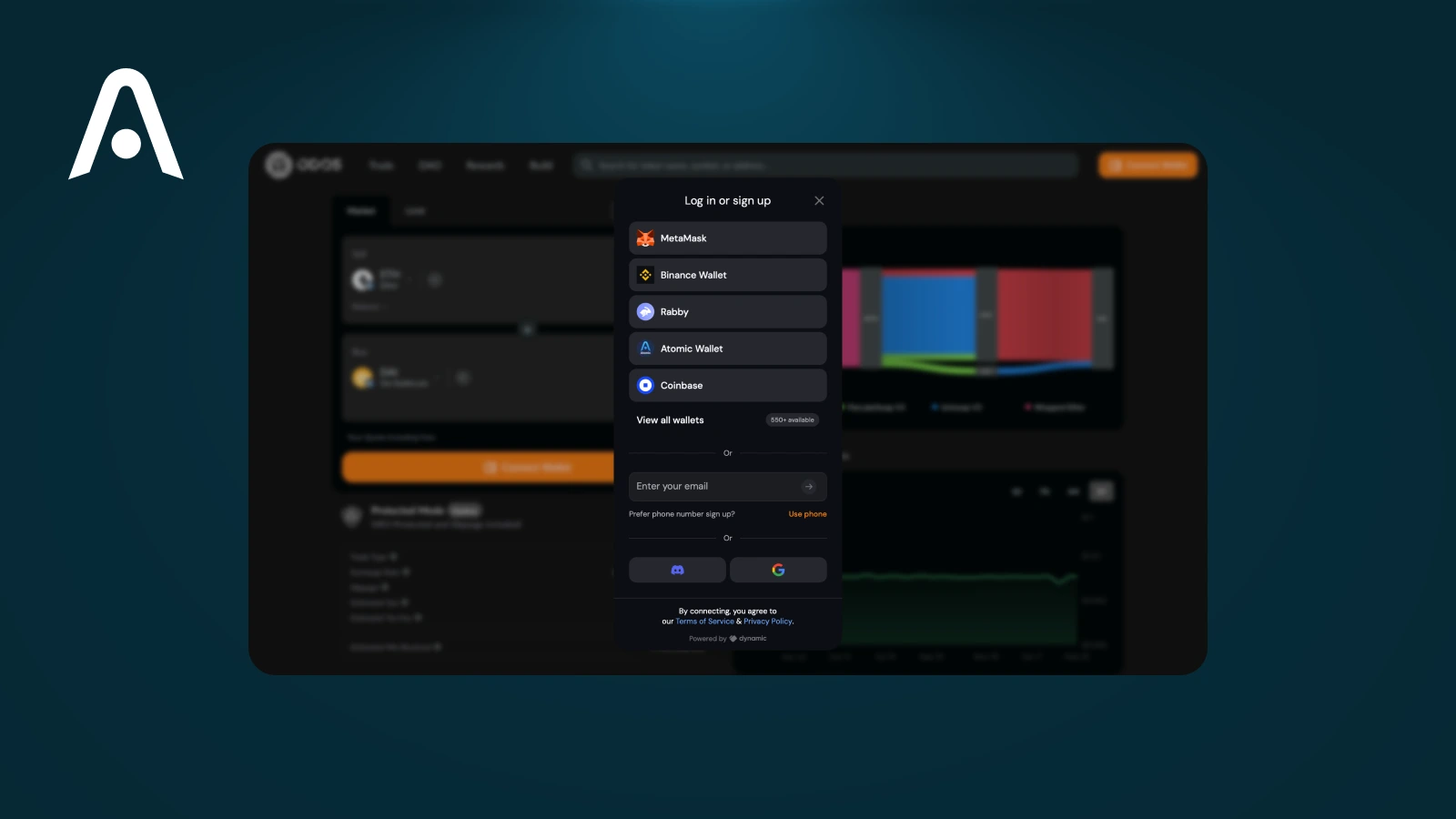
Odos works with browser-based Web3 wallets, including the Atomic Wallet Extension. Since Odos is non-custodial, your wallet is required to access trading features and sign transactions.
To connect using Atomic Wallet Extension:
- Install the Atomic Wallet Extension in your browser
- Open app.odos.xyz
- Click “Connect Wallet”
- Select Atomic Wallet from the list
- Approve the connection request
- Review and sign swaps directly inside the extension
Your assets remain in your wallet at all times. Odos only executes transactions you explicitly approve, making the wallet the control layer for secure DeFi trading.
Risks of Trading on DEX Aggregators
While DEX aggregators improve execution efficiency, they do not eliminate the inherent risks of decentralized finance. Smart routing optimizes paths, but trades are still subject to on-chain realities.
Key risks include:
• Smart contract risk from underlying protocols
• Slippage in volatile or low-liquidity markets
• Liquidity fragmentation across chains and pools
• Gas fee volatility during network congestion
• MEV (Maximal Extractable Value) exposure
Even when routing is optimized, market conditions can change between transaction submission and confirmation. Users should always review execution details carefully before signing.
Trade on Odos With a Secure Web3 Wallet
Non-custodial DeFi trading requires a secure browser wallet to connect, sign, and manage transactions. If you plan to use Odos or other DeFi aggregators, a reliable Web3 extension is essential.
Install the Atomic Wallet Extension to connect easily to Odos, manage your assets securely, and access DeFi applications directly from your browser — while maintaining full control of your private keys.