What Does Sui Mean in Crypto?
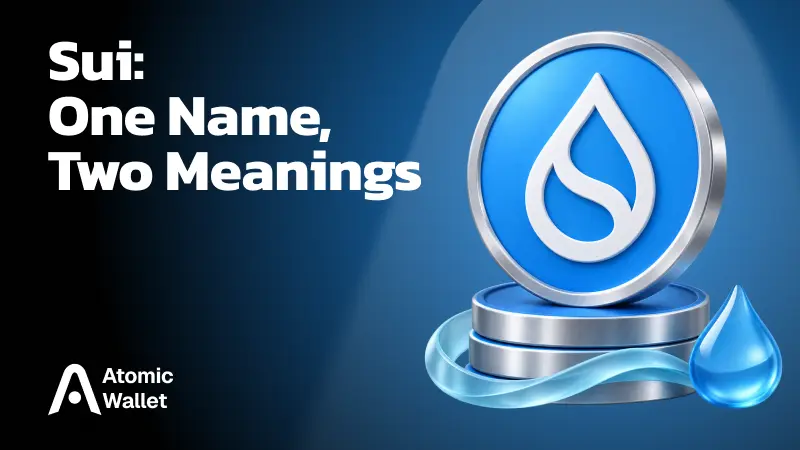
Sui is a blockchain named for water. Its native coin trades under the symbol SUI. Say the name “swee,” whether you’re talking about the network or the coin.
The difference matters when you move funds. “Receive SUI” tells you which coin to expect. “Receive USDC on Sui” describes a different asset arriving on the same blockchain. Here’s how to read those labels before you confirm a transfer.
What Does Sui Mean in Japanese?
The name comes from sui, a Japanese reading of 水, the character for water.
If you learned mizu as the Japanese word for water, you learned it correctly. A kanji can have several readings. On its own, 水 is commonly read mizu. In compounds, you can hear sui, as in suitō, a water bottle or flask.
Mysten Labs co-founder Adeniyi Abiodun discussed the choice in an interview about the project’s origins. The association with water came first. The team then used the name for the network, which helps explain the water drop in its branding.
How Do You Pronounce Sui?
In English, Sui sounds like “swee.” Say “sweet” and leave off the final t.
It’s one syllable. If you’re reading a price aloud, “five SUI” sounds like “five swee.” Ledger used the same pronunciation cue in its podcast with Sui co-founder Kostas Chalkias.
What Is Sui in Crypto?
Sui is a layer 1 blockchain. SUI is the native coin that holders can transfer, spend on network fees or delegate to a validator.
A layer 1 maintains its own record of transactions. When you send someone SUI, the network’s validators verify the transfer and the recipient can check the result on Sui. Applications running on the network can also issue their own assets, so a Sui address may hold much more than its SUI balance.
On an exchange, SUI is a ticker, the short symbol identifying the coin in a market. The capital letters don’t expand into a longer phrase. For more on how Sui processes transactions, see our guide to the Sui blockchain. Our SUI token guide covers staking and the role of the coin.
Sui’s public mainnet opened on May 3, 2023. The coin has a maximum supply of 10 billion SUI. That cap and the amount already circulating are different figures, which the Sui Foundation tracks on its token supply page.
What Does SUI Mean on a Wallet or Exchange?
Read the label next to the name. A balance shows how much you own, a trading pair quotes a price, and a network selector chooses the blockchain for a transfer.
Suppose SUI/USDT shows 2.00. At that example price, 5 SUI would cost 10 USDT before fees. Buying the coin changes your exchange balance. A separate withdrawal sends it to your wallet, and that step asks you to choose a network and enter a receiving address.
What Does “On Sui” Mean When You Send Crypto?
“On Sui” identifies the blockchain that will record the transfer. Match both the asset and the network shown by the receiving wallet or exchange.
For example, a friend asks you for 25 USDC on Sui. Choose USDC as the asset, select Sui as the withdrawal network, and use the address from your friend’s USDC deposit screen for Sui. Selecting SUI as the asset would send a different coin. Selecting another chain could leave the deposit uncredited.
Pay attention to the fee line as well. SUI normally pays for computation and storage. An app may sponsor that cost. Sui also supports gas-free peer-to-peer transfers for eligible stablecoins, including USDC, when the transfer meets its conditions. An exchange may still charge its own withdrawal fee. Check the final quote before confirming.
Wallets may display a fee in MIST, the smallest unit of SUI. One SUI equals one billion MIST, so 500,000 MIST converts to 0.0005 SUI. If the label says “gas budget,” that figure is a spending limit. The transaction receipt shows the actual charge. See Sui’s gas documentation.
How to Receive SUI in Atomic Wallet
To receive native SUI in Atomic Wallet, open SUI, select Receive and copy the address shown for that asset.
On the sending platform, select the SUI coin and the Sui network. Compare the pasted address with the one in our wallet and review the amount the recipient will get after any withdrawal fee. If you’re using that route for the first time, a small test transfer can confirm the deposit works before you send the rest.
Once the transfer is confirmed, look for the incoming amount under SUI. If your sender is offering a wrapped token or a different network, check support for that exact asset before sharing a deposit address. You can find the wallet options on our Sui wallet page.