What Is Whop? Inside the $1.6B Marketplace Backed by Tether
Whop is a digital marketplace built for online entrepreneurs who sell software, subscriptions, trading communities, and access-based digital products. Originally launched as a way to centralize online selling, Whop has evolved into a full commerce platform for internet-native businesses. The recent $200 million strategic investment from Tether — valuing the company at $1.6 billion — signals something bigger: stablecoin payments are moving from speculation into real online commerce infrastructure.
What Is Whop?
Whop is an online marketplace where creators and digital entrepreneurs can sell access-based products — from SaaS tools and trading groups to private communities and subscriptions. Instead of separating customer acquisition, payments, and content delivery across multiple platforms, Whop aims to combine them into one system.
At its core, Whop offers:
• A marketplace for digital products and memberships
• Tools to sell software, subscriptions, and gated access
• Built-in payment processing
• Community and access management
• Infrastructure for internet-native businesses
It is not a crypto exchange and does not function as a trading platform. Rather, it acts as an online business layer where creators can list, manage, and monetize digital offerings.
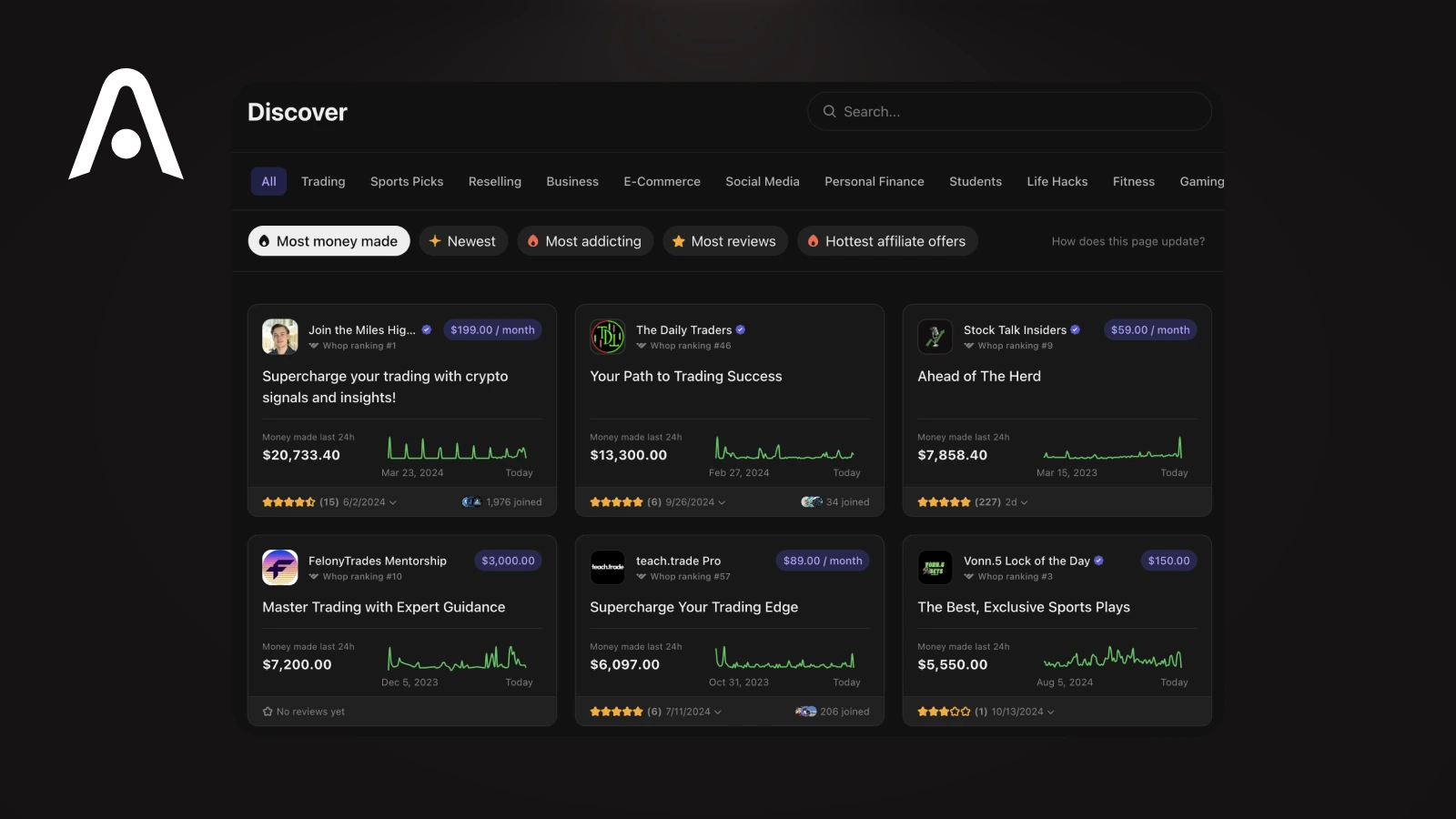
How Whop Works
Whop operates as an all-in-one digital commerce platform. Creators list their products directly on the marketplace, and customers purchase access through Whop’s integrated payment system. The platform then manages delivery, permissions, and revenue tracking.
The basic flow looks like this:
- A creator lists a digital product, subscription, or community
- A customer purchases access
- Whop processes the payment
- Access is granted automatically
- The seller manages revenue and community tools through a dashboard
Instead of juggling payment processors, Discord roles, and subscription systems separately, Whop centralizes these elements into one operational stack.
Why Tether Invested $200M in Whop
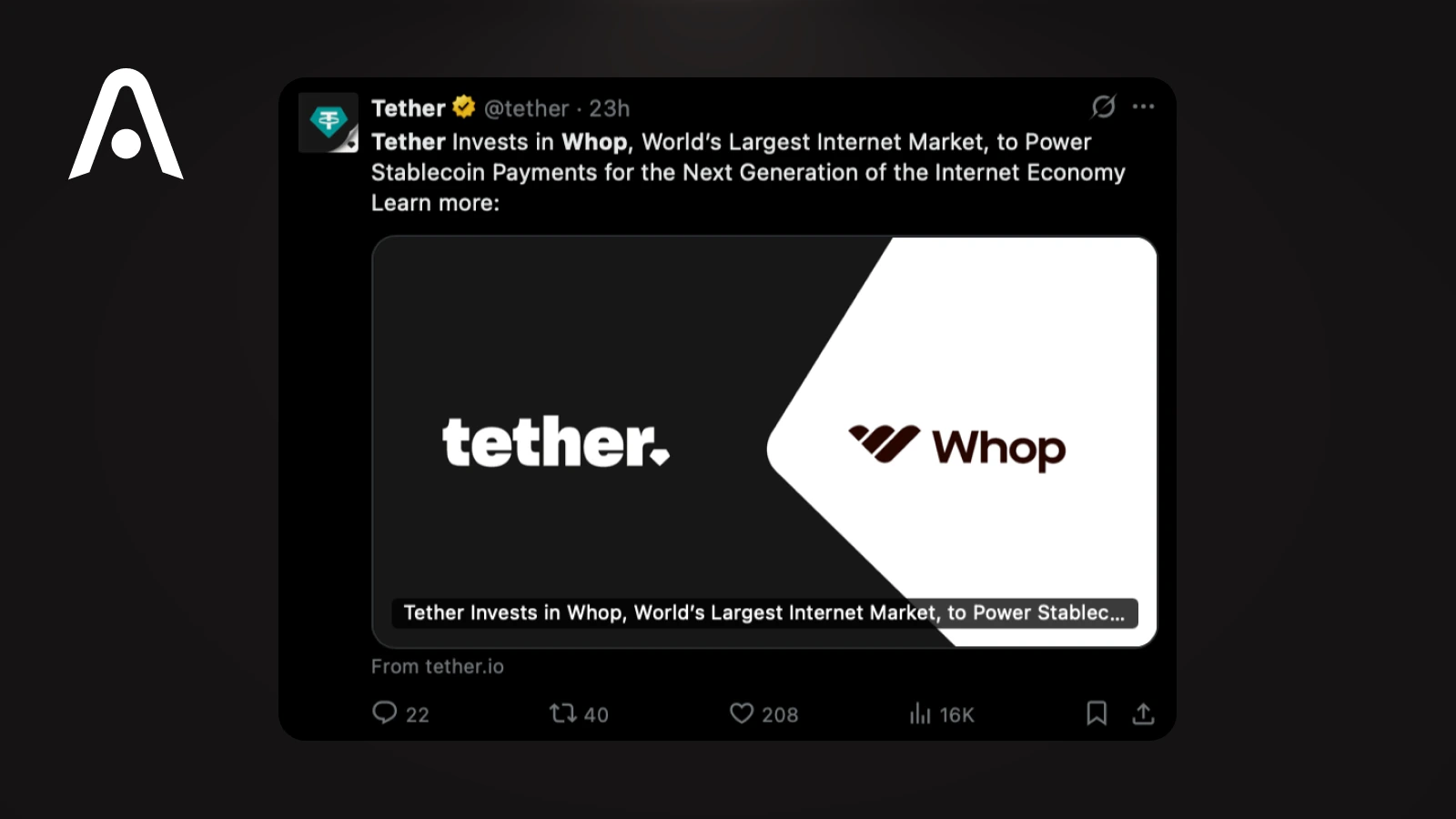
Tether’s $200 million strategic investment in Whop is not simply a financial bet — it reflects a broader shift in how stablecoins are being positioned in the global economy. Rather than focusing purely on trading activity, Tether is expanding into infrastructure that supports real online commerce.
The investment suggests several strategic objectives:
• Integrating stablecoin payments directly into large-scale online marketplaces
• Expanding global settlement infrastructure beyond exchanges
• Strengthening ties between crypto rails and traditional financial backing
• Validating stablecoins as payment tools, not just trading instruments
• Supporting the rise of internet-native businesses operating across borders
With institutional names involved in the broader capital stack, the move signals that stablecoin payments are increasingly viewed as financial infrastructure rather than experimental fintech.
How Stablecoin Payments Fit Into Whop
Stablecoins such as USDT function as dollar-pegged digital assets that can move globally, 24/7, without relying on traditional banking hours. For a marketplace like Whop — which serves online entrepreneurs across different countries — this creates a more flexible settlement layer.
In practice, stablecoin integration enables:
• USDT-based settlement for global transactions
• Cross-border payments without traditional wire friction
• 24/7 transaction capability
• Reduced dependency on legacy banking rails
• Greater accessibility for creators in emerging markets
For digital businesses that operate entirely online, having a programmable, always-available payment layer can remove geographic limitations and reduce payment bottlenecks. Stablecoins become less about speculation and more about enabling internet-based commerce.
Whop Is Not a Stablecoin Issuer
Although Whop is integrating stablecoin payments, it does not issue its own digital currency. The platform does not mint USDT or operate a monetary layer. Instead, it relies on external stablecoin issuers — such as Tether — for the underlying digital asset infrastructure.
This distinction matters.
Whop operates at the application layer, meaning it provides marketplace functionality, commerce tools, and payment integration. The monetary layer — including issuance, reserves, and redemption mechanics — remains with third-party stablecoin providers.
In simple terms: Whop facilitates payments, but it does not create the currency being used.
Custodial vs Non-Custodial Spending
When stablecoins are used on digital marketplaces, the custody model becomes a key risk factor. Some platforms hold funds on behalf of users, while others integrate non-custodial wallet systems. Understanding the difference helps clarify who controls assets and where counterparty exposure sits.
Risks of Stablecoin-Based Marketplaces
While stablecoin integration can improve payment efficiency, it does not eliminate risk. Platforms that combine digital commerce with crypto settlement operate across multiple regulatory and financial layers.
Key risks include:
• Platform risk — Operational disruptions or policy changes can affect access to funds or services.
• Regulatory risk — Stablecoin rules continue to evolve across jurisdictions.
• Stablecoin issuer risk — Users depend on the issuer’s reserve management and transparency.
• Payment network dependencies — Card rails and banking partners still influence fiat on/off-ramps.
• Margin pressure — Payment platforms must balance fees, incentives, and compliance costs.
Stablecoins may streamline settlement, but they still exist within broader financial and regulatory systems.
What Whop Signals About the Future of the Internet Economy
Whop’s partnership with Tether highlights a larger structural trend: digital marketplaces are beginning to integrate crypto payment rails directly into their business models. Stablecoins are increasingly positioned as backend infrastructure rather than speculative assets.
This convergence suggests:
• Marketplaces embedding crypto settlement layers
• Stablecoins functioning as digital payment infrastructure
• Traditional finance backing crypto-native platforms
• The internet economy moving toward borderless settlement
If this model expands, stablecoin-powered marketplaces could become a standard part of online commerce, especially for globally distributed creator and subscription businesses.
What Users Should Understand Before Using Stablecoin Marketplaces
Using stablecoins for online payments is not the same as holding them as a long-term asset strategy. Marketplaces prioritize spending and transaction flow, not storage security.
Before using stablecoin-based platforms, users should understand:
Spending wallets serve a different purpose than long-term storage.
Custody structure directly affects risk exposure.
Stablecoin value depends on the issuer’s reserve model.
A platform is not a bank, even if it processes payments.
Separating operational funds from long-term holdings is often a prudent approach when interacting with digital marketplaces.
Manage Stablecoins With the Right Infrastructure
As stablecoin payments expand into online marketplaces like Whop, the distinction between spending and holding becomes increasingly important.
Payment platforms are designed for transaction flow. Long-term storage requires a different level of control.
For users who hold USDT or other stablecoins beyond daily spending needs:
• Separate operational funds from long-term holdings
• Understand custody models before depositing
• Keep private keys under your control when storing assets
• Use a secure wallet infrastructure for self-custody
Atomic Wallet provides a non-custodial environment for managing stablecoins securely, giving users full control of their private keys while interacting with the broader crypto economy.