Why Is Bitcoin Dropping? Key Crypto Market Drivers

If you are checking your portfolio today and asking yourself why is bitcoin dropping, you are certainly not alone. The cryptocurrency coin market is notorious for its volatility, capable of swinging from euphoric all-time highs to sudden, sharp corrections within the span of a few hours. When Bitcoin sneezes, the rest of the market catches a cold, leading investors across the globe to wonder why is crypto down across the board.
Current price drops are rarely caused by a single isolated event. Instead, they are usually the result of a “perfect storm” of converging factors. These can range from significant macroeconomic shifts—such as changes in interest rates, inflation data, or geopolitical tensions—to crypto-specific mechanics like leverage flush-outs and miner capitulation. Furthermore, the market often reacts emotionally to news cycles, leading to panic selling (FUD) that exacerbates technical corrections.
Understanding these red candles requires looking beyond the immediate price tag. It involves analyzing on-chain data, global economic health, and institutional behavior. Whether you are holding BTC, solana crypto, or XRP, understanding the root causes of a downturn is the first step to navigating it successfully and keeping your emotions in check.
The content provided in this article is for informational purposes only and does not constitute financial advice. Cryptocurrency investments are highly volatile. Always do your own research (DYOR) before making investment decisions.
Reading Bitcoin Price Moves
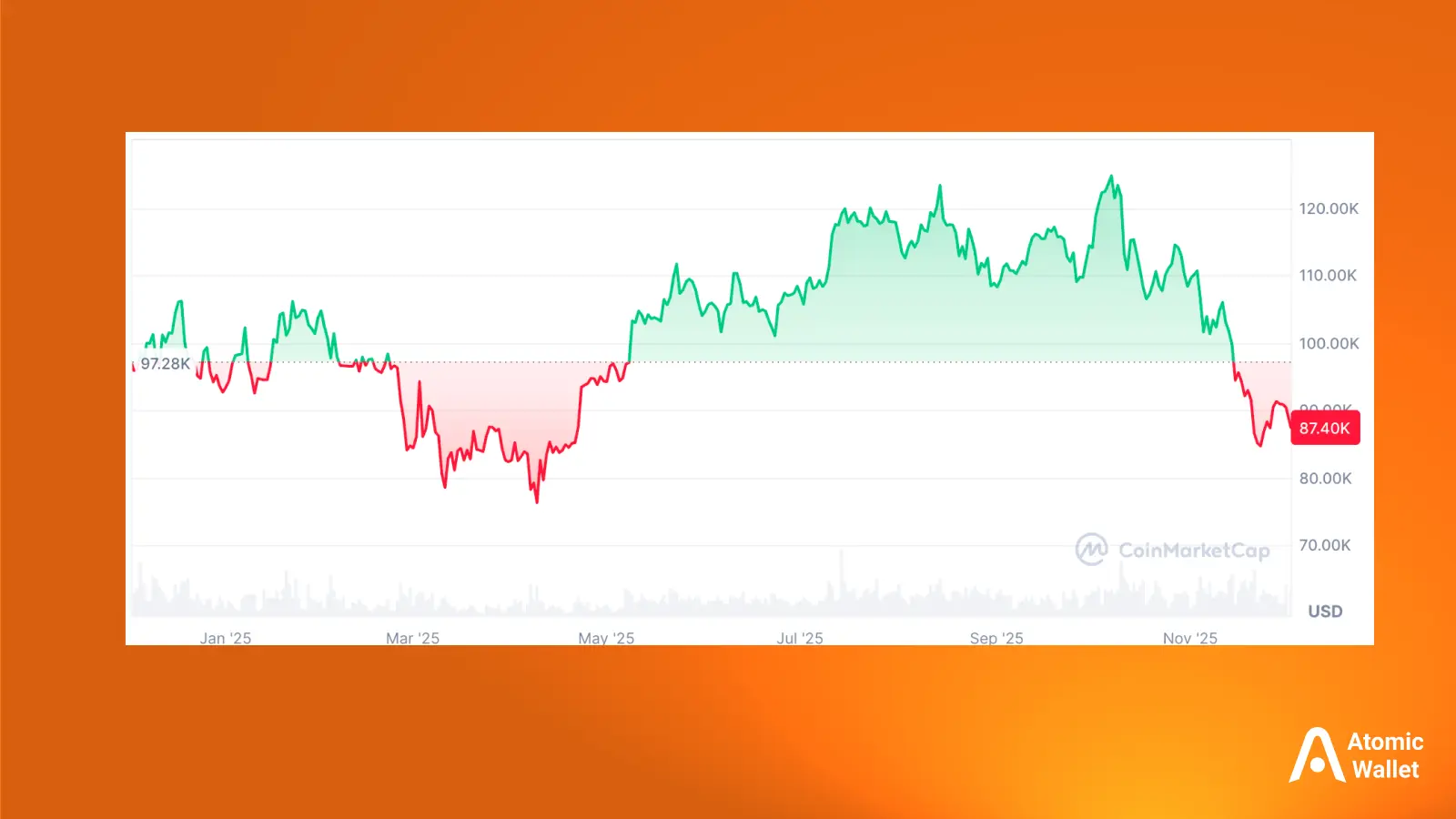
To truly understand why is crypto dropping, one must first learn how to read the charts beyond the scary negative percentages. In the crypto world, a 5% or 10% drop is not necessarily a crash; it is often a healthy correction necessary for sustainable growth.
Support and Resistance Levels
Bitcoin rarely moves in a straight line; it moves in waves. When the price drops, it is often searching for “support”—a specific price level where buyer demand is historically strong enough to stop the decline. Conversely, when it rises, it hits “resistance.” When Bitcoin fails to break a resistance level multiple times, traders often sell to lock in profits, triggering a pullback. These technical levels are self-fulfilling prophecies that guide automated trading bots and institutional desks.
The Role of Market Cycles
The cryptocurrency coin market operates in distinct, repetitive cycles. We have the accumulation phase, the bull run, the distribution phase, and the bear market. Often, when users frantically search for why is bitcoin dropping, it is simply because the market has entered a short-term cooling-off period after a prolonged rally. Smart money often uses these dips to re-accumulate assets at a discount.
If you are looking to secure your assets during these volatile moves, ensuring you have a reliable non-custodial wallet is essential. You can manage your portfolio securely using the Atomic Bitcoin Wallet to keep your keys safe.
Volatility vs. Trend
It is crucial to distinguish between short-term volatility and a long-term trend reversal. A drop caused by a singular news event (like a regulatory rumor) is often bought up quickly, resulting in a “V-shape recovery.” However, a drop caused by a fundamental shift in the global economy may signal a longer “crypto winter.”
Macro Forces on Crypto Markets
Cryptocurrency does not exist in a vacuum. In recent years, Bitcoin has become increasingly correlated with traditional stock markets, specifically the tech-heavy Nasdaq. This means that the answer to why is crypto down is often the same answer as “why are stocks down.”
The Federal Reserve and Interest Rates
The biggest influence on the market is often the Federal Reserve. When interest rates are high, money becomes “expensive.” Investors are less likely to borrow money to speculate on risk-on assets like crypto.
- High Rates: Generally bearish for crypto as liquidity dries up.
- Low Rates: Generally bullish for crypto as cheap money floods the system.
The Strength of the U.S. Dollar (DXY)
There is often an inverse relationship between the U.S. Dollar Index (DXY) and Bitcoin. When the dollar is strong, Bitcoin tends to look weaker in comparison because it is priced in dollars. When the dollar weakens, hard assets like Gold and Bitcoin often rally as a hedge against currency devaluation.
Altcoins and Beta
When macro forces hit Bitcoin, altcoins usually suffer more severe losses. This explains why is solana going down or why is xrp dropping with higher percentage losses than BTC itself. Altcoins act as “high beta” assets—meaning they amplify Bitcoin’s moves. If Bitcoin drops 2%, solana crypto might drop 5% or 6% because it has lower liquidity and higher volatility.
Market Reaction Matrix
What Is Liquidation Risk?
One of the most violent drivers of sudden price drops is what traders call a “liquidation cascade.” While technical analysis looks at trends, liquidation mechanics explain the speed of the drop. You may hear terms regarding “maxbytes” or data overload during these events, but the core concept is forced selling.
Understanding Leverage
Many traders do not buy spot Bitcoin; they buy derivatives using leverage (borrowed money). If a trader goes “Long” on Bitcoin with 10x leverage, a mere 10% drop in price wipes out their entire collateral. This is a high-risk game that dictates short-term price action.
The Chain Reaction
When the price dips slightly due to normal market variance, over-leveraged long positions are liquidated. The exchange engine automatically sells their Bitcoin to cover the debt.
- Initial Sell-off: Price drops naturally or via a large sell order.
- Trigger: Stop-losses and liquidation points of leveraged traders are hit.
- Forced Selling: Exchanges sell the assets instantly to solvency.
- Cascade: This selling drives the price down further, hitting more liquidation prices below, causing a domino effect.
Impact on Altcoins
This mechanism is a primary reason why is xrp dropping or why is solana going down so suddenly without any specific news. The liquidity (the number of buyers available) in altcoins is lower than in Bitcoin. When a liquidation cascade hits the solana crypto markets, the price creates a long “wick” down because there simply aren’t enough buy orders to absorb the forced sales immediately.
ETF Flows, Liquidity, and Sentiment
In the modern era of crypto, Institutional flows are a massive driver. The introduction of Spot Bitcoin ETFs has changed the game, making the answer to why is bitcoin dropping often a matter of Wall Street business hours and institutional decision-making.
ETF Outflows
If the Spot Bitcoin ETFs (like those from BlackRock or Fidelity) see consecutive days of net outflows, it creates significant selling pressure. Since these funds must hold 1:1 Bitcoin backing, when shares are sold by institutional investors, the actual Bitcoin must be sold on the open market, depressing prices.
Market Sentiment (Fear & Greed)
Crypto is highly reflexive. Sentiment drives price, and price drives sentiment.
- Extreme Greed: Often marks a local top where smart money begins to sell.
- Extreme Fear: Often marks a local bottom where contrarian investors buy.
Liquidity Gaps and “Max Pain”
You might notice that why is crypto dropping is a common search on weekends. This is due to “thin liquidity.” Banks are closed, and institutional trading desks are offline. With fewer orders in the order book, it takes less capital for whales to push the price up or down, leading to “fake outs” or sudden drops that recover by Monday morning.
For a deeper dive into how different assets behave during these flows, check out our guide on the best cryptocurrencies to buy where we analyze market trends regularly.
Building Your Own Crypto Playbook
Instead of panicking and frantically searching why is crypto down, experienced investors build a playbook to profit from the volatility. A drop in the cryptocurrency coin market is seen as a discount, not a disaster, provided you have a strategy in place.
1. Dollar Cost Averaging (DCA)
Trying to time the exact bottom is nearly impossible. DCA involves buying a fixed dollar amount of crypto at regular intervals (e.g., $50 every week), regardless of the price. This smooths out your average entry price over time and removes the emotional stress of timing the market.
2. Diversification
Don’t put all your eggs in one basket. While you might be bullish on solana crypto, balancing it with Bitcoin and Stablecoins can reduce your portfolio’s overall volatility.
3. Self-Custody is Key
When markets are dropping, exchange risk increases. We have seen in previous cycles that exchanges can halt withdrawals during crashes. The safest place for your assets is in a wallet you control completely.
4. Keep “Dry Powder”
Always keep some stablecoins (USDT/USDC) on the side. This allows you to “buy the dip” when everyone else is panic selling, turning a market drop into an opportunity.
Take Control of Your Assets
Ready to secure your crypto and buy the dip effectively? Atomic Wallet allows you to manage over 1000+ coins and tokens, stake your assets for passive income, and most importantly, keep your private keys in your own hands.
Download Atomic Wallet to start managing your portfolio securely today.
Conclusion: Putting Bitcoin Drops in Perspective
So, why is bitcoin dropping? Today it might be leverage flush-outs; tomorrow it might be Federal Reserve policy or ETF outflows. The cryptocurrency coin market is a living, breathing ecosystem that reacts to global liquidity and human emotion in real-time.
While red charts can be stressful, they are the price of admission for the potential gains crypto offers. By understanding the macro forces, monitoring liquidity risks, and using secure tools like Atomic Wallet, you can stop fearing the drops and start using them to your advantage. Stay calm, zoom out, and stick to your long-term strategy.