FBTC Stock: A Complete Guide to Fidelity’s Bitcoin ETF

FBTC (Fidelity Wise Origin Bitcoin Fund) has quickly become one of the key ways for traditional investors to get exposure to Bitcoin through the stock market. Traded under the ticker FBTC, it lets you buy a “stock” that tracks Bitcoin’s spot price, without touching exchanges, wallets, or private keys. As spot Bitcoin ETFs gained traction with institutions, FBTC emerged as one of the most closely watched tickers in the entire Bitcoin ETF segment.
Because FBTC stock price moves almost one-to-one with BTC, it has turned into a clean proxy for Bitcoin sentiment inside traditional portfolios, retirement accounts, and brokerage apps. In 2024–2025, inflows, fee cuts, and growing institutional interest made FBTC a core part of the conversation around “Bitcoin going mainstream.”
What Is FBTC? (Fidelity’s Spot Bitcoin ETF)
FBTC is Fidelity’s spot Bitcoin ETF — a fund that holds real BTC in custody and issues shares that trade on the stock market like any other equity. When you buy FBTC, you’re effectively buying regulated exposure to Bitcoin’s price movements, wrapped in a familiar ETF structure that works with standard brokers and retirement platforms.
Unlike futures-based products, FBTC is backed by physical bitcoin held with Fidelity’s digital asset custody arm, and it’s designed to closely track the underlying spot market. That combination — a blue-chip issuer, spot backing, and relatively low fees — is why many investors treat FBTC as one of the simplest “plug-and-play” options for adding Bitcoin to a traditional portfolio.

Why Investors Care About FBTC Stock
FBTC has become one of the most popular Bitcoin ETFs because it offers regulated, low-friction exposure to BTC without requiring users to manage wallets, private keys, or crypto exchanges. For traditional investors — especially those using Fidelity, Schwab, Robinhood, or IRA/401(k) accounts — FBTC acts as an accessible bridge into Bitcoin.
Key reasons for its popularity include:
• Low fees (0.25%) compared to other spot Bitcoin ETFs.
• Strong tracking accuracy thanks to its physical BTC backing.
• High liquidity, making large trades easier and spreads tighter.
• Fidelity’s brand trust, which reduces perceived risk for cautious investors.
For many, FBTC stock is simply the easiest way to get Bitcoin exposure inside existing financial infrastructure.
FBTC Stock Price — Recent Performance (2024–2025)
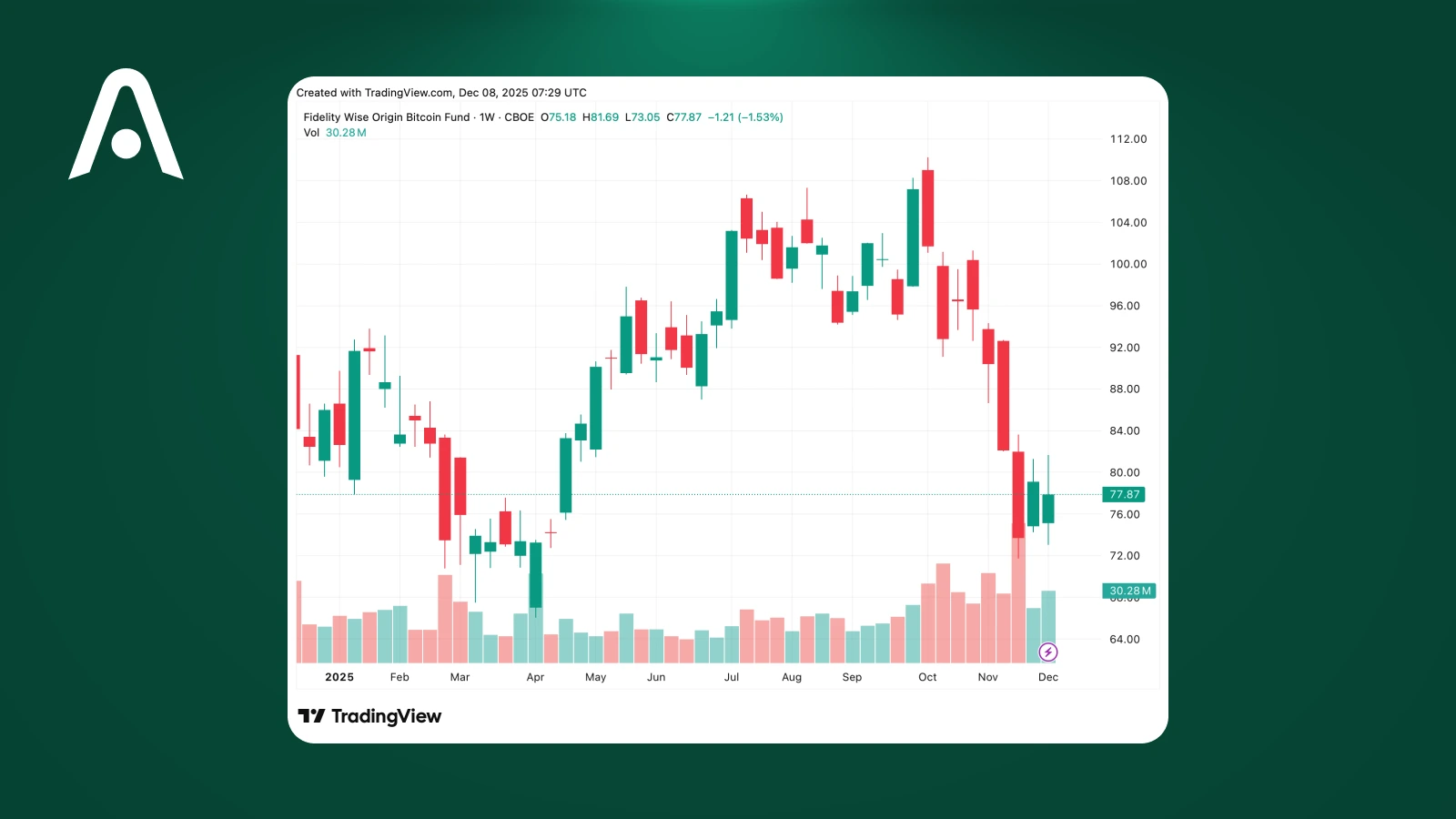
FBTC stock price has largely mirrored Bitcoin’s strong volatility cycle from 2024 into 2025, with movements driven by BTC’s broader macro narrative: halving expectations, institutional inflows, ETF trends, and regulatory clarity. The ETF saw rapid growth in assets under management, pulling in billions during peak inflow periods.
Key performance notes:
• 52-week range: roughly from the mid-$60s to over $110, reflecting Bitcoin’s own swings.
• Record volume spikes during BTC rallies and inflation/CPI announcements.
• High correlation with BTC, especially during macro-driven market hours.
• ETF inflows/outflows sometimes creating short-term price dislocations relative to NAV.
Investors treat FBTC as a proxy for both Bitcoin price action and institutional sentiment — which makes its chart a direct reflection of BTC’s macro narrative.
How FBTC Works — What’s Inside the ETF
FBTC holds actual Bitcoin in custodial storage through Fidelity Digital Assets, making it a true spot ETF rather than a derivatives-based product. Each share represents fractional ownership of Fidelity’s BTC reserves, and its market price closely tracks the fund’s net asset value (NAV).
Authorized participants (APs) can create or redeem shares to keep FBTC aligned with Bitcoin’s real-time price. This mechanism keeps price deviations minimal and ensures the ETF moves almost in lockstep with BTC. For most investors, FBTC behaves like a stock ticker that mirrors Bitcoin — but with traditional brokerage convenience.
FBTC vs Other Bitcoin ETFs (IBIT, ARKB, BTCO)
While many Bitcoin ETFs launched in the same wave, FBTC stands out in several ways. BlackRock’s IBIT leads in assets and inflows, but FBTC benefits from Fidelity’s massive retail client base and long-standing reputation in wealth management. Compared to ARKB or BTCO, FBTC typically offers tighter spreads and more consistent liquidity.
Key differences to note:
• FBTC vs IBIT: IBIT is larger, but FBTC often wins on retail penetration through Fidelity.
• FBTC fees (0.25%) remain competitive within the ETF landscape.
• Liquidity & volume: high enough for institutions, accessible enough for retail.
• Brand trust: Fidelity’s long track record lowers perceived risk for new Bitcoin investors.
In short, FBTC sits in the “top tier” of spot BTC ETFs and is widely used as a long-term exposure vehicle.
If you’re ready, I can continue with the next 2 sections.
What Moves FBTC Stock Price
FBTC’s price movement is almost entirely tied to Bitcoin’s spot price, but several external forces can amplify volatility. Macro events—like Federal Reserve rate decisions, CPI reports, or shifts in risk-on/risk-off sentiment—often trigger sharp inflows or outflows across all Bitcoin ETFs. These flows, in turn, impact FBTC’s short-term trading behavior.
Key drivers include:
• Bitcoin’s price direction — the primary mover of FBTC shares.
• ETF inflows/outflows — large creations or redemptions can shift momentum quickly.
• Macro news — CPI, FOMC, interest-rate expectations.
• Regulatory updates — SEC rulings, crypto policy changes.
• Halving cycles & industry catalysts — upgrades, institutional adoption, miner economics.
Together, these factors make FBTC both a proxy for Bitcoin and a barometer for institutional crypto sentiment.
Risks for FBTC Investors
Although FBTC simplifies Bitcoin exposure, it still inherits the underlying asset’s volatility. Sharp BTC drawdowns translate directly into losses for FBTC holders. The ETF does not distribute dividends, and during periods of extreme market stress, NAV tracking can temporarily widen—even if it usually self-corrects.
Main risks to consider:
• Full volatility of Bitcoin — price swings can be extreme.
• No yield or dividend component — pure price exposure.
• Regulatory uncertainty — future crypto policy may alter ETF dynamics.
• Tracking issues in fast markets — brief NAV dislocations during heavy trading.
Despite these risks, FBTC is often favored by investors who want regulated, low-friction Bitcoin access without handling private keys.
Who Should Consider FBTC?
FBTC is built for investors who want Bitcoin exposure without managing self-custody, private keys, or on-chain transactions. It fits naturally into traditional brokerage workflows and retirement accounts, making it accessible to people who could never hold BTC directly due to institutional or regulatory constraints.
It’s also useful for investors who prefer the familiarity of buying a stock-like product through platforms such as Fidelity, Schwab, Robinhood, or TD Ameritrade. For many, FBTC is a clean, compliant, and operationally simple way to add Bitcoin to a diversified portfolio.
FBTC Price Outlook — What Analysts Expect
Market analysts generally view FBTC’s trajectory as inseparable from Bitcoin’s broader cycle. As BTC approaches its next halving milestone and institutional adoption accelerates—especially after the approval of multiple spot ETFs—many expect consistent inflows to continue shaping FBTC’s demand curve.
Strategists from major banks note that spot Bitcoin ETFs have become a primary gateway for institutional capital, and FBTC, given Fidelity’s brand strength, is positioned as a long-term beneficiary of this trend. Future outlooks largely depend on macro conditions, ETF flows, and Bitcoin’s own supply-driven cycle.
How to Get Direct Bitcoin Exposure
While FBTC offers regulated, brokerage-friendly Bitcoin exposure, some investors prefer direct ownership—holding BTC in a wallet they control without intermediaries, trading hours, or ETF management fees.
Atomic Wallet provides a simple way to store, send, and manage Bitcoin securely through full self-custody, giving you complete control over your private keys and long-term holdings. It also supports multi-asset portfolio management, swaps, and a clean interface for users who want to graduate from ETF exposure to real on-chain ownership.