HODL Meaning: What It Means in Crypto and How It Works
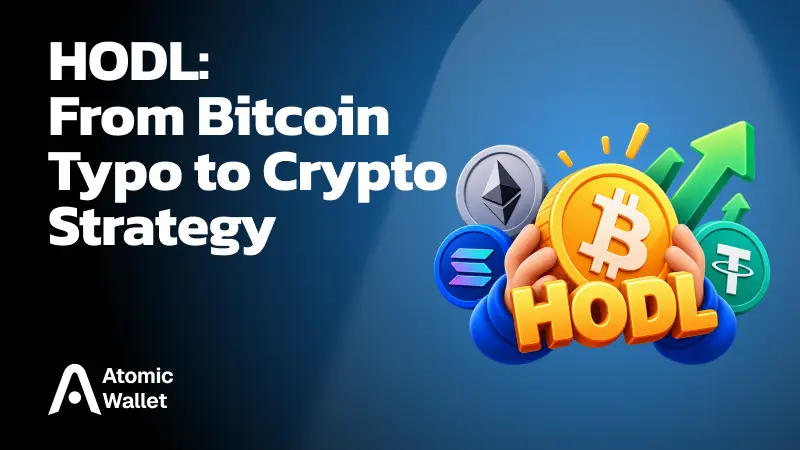
HODL is crypto slang for holding onto an asset through short-term price swings instead of reacting to every market move.
You’ll often see it during a sharp sell-off: prices turn red, anxiety spreads, and someone posts “HODL.” The message is simple: they intend to keep their crypto despite the turbulence. What started as a typo became one of the community’s most recognizable expressions—and shorthand for a long-term approach with real benefits and risks.
What Does HODL Mean in Crypto?
To HODL means to keep a cryptocurrency with a long-term view, even when its price becomes volatile.
If someone says, “I’m HODLing BTC through this dip,” they mean they plan to keep their Bitcoin rather than sell because of the current decline. A person following that approach is a HODLer, and the act of doing it is HODLing.
The word carries more intention than simply saying you own crypto. You might hold a token briefly while preparing to trade it. Calling yourself a HODLer usually signals that you expect to stay invested through market swings because you believe in the asset’s longer-term prospects.
You’ll also see HODL expanded as “Hold On for Dear Life.” That phrase captures the feeling of holding through a turbulent market, although it was created after the original typo. Neither the expression nor the strategy sets a fixed holding period or guarantees that an asset will recover.
Where Did HODL Come From?
HODL originated in a BitcoinTalk post titled “I AM HODLING,” published by GameKyuubi on December 18, 2013.
Bitcoin was falling, and GameKyuubi was frustrated with attempts to time the market. In the original post, he admitted that he was a bad trader and explained why he would keep his Bitcoin instead of trying to sell and buy back at the perfect moment. He noticed the misspelled title, mentioned drinking whisky, and posted it anyway.
Other forum members quickly picked up the spelling. HODL became a joke, then a rallying cry for people holding through crypto’s price swings.
“Hold On for Dear Life” came later as a phrase fitted to the existing letters. The distinction matters: HODL began with someone acknowledging the limits of his trading ability. It wasn’t a prediction that every cryptocurrency would eventually rise.
How Does HODLing Work?
HODLing means keeping a crypto position over time rather than repeatedly buying and selling around short-term price movements.
Consider a hypothetical holder who buys $500 of Bitcoin. If its price falls 20%, that position is worth $400, while the amount of BTC remains unchanged. A HODLer might keep the position because the decline hasn’t changed their reason for owning Bitcoin. The lower market value still represents a loss, and holding does not guarantee recovery.
A deliberate approach starts with a few decisions:
- Reason for holding: What gives the asset potential value over time
- Time horizon: How long the holder expects to keep the position
- Review conditions: What changes would make them reconsider
- Access and storage: How they will protect and recover their crypto
There is no universal holding period. Someone may stay invested for years while periodically reviewing the project and their own circumstances.
Simply keeping ordinary BTC or ETH in a wallet does not generate rewards or increase the number of coins. The position’s market value changes with the asset’s price; staking and other reward mechanisms involve separate actions and risks.
Recovery takes a bigger percentage move than the original decline. If a coin falls from $100 to $20, it has lost 80% of its value. Returning to $100 then requires a 400% gain. Keeping the same number of coins does not make that recovery automatic.
HODLing vs. Trading, DCA, and Staking
HODLing describes keeping an asset over time. Trading, dollar-cost averaging, and staking describe different ways to buy, sell, or use it.
These approaches can overlap. Someone might buy crypto monthly, hold it for years, and stake an eligible asset along the way.
DCA determines how someone builds a position; HODLing describes what they do with it afterward. Regular purchases spread entry prices across different market conditions, but can still accumulate losses if the asset keeps declining.
Staking adds another layer. Rewards come from participation in a network’s staking mechanism, with conditions that vary by asset and method. A HODLer can choose to stake, but rewards are separate from any gain or loss in the coin’s price.
Benefits and Risks of HODLing
HODLing can simplify investment decisions and reduce frequent trading costs, while leaving the holder exposed to the asset’s full price risk.
Why People HODL
Holding a position requires fewer buying and selling decisions than active trading. That can mean less time watching charts, fewer trading fees, and less pressure to react immediately to every headline.
A longer horizon also gives an investment thesis time to develop. Someone interested in a network’s adoption may choose to follow its progress over years rather than trade each week’s price movements.
Where HODLing Can Go Wrong
Patience cannot repair a failed project. A token can lose demand, become difficult to sell, or continue falling even while the broader market recovers. Bitcoin’s history does not establish what will happen to another asset.
Personal circumstances matter, too. A holder who unexpectedly needs cash may have to sell during a deep decline. Meanwhile, money committed to that position remains unavailable for other needs or opportunities.
HODLing reduces trading activity; it does not reduce the size of a price drop. The approach still depends on the asset chosen, the amount committed, and the holder’s ability to keep reassessing the decision.
Waiting only helps if the asset survives. In its 2021–2025 GeckoTerminal study, CoinGecko classified 53.2% of tracked cryptocurrencies as failed, meaning they were no longer actively traded. The dataset includes many small on-chain tokens, so this figure should not be treated as the failure rate of established cryptocurrencies.
Does HODL Mean You Should Never Sell?
HODLing means taking a long-term view, while leaving room to sell when your reasons for holding or personal circumstances change.
A price drop alone tells you how the market values an asset today. It doesn’t explain whether the project is progressing, losing users, or facing a serious problem. Those developments deserve attention even when you plan to hold for years.
Common reasons to review a position include:
- The original thesis changes: Development stalls, demand weakens, or a major security incident changes the outlook
- The position becomes too large: A price increase leaves one asset accounting for more of your finances than intended
- Your needs change: An upcoming expense makes access to cash more important
- A planned milestone arrives: You reach a time horizon or goal you previously set for reassessment
Selling part of a position can also fit a long-term approach. Someone may reduce their exposure while continuing to hold the remainder.
The distinction becomes clearer with bag holding, a slang term for being left with an asset that has lost substantial value and may have poor prospects. A falling price doesn’t automatically make someone a bag holder. The concern is continuing to hold purely because selling would mean accepting a loss, without considering what has changed.
How to Store Crypto for Long-Term Holding
Long-term crypto storage requires protecting access to your assets and keeping a recovery method you can use if your device is lost or replaced.
Your crypto remains on the blockchain. The storage decision concerns who controls the private keys and how those keys are protected.
The main options carry different responsibilities:
- An exchange account: The provider controls the keys, so access depends on its security, continued operation, and withdrawal policies
- A self-custody software wallet: You control the keys through an app and take responsibility for device security and recovery information
- A hardware wallet: A separate device isolates the signing keys, while you remain responsible for its backup and the transactions you approve
As Bitcoin.org explains, holding your own keys removes reliance on a custodian but makes protecting those keys your responsibility.
For a wallet that uses a recovery phrase, keep the backup offline, private, and protected against physical damage. Replacing a phone or computer need not mean losing your crypto if you have the valid information required to restore access.
A long holding period also makes maintenance relevant. Devices fail, apps change, and backups can become unreadable. Periodically checking that your recovery information remains intact and that you understand the restoration process helps keep a long-term position accessible.
How to Hold Crypto With Atomic Wallet
You can hold and manage supported crypto in Atomic Wallet while keeping control of your private keys.
Our desktop and mobile apps let you receive assets, check balances, and send crypto when you decide to move it. To get started:
- Download the app
- Create your wallet: Follow the setup process and choose a strong, unique password
- Protect your backup: Write down your 12-word recovery phrase in the correct order and keep it offline
- Get your receiving address: Open the supported asset and check that its network matches the network used by the sender
- Test the transfer: Send a small amount, confirm it arrives, then transfer the remaining amount you intend to hold
Your 12-word backup phrase lets you restore access if you lose your device. The app password does not replace that backup, and our support team will never ask you to share it.
Once your crypto arrives, you decide how long to keep it and when to move it. Holding does not require activating a separate feature or enrolling in an earning program.