What Is the $BIRB Token? Moonbirds, Solana, and Nesting 2.0 Explained
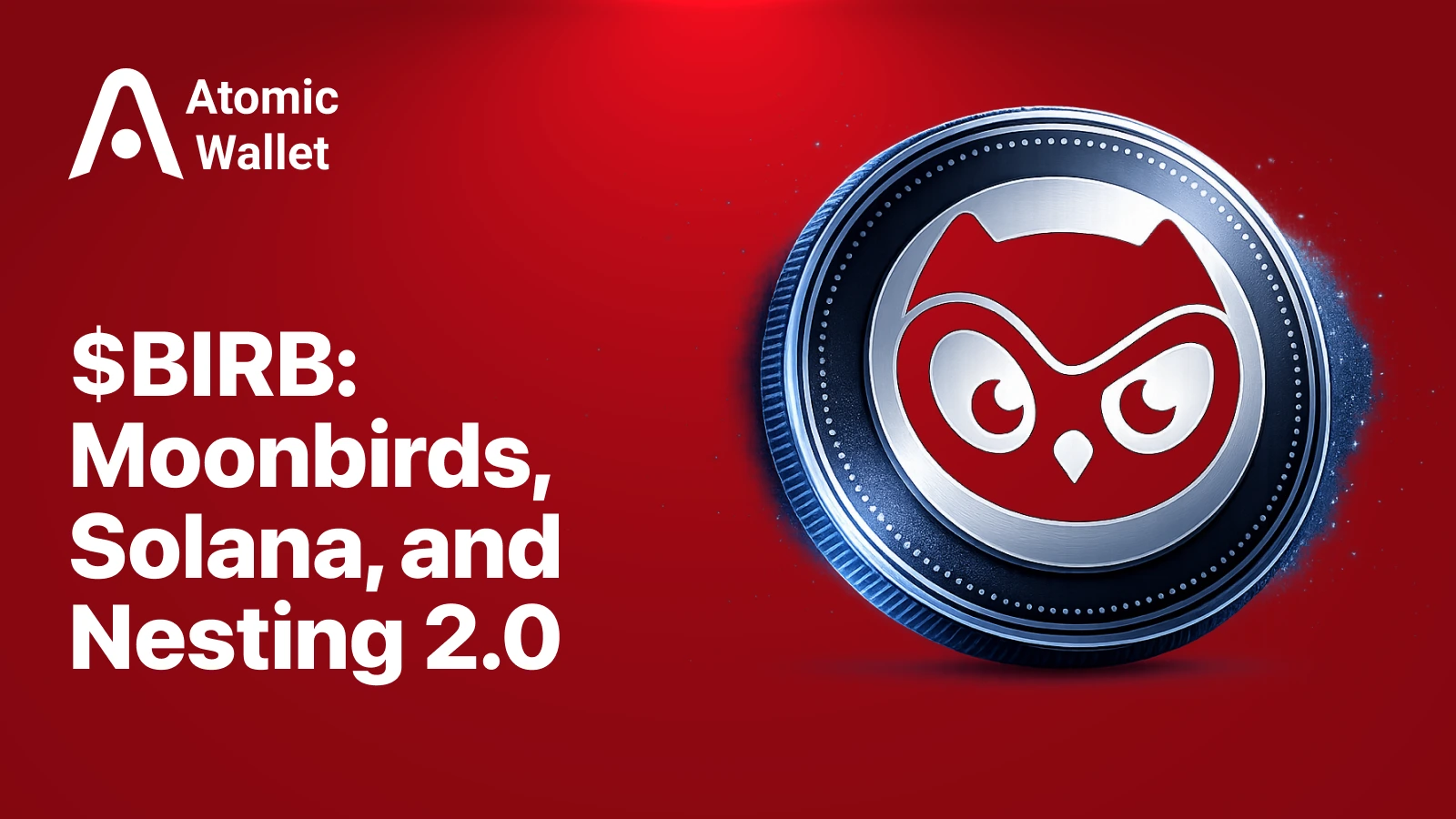
Moonbirds has officially launched the $BIRB token on Solana, marking a major shift from an Ethereum-native NFT brand into a broader ecosystem economy. This is not “Solana dunking on Starknet” style meme fuel, it’s a structural move: a fungible token layer designed to reward holders, fund partnerships, and support long-term community mechanics like Nesting 2.0. The goal here is to explain what $BIRB is, how it connects to Moonbirds NFTs, and why the Solana launch changes distribution and UX.
What Is the $BIRB Token?
The $BIRB token is the ecosystem token for Moonbirds, launched as a Solana-native asset that adds a fungible rewards and incentives layer on top of the existing NFT collections. After Moonbirds was acquired by Orange Cap Games, $BIRB became the mechanism for aligning NFT holders with longer-term ecosystem activity rather than one-off hype cycles.
Key points about the birb token and moonbirds birb:
- $BIRB is the official ecosystem token tied to Moonbirds and related collections
- It launched on Solana as a native token designed for broad distribution and trading
- It expands Moonbirds beyond NFTs into rewards, incentives, and ecosystem mechanics
- It is directly linked to NFT holders through Nesting 2.0-style reward streams over time
Why Moonbirds Chose Solana for $BIRB
Solana gives Moonbirds a distribution and UX layer that is optimized for fast, low-cost transactions—important when a token is meant to be claimed, traded, and used at scale. The Solana ecosystem also offers deep DEX infrastructure and high user activity, which can make it easier for a new token economy to find liquidity and real usage quickly.
Just as importantly, this is not a migration away from Ethereum’s NFT history. Moonbirds originated on Ethereum, but $BIRB launching on Solana is a distribution decision: reaching a different liquidity environment and simplifying trading and reward-claim UX for a wider audience.
$BIRB Tokenomics Explained
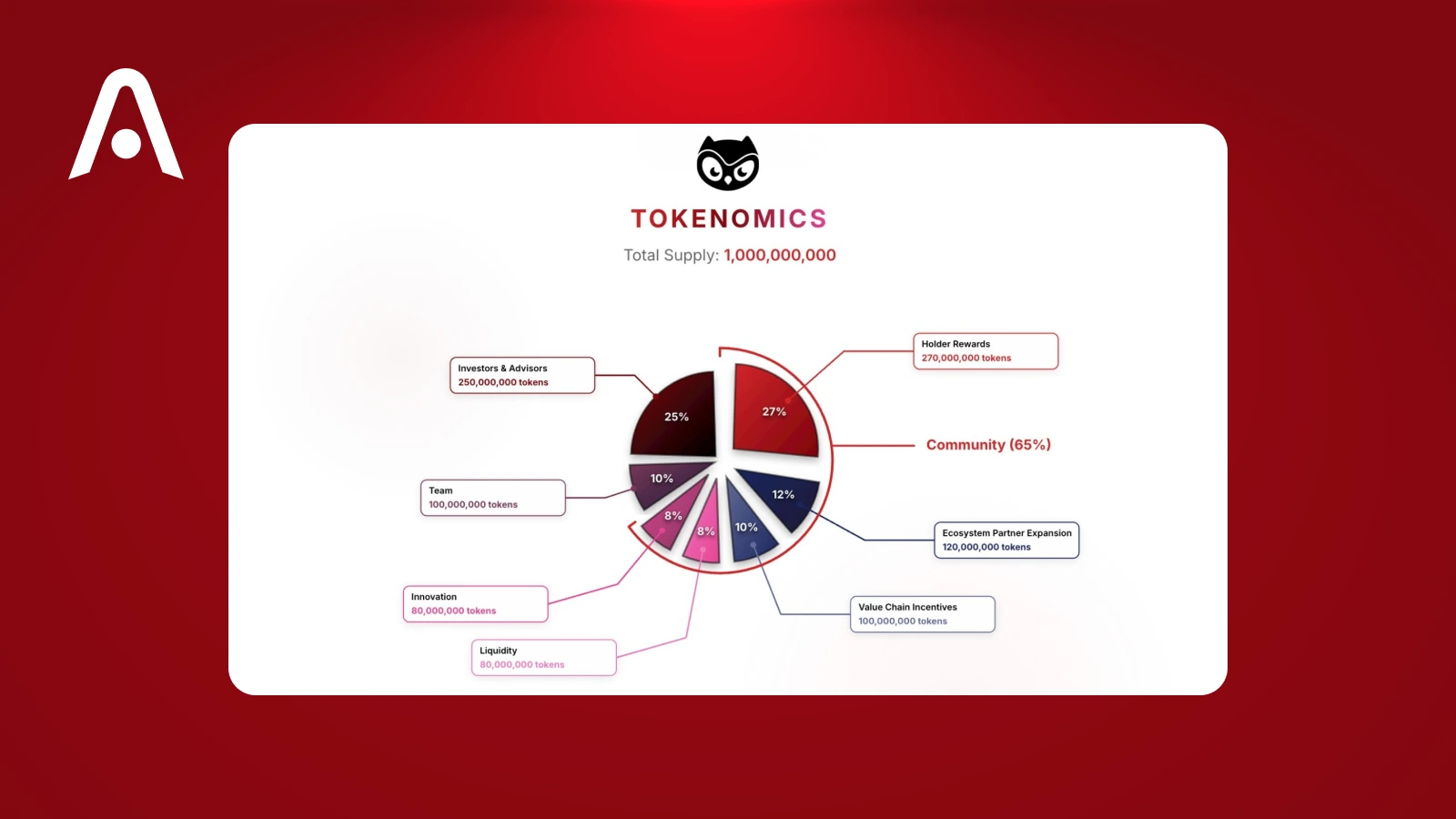
The $BIRB economy is built around long-term participation rather than short-term distribution. The total supply is fixed, with the majority reserved for community-driven use cases tied directly to Moonbirds and its broader ecosystem.
Key elements of birb tokenomics include:
- Total supply: 1,000,000,000 $BIRB
- Community allocation: 65% of supply
- Team allocation: 10%
- Investors & advisors: 25%
- Liquidity and ecosystem buckets: carved out to support trading, partnerships, and future development
This structure signals that $BIRB is meant to function as an ecosystem token rather than a simple speculative asset, with most issuance tied to usage, participation, and time-based distribution.
Community Allocation and Vesting Logic
The largest share of $BIRB is intentionally distributed over time, not upfront. This vesting logic is designed to align NFT holders and contributors with the long-term growth of the Moonbirds ecosystem, rather than encouraging immediate selling pressure.
By stretching rewards across a multi-month schedule, the model aims to balance two competing forces: rewarding early supporters while discouraging short-term farming behavior. Whether this approach succeeds is part of the ongoing debate, but structurally it shifts incentives toward continued engagement instead of one-time claims.
What Is Nesting 2.0?
Nesting 2.0 is the updated reward mechanic that links Moonbirds NFTs to $BIRB distribution over time. Instead of locking NFTs in a way that limits flexibility, the system introduces a protocol-level deposit that keeps participation active while preserving usability.
Key aspects of nesting 2.0 and moonbirds nesting include:
- NFTs are deposited into the nesting protocol rather than “frozen” on marketplaces
- A soulbound representation is issued while the original NFT is nested
- Moonbirds, Mythics, and Oddities are all eligible
- Rewards are designed to favor long-term participation, not instant claims
This design reframes nesting as an ongoing relationship with the ecosystem rather than a one-off staking action.
How $BIRB Rewards Are Claimed Over 24 Months
$BIRB rewards are distributed gradually, following a predictable monthly schedule rather than a single airdrop event.
- Deposit an eligible NFT into the nesting protocol
- Claims occur once per month, on the 28th
- Each month unlocks 1/24 of the total allocation
- Partial-month participation is calculated on a pro-rata basis
- A no-rush window ensures early participants are not penalized for timing
This structure makes it clear that $BIRB rewards are designed to be earned over time, reinforcing long-term alignment instead of encouraging short-term extraction.
The Debate: Long-Term Alignment vs Farming Concerns
The launch of $BIRB exposed a clear split in how the Moonbirds community interprets the token’s incentives. While some see the mechanics as a deliberate move toward long-term alignment, others worry that certain design choices may encourage short-term farming behavior.
Beware of Fake $BIRB Claim Sites
As with most high-profile token launches, the $BIRB rollout has been accompanied by a wave of scam activity. Fake “claim” websites are designed to look official and prompt users to connect wallets, a common pattern used by drainers.
Key red flags to watch for:
- Unofficial domains advertising early or exclusive $BIRB claims
- Links shared outside of verified Moonbirds channels
- Requests to sign unexpected transactions or approvals
- Claims that require urgency or “limited-time” actions
For $BIRB, legitimacy is determined by the token’s onchain contract and verified sources—not by where a link is hosted.
How to Verify the Real $BIRB Token
With multiple fake claim pages circulating, verification matters more than speed. The only reliable way to confirm you are interacting with the real $BIRB token is through onchain data, not website design or social links.
Key verification steps include:
- Check the official SPL token address shared through verified Moonbirds channels
- View the token directly on Solscan to confirm decimals, supply, and holder activity
- Ignore domains and “claim” URLs — domains do not prove legitimacy
- Rely only on announcements from Moonbirds’ official accounts
If the contract address does not match, assume the site is malicious, even if the UI looks professional.
What $BIRB Means for Moonbirds Going Forward
$BIRB represents a structural shift for Moonbirds from a pure NFT project into a broader ecosystem with ongoing incentives. Instead of relying solely on NFT market cycles, the token introduces a way to reward participation, fund partnerships, and support long-term engagement.
For Moonbirds, this moves the brand closer to an ecosystem model where NFTs, tokens, and community activity reinforce each other. Whether that vision succeeds will depend less on short-term price action and more on how consistently the ecosystem delivers value over time.
What Users Should Understand Before Claiming or Trading $BIRB
Before interacting with $BIRB, it’s important to separate mechanics from hype. There is no need to rush into claims or trades, and timing does not provide an advantage within the designed reward structure. Unlocks follow a fixed schedule, and participation is measured over months, not hours.
Just as importantly, $BIRB should not be viewed as a direct proxy for Moonbirds NFT value. The token adds an incentive layer to the ecosystem, but NFTs and tokens follow different market dynamics. Security, patience, and understanding the vesting model matter more than reacting to short-term price movement.
How to Manage $BIRB Without Relying on Third Parties
When interacting with ecosystem tokens like $BIRB, security and self-custody matter more than speed. Using a non-custodial wallet that supports both Solana and Ethereum assets helps you verify tokens onchain, avoid fake claim sites, and manage rewards without relying on third parties.
Atomic Wallet provides a neutral way to store, send, and manage SPL and ERC assets while keeping full control of your keys.