Prediction Markets on Mobile: Why Real-Time Forecasting Is Going Everywhere
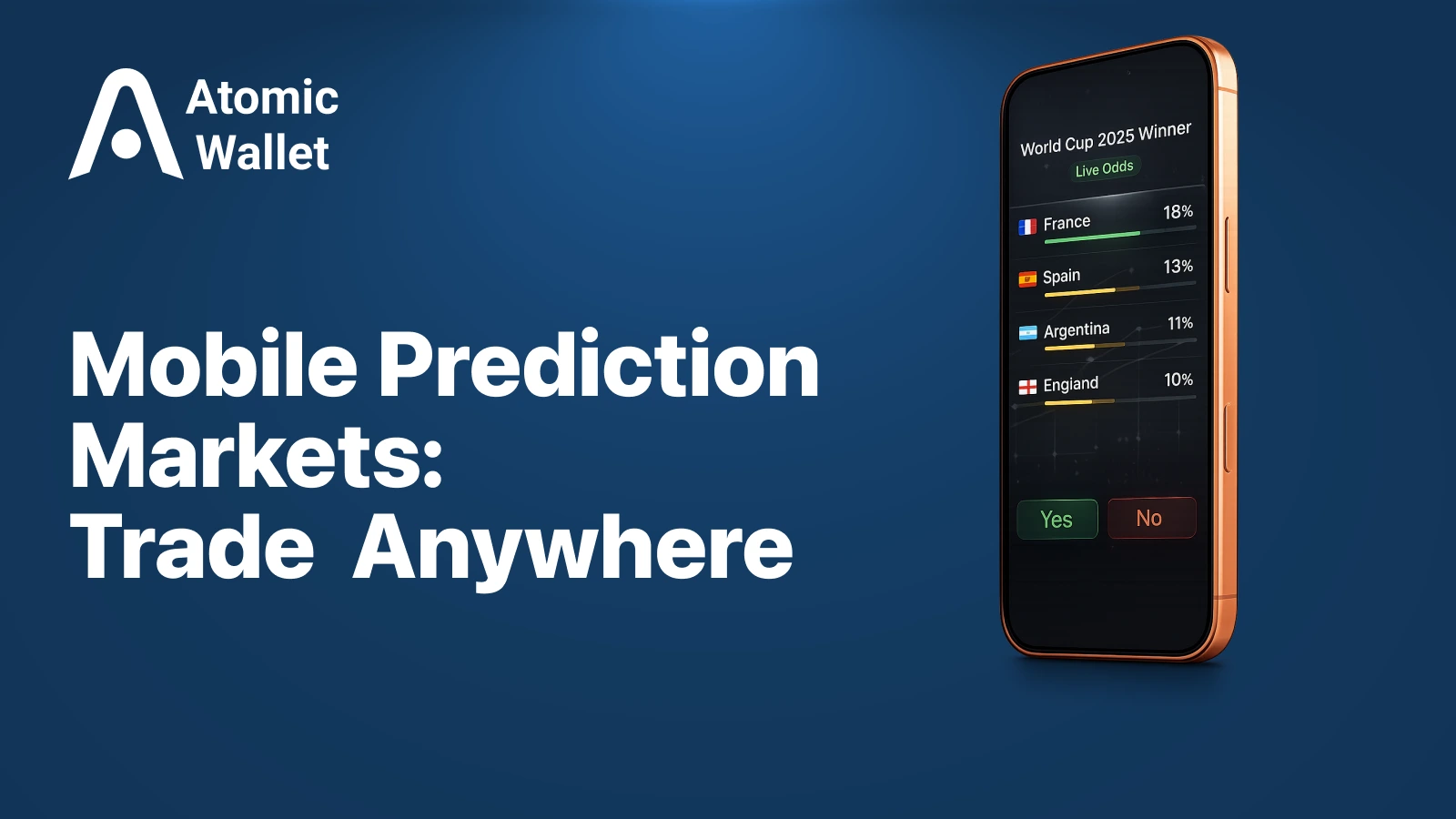
Prediction markets are rapidly becoming one of the internet’s most valuable sources of real-time information.
For years, people relied on news outlets, analysts, and social media to understand what might happen next. Today, a growing number of users are turning to prediction markets instead.
Rather than simply reporting events, prediction markets continuously price the probability of future outcomes.
From elections and financial markets to sports championships and crypto events, these platforms transform forecasts into live markets that update as new information becomes available.
At the same time, the way people consume information has changed.
Modern users rarely wait to get home and open a laptop. Breaking news, market updates, sports scores, and social media discussions are increasingly experienced through mobile devices.
This shift is creating a natural intersection between prediction markets and mobile technology.
As real-time forecasting becomes more mainstream, users expect access to market probabilities wherever they are. Whether following a major election, tracking crypto developments, or monitoring the FIFA World Cup, mobile access is becoming just as important as the forecasts themselves.
Why Prediction Markets Are Growing So Fast
Prediction markets have evolved from niche forecasting tools into one of the fastest-growing categories in finance, sports, and information markets.
Several factors are driving this growth.
First, prediction markets offer something traditional media cannot: a constantly updated probability.
Instead of reading competing opinions about what might happen, users can observe how thousands of participants collectively price an outcome in real time.
This creates a dynamic forecasting environment where expectations adjust immediately as new information emerges.
Several trends continue to accelerate adoption:
- growing interest in crowd-based forecasting
- expanding sports prediction markets
- increased mainstream awareness
- rising trading volumes
- greater institutional attention
The industry itself has also matured significantly.
Platforms focused on prediction markets have attracted substantial user growth and investor interest, while new markets now cover everything from politics and economics to technology, entertainment, and global sporting events.
As a result, prediction markets are increasingly viewed not only as trading venues, but as information networks that help users understand how the broader market interprets future events.
Prediction Markets Are Becoming an Information Layer
Prediction markets are changing the way people consume information by turning expectations into measurable probabilities.
Traditional news answers one question:
What happened?
Prediction markets focus on a different question:
What happens next?
This distinction is becoming increasingly important in a world where information moves quickly and attention spans continue to shrink.
Rather than relying solely on headlines or expert commentary, users can watch market probabilities update as participants react to new developments.
This creates several advantages:
- real-time forecasting
- crowd intelligence
- transparent market expectations
- continuously updated probabilities
- faster information discovery
For many users, prediction markets function as an additional layer on top of traditional news.
A headline might announce a major event, but the market immediately reveals how participants believe that event changes future outcomes.
Whether the subject is sports, politics, economics, or cryptocurrency, prediction markets provide a unique way to visualize collective expectations in real time.
As adoption continues to grow, many observers believe these markets could become an increasingly important part of how people discover, interpret, and respond to information online.
Why News Is Now Mobile-First
The internet has become mobile-first, and news consumption has evolved alongside it.
For most people, the first place they encounter breaking information is no longer a desktop browser.
It is a smartphone.
Whether following financial markets, sports events, crypto developments, or global headlines, users increasingly rely on mobile devices for real-time updates throughout the day.
Several trends have accelerated this shift:
- push notifications
- social media feeds
- live score updates
- mobile news apps
- instant messaging platforms
Information now moves continuously.
A major story can emerge, spread globally, and reshape public expectations within minutes.
As a result, users have become accustomed to receiving updates immediately rather than waiting for scheduled broadcasts, newspapers, or desktop sessions.
This change has fundamentally altered how people interact with information.
Modern audiences expect speed, accessibility, and real-time awareness wherever they happen to be.
That expectation is one of the reasons prediction markets are increasingly moving toward mobile-first experiences.
Why Mobile UX Is Critical for Prediction Markets
Prediction markets are uniquely dependent on speed, making mobile access one of the most important parts of the user experience.
Unlike traditional content platforms, prediction markets react directly to new information.
When an election result, economic report, player injury, or breaking news headline emerges, probabilities can shift within seconds.
Users often want the ability to:
- check market probabilities instantly
- react to breaking news
- monitor active positions
- follow live events
- access markets from anywhere
This is especially important because many prediction market use cases happen away from a desk.
People follow sports from stadiums, bars, airports, trains, and living rooms. They track elections during debates and breaking news events. They monitor crypto markets while commuting or traveling.
In each case, mobile access becomes more than a convenience.
It becomes the primary way users engage with the market.
As prediction markets continue expanding into mainstream audiences, the quality of the mobile experience may become just as important as the accuracy of the forecasts themselves.
World Cup 2026: The Perfect Mobile Prediction Market Use Case
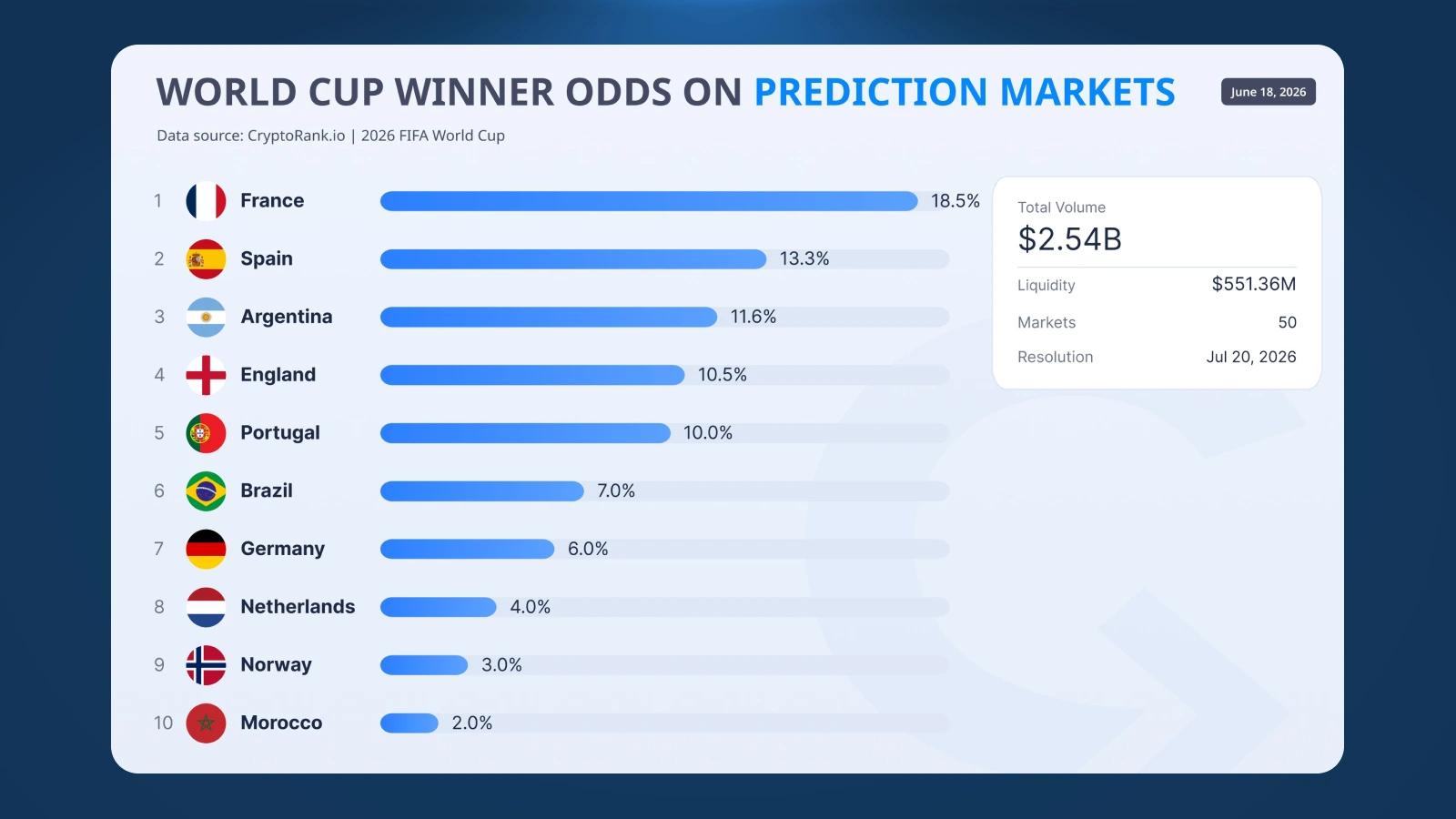
Few global events demonstrate the value of mobile prediction markets better than the FIFA World Cup.
The tournament generates nonstop news, constant discussion, and real-time shifts in expectations.
A single goal, injury, red card, or coaching decision can instantly change how fans and traders view a team’s chances of winning the competition.
This is exactly the type of environment where prediction markets thrive.
Rather than relying on static pre-tournament forecasts, users can watch probabilities evolve throughout the event as new information enters the market.
Several factors make the World Cup particularly suited for mobile forecasting:
- live matches across multiple time zones
- continuous news flow
- global audience participation
- rapidly changing probabilities
- high engagement across social media
The 2026 FIFA World Cup has already generated massive attention across prediction markets, with billions of dollars in trading volume tied to tournament winner forecasts and related sports markets.
For many users, the experience is naturally mobile.
A fan watches a match, receives a notification, checks updated probabilities, and follows how market expectations change in real time—all from a smartphone.
This combination of sports, information, and mobile access represents one of the clearest examples of why prediction markets continue gaining momentum.
From Elections to Sports: Prediction Markets Are Everywhere
Prediction markets are no longer limited to a single category.
What began as a niche forecasting concept has expanded into a broad ecosystem covering many of the events people already follow every day.
Popular categories now include:
- sports
- elections
- cryptocurrency markets
- economic events
- technology developments
- artificial intelligence
The common thread across all of these markets is uncertainty.
Whenever people want to understand the likelihood of a future outcome, prediction markets provide a mechanism for aggregating expectations into a measurable probability.
This versatility is one reason the industry continues to grow.
Users do not need to learn a completely different system for every topic. The same market-based forecasting model can be applied to a World Cup winner, an election result, a crypto milestone, or a major technology announcement.
As more real-world events become available through prediction markets, mobile access becomes increasingly important for keeping pace with constantly changing information.
Prediction Markets vs Traditional News Feeds
Prediction markets and traditional news serve different purposes, but together they can provide a more complete picture of the world.
News platforms focus on reporting events after they happen.
Prediction markets focus on estimating what could happen next.
This distinction helps explain why many users increasingly view prediction markets as a complement to traditional information sources.
When a major event occurs, news outlets provide context and analysis.
Prediction markets immediately reflect how participants believe that event changes future probabilities.
For example, a World Cup injury announcement might generate headlines across sports media. At the same time, prediction markets can instantly show whether traders believe that injury materially affects a team’s chances of winning the tournament.
This ability to translate information into probabilities is one reason prediction markets are attracting increasing attention from both traders and everyday users.
Why Prediction Markets Fit the Mobile Era
Prediction markets align naturally with the way people already consume information online.
Modern digital behavior is fast, mobile, and constantly connected.
Users move between notifications, social feeds, messaging apps, and live updates throughout the day. Information is no longer consumed in long, uninterrupted sessions.
Instead, it arrives in a continuous stream.
Prediction markets fit this environment because they are built around real-time updates and constantly changing probabilities.
Several characteristics make them particularly suited to mobile behavior:
- instant information access
- real-time updates
- short interaction cycles
- live event tracking
- continuous market feedback
Rather than reading lengthy forecasts, users can quickly understand market expectations through a simple probability.
As smartphones become the primary gateway to news, sports, finance, and social media, prediction markets are increasingly becoming part of the same mobile-first information ecosystem.
For many users, checking market probabilities may soon become as common as checking headlines, scores, or social feeds.
How Atomic Makes Prediction Markets Accessible Anywhere
As prediction markets become more mobile, users need simple ways to access blockchain-based markets while maintaining control of their assets.
The growth of mobile forecasting is closely connected to the growth of self-custody.
Users increasingly want the ability to manage digital assets, follow market opportunities, and interact with onchain ecosystems directly from their smartphones.
Several factors are driving this shift:
- mobile-first crypto adoption
- demand for self-custody
- growing interest in prediction markets
- faster access to market opportunities
- increased use of onchain applications
Atomic Wallet helps support this mobile-first experience by giving users access to their digital assets wherever they are.
Whether following sports markets, monitoring election forecasts, or exploring emerging prediction market ecosystems, mobile access allows users to stay connected without being tied to a desktop environment.
As forecasting platforms continue expanding, the ability to manage assets securely from a smartphone may become an increasingly important part of the overall user experience.
Conclusion: The Future of Forecasting Is Mobile
Prediction markets are becoming a new way to understand the world.
Rather than simply consuming information after events occur, users can now follow how the market collectively evaluates future outcomes in real time.
At the same time, the internet itself has become mobile-first.
People follow sports, news, financial markets, and social conversations from their phones throughout the day. As a result, prediction markets are naturally evolving toward the same model.
Several long-term trends are supporting this shift:
- growth of real-time forecasting
- expanding prediction market adoption
- mobile-first information consumption
- increasing use of self-custody tools
- broader access to onchain applications
From the FIFA World Cup and elections to crypto markets and technology developments, prediction markets are becoming increasingly relevant across a wide range of topics.
As these platforms continue growing, one thing appears increasingly clear:
The future of forecasting is not only real-time—it is mobile.