Top Tokenized Gold Coins: PAX Gold, Tether Gold, XAUm, and CGO
Tokenized gold sits at the intersection of traditional safe-haven assets and onchain infrastructure. Instead of betting on a “gold narrative” token, users get blockchain-based exposure to real, physical gold held in vaults. This article compares the leading tokenized gold options, explains how the category works, and outlines why assets like PAXG and XAUt are increasingly used as an alternative to both stablecoins and paper gold.
What Is Tokenized Gold?
Tokenized gold refers to blockchain tokens that represent ownership of physical gold stored in professional vaults. Each token is backed by a specific amount of real gold and can be transferred, held, or used like any other onchain asset.
Key characteristics of tokenized gold include:
- Each token represents a direct claim on physical gold
- Gold is stored offchain by custodians, usually to LBMA standards
- Tokens can be transferred globally, 24/7
- Unlike ETFs, tokens settle onchain and can be self-custodied
- Unlike synthetic tokens, value is tied to real bullion, not derivatives
In crypto, tokenized gold matters because it offers a non-USD store of value that can move and integrate across blockchains without relying on traditional market hours or intermediaries.
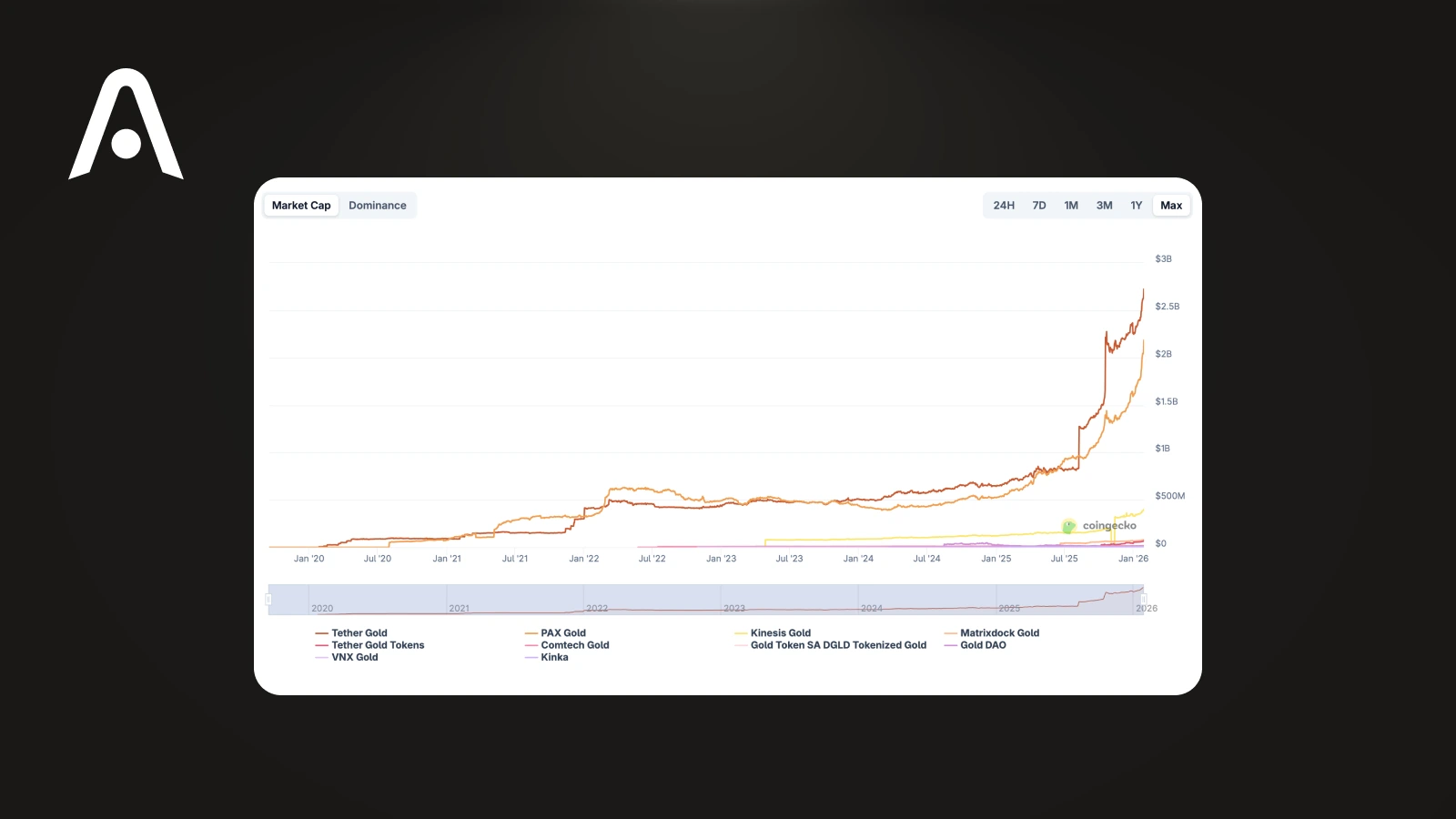
Why Tokenized Gold Is Gaining Attention Now
Interest in tokenized gold has grown as investors look for assets that behave differently from both volatile cryptocurrencies and fiat-backed stablecoins. Gold’s role as a long-term store of value becomes more attractive during periods of macro uncertainty, high inflation concerns, or currency debasement narratives.
At the same time, the rise of real-world asset tokenization has made gold easier to hold and transfer in digital form. For crypto users, tokenized gold offers exposure to a historically stable asset while remaining compatible with onchain wallets, DeFi infrastructure, and self-custody workflows.

Tether Gold (XAUt)
Tether Gold is a tokenized gold product issued by Tether that represents ownership of physical gold bars stored in secure vaults. Each XAUt token corresponds to one troy ounce of gold, with ownership linked to specific allocated bars rather than pooled exposure.
Key points about Tether Gold include:
- Backed by physical, allocated gold bars
- Each token represents one troy ounce of gold
- Ownership model tied to specific bar allocations
- Commonly used as a gold-backed store of value onchain
- Benefits from Tether’s brand reach and existing crypto liquidity
At the same time, XAUt follows Tether’s broader transparency model, which relies on attestations rather than full public audits. This makes it appealing for users prioritizing liquidity and brand familiarity, while still requiring trust in the issuer and custodian structure.
Pax Gold (PAXG)
Pax Gold is a tokenized gold asset issued by Paxos, designed with an institutional-grade structure. Each PAXG token represents one troy ounce of London Good Delivery gold stored in LBMA-approved vaults.
Key characteristics of Pax Gold include:
- Backing by LBMA-accredited gold bars
- One-to-one mapping between tokens and physical gold
- Clear redemption pathways for physical gold or cash
- Strong regulatory positioning through Paxos
- Widely used by institutions and long-term holders
PAXG is often viewed as the most “traditionally compliant” tokenized gold option. Its appeal comes from regulatory clarity and redemption mechanics, making it a preferred choice for users who value institutional trust frameworks over pure onchain liquidity.
XAUm (Matrixdock Gold)
Matrixdock issues XAUm as a tokenized gold product focused on real-world asset infrastructure. Like other gold-backed tokens, XAUm represents ownership of physical gold held in professional vaults, with a structure designed to integrate cleanly into onchain workflows.
Key aspects of XAUm include:
- Issued by an RWA-focused provider rather than a stablecoin issuer
- Backed by physical gold stored with third-party custodians
- Uses a unit model aligned with standard gold measurements
- Positioned as an alternative to PAXG and XAUt
- Often highlighted for its Asia-focused infrastructure and custody setup
XAUm is typically viewed as a diversification option within tokenized gold, appealing to users who want exposure beyond the dominant Paxos and Tether ecosystems.
Comtech Gold (CGO)
Comtech Gold takes a different approach to tokenized gold by using a gram-based model. Each CGO token represents one gram of physical gold, making it more accessible for smaller denominations and frequent transfers.
Key features of Comtech Gold include:
- One token equals one gram of physical gold
- Designed for fractional ownership and smaller transaction sizes
- Operates within a payments- and remittance-friendly framework
- Built on infrastructure optimized for enterprise and trade use cases
- Positioned as a practical alternative to ounce-based gold tokens
The gram-based structure makes CGO particularly suitable for users who want precise allocation, smaller exposure sizes, or use cases closer to payments than long-term storage.
Key Differences Between Tokenized Gold Tokens
Although all tokenized gold assets aim to represent physical bullion onchain, their structures differ in ways that affect usability, liquidity, and redemption. Understanding these differences helps determine which token best fits long-term holding, DeFi usage, or practical transfers.
Risks to Understand Before Using Tokenized Gold
Tokenized gold reduces some frictions of traditional gold ownership, but it introduces its own set of risks that users should understand.
Key risks include:
- Custody risk: You rely on issuers and custodians to properly store and manage the underlying gold
- Transparency models: Some projects use attestations rather than full audits
- Redemption constraints: Physical redemption often comes with minimums, fees, or geographic limits
- Liquidity and spreads: Thin markets can lead to slippage during stress periods
- Regulatory considerations: Rules around commodity-backed tokens can change over time
Understanding these factors helps set realistic expectations and avoid treating tokenized gold as risk-free.
How to Choose a Tokenized Gold Token
Choosing a tokenized gold asset depends less on branding and more on how you plan to use it. Some tokens are better suited for long-term storage, others for onchain liquidity or smaller, more flexible transfers.
In practice, the decision comes down to a few questions: do you care more about institutional-style custody and redemption, or ease of transfer and liquidity? Do you need ounce-based exposure for storage, or gram-based units for precision and payments? Prioritizing trust structure, liquidity, and compatibility with your wallet setup usually matters more than minor fee differences.
For users who want exposure to gold-backed tokens while keeping control of their assets, self-custody remains a core principle. Managing tokenized gold securely alongside other onchain assets in a single wallet helps reduce friction and keeps long-term ownership simple. Atomic Wallet provides a simple way to hold, send, and manage tokenized gold tokens alongside other crypto assets, without relying on centralized platforms.