What Is XDC Network? The Trade Finance Blockchain Gaining New Attention

XDC spent years outside the center of crypto attention.
While the market rotated between meme coins, AI narratives, and high-speed Layer-1 competition, XDC focused on something far less retail-friendly: trade finance infrastructure, enterprise settlement, and tokenized real-world assets.
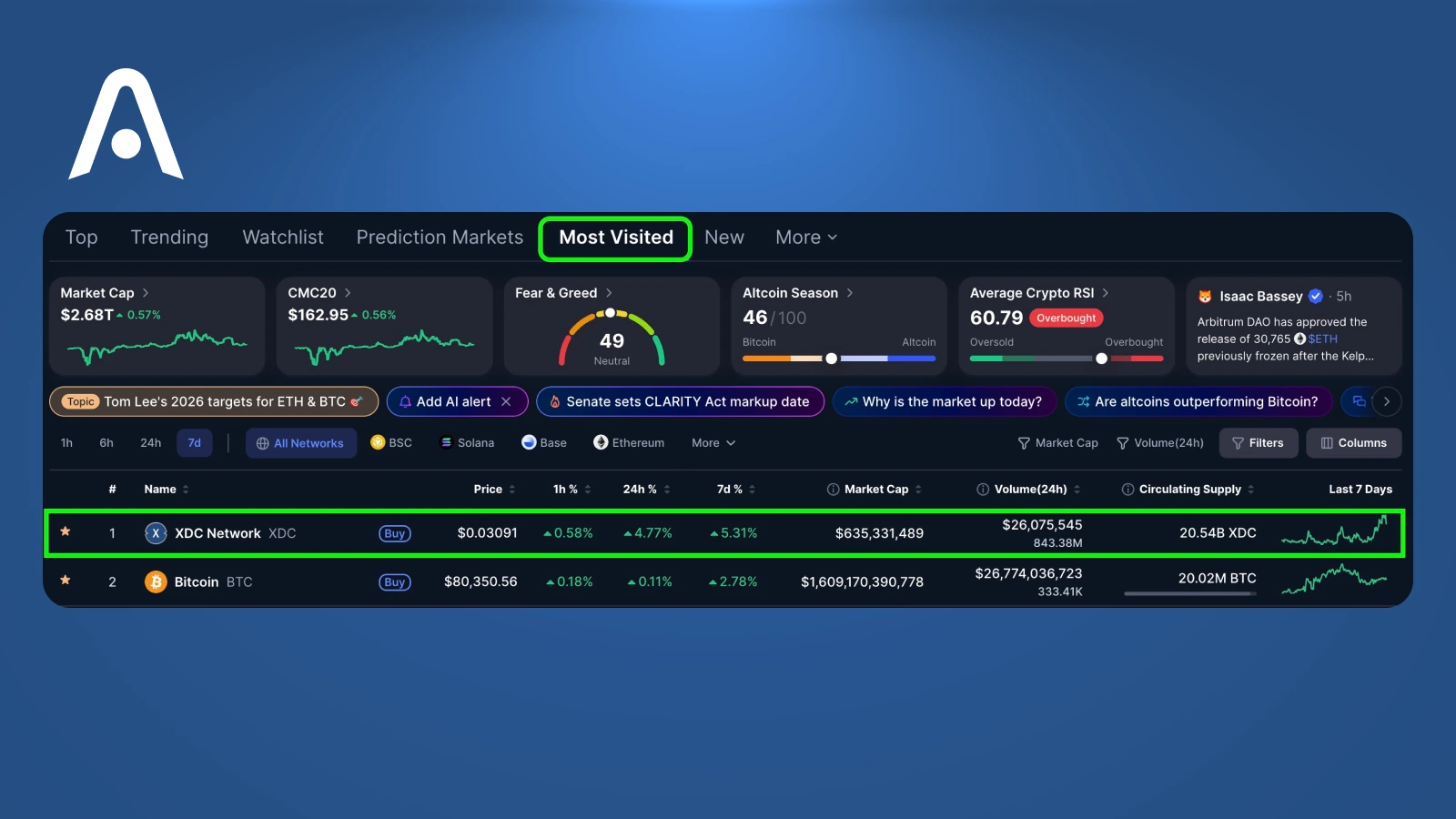
Now that RWAs have become one of crypto’s strongest institutional narratives, attention is starting to return to projects that were building in that direction long before the trend accelerated. XDC’s recent surge in visibility — including becoming one of CoinMarketCap’s most visited assets — reflects that shift.
Why XDC Is Suddenly Getting Attention
XDC is attracting renewed attention because the market is rotating toward RWAs, institutional infrastructure, and blockchain-based trade finance narratives.
For years, XDC remained relatively quiet compared to more speculative Layer-1 ecosystems. The project focused heavily on enterprise use cases instead of retail hype cycles, which kept it outside most mainstream crypto conversations.
That dynamic started changing as tokenized real-world assets moved into the spotlight. Investors began looking beyond generic smart contract platforms and toward networks built specifically for settlement, compliance, and financial infrastructure.
XDC’s positioning suddenly looked much more relevant:
- trade finance integration
- RWA tokenization
- institutional blockchain infrastructure
- ISO 20022 compatibility narratives
- enterprise-oriented ecosystem growth
The market attention may be recent, but the infrastructure narrative behind XDC has been building for years.
What Is XDC Network?
XDC Network is an EVM-compatible Layer-1 blockchain focused on trade finance, enterprise payments, and tokenized real-world assets.
The network was designed around business and institutional use cases rather than purely retail DeFi activity. Its core positioning centers on fast settlement, low transaction costs, interoperability, and infrastructure suitable for financial workflows.
Technically, XDC supports Ethereum-compatible smart contracts, allowing developers to use familiar Solidity tooling while operating inside the XDC ecosystem.
The broader thesis behind the network is straightforward: financial systems handling trade documents, settlement, payments, and asset tokenization still rely heavily on fragmented infrastructure and slow processes. XDC aims to provide blockchain rails optimized for those environments.
That is why the project is often discussed alongside:
- trade finance digitization
- tokenized commodities
- enterprise blockchain adoption
- cross-border settlement
- real-world asset infrastructure
Instead of competing directly in retail speculation narratives, XDC has consistently positioned itself around institutional blockchain utility.
Why Trade Finance Matters for Blockchain
Trade finance remains heavily dependent on paper-based processes and fragmented systems, which creates delays, settlement friction, and limited access to capital.
This is the problem XDC has targeted from the beginning.
Global trade still relies on invoices, bills of lading, letters of credit, and document verification workflows that often move across multiple institutions and jurisdictions. Settlement can take days, while smaller businesses frequently struggle to access financing at all.
That inefficiency created what is commonly referred to as the global trade finance gap — a multi-trillion-dollar shortfall between what businesses need and what traditional financial systems are willing or able to provide.
Blockchain infrastructure becomes attractive in this environment because it can digitize and coordinate parts of the process:
- document verification
- asset tracking
- payment settlement
- tokenized trade instruments
- cross-border value transfer
This is also why the RWA narrative connects naturally to trade finance. Once financial documents and assets become digitally transferable, blockchain networks start competing to become the infrastructure layer underneath them.
How XDC Fits Into the RWA Narrative
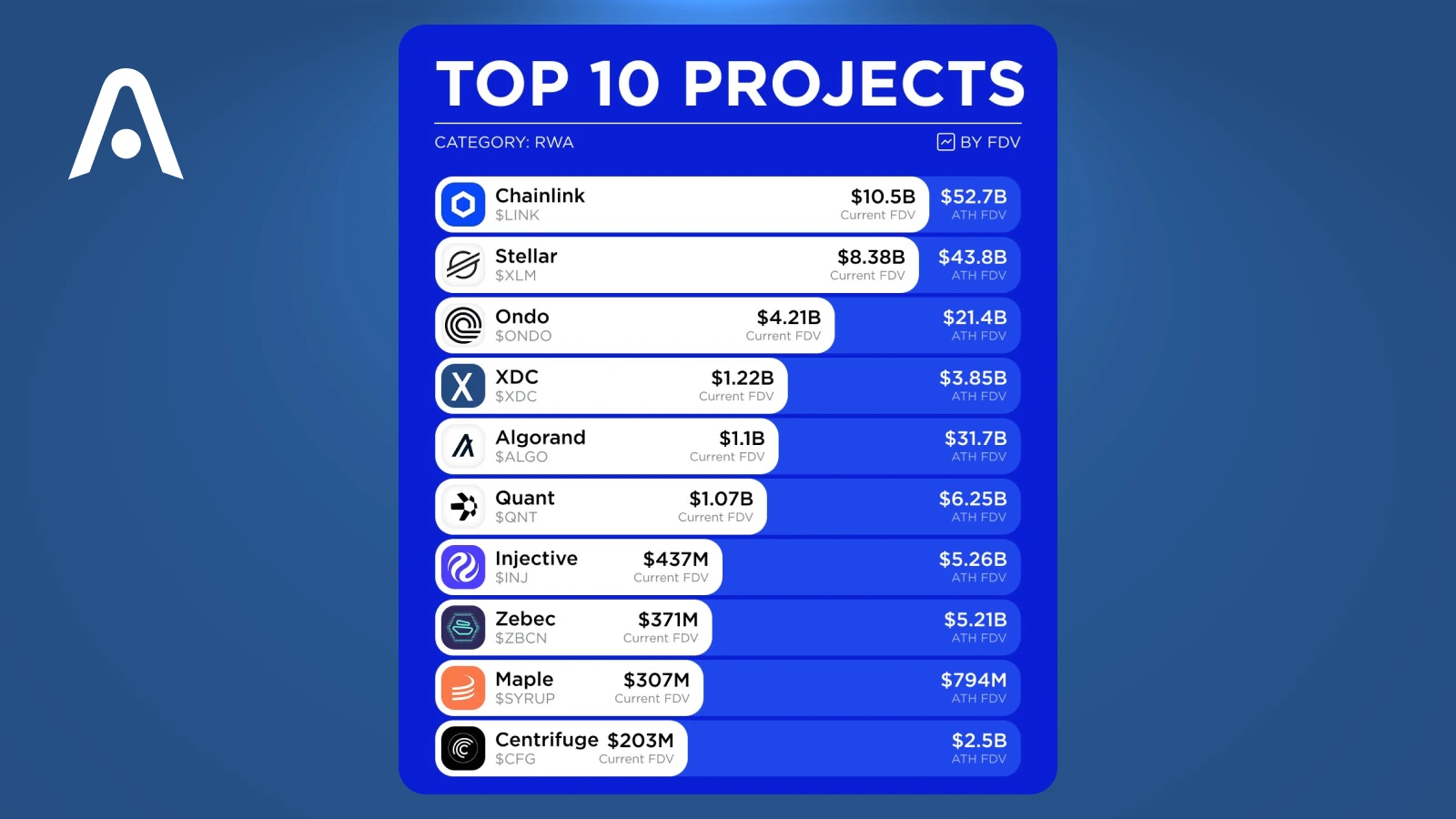
XDC is positioning itself around tokenized real-world assets and financial infrastructure rather than competing as a generic retail-focused Layer-1.
That distinction matters because the RWA sector is developing differently from earlier crypto cycles. Instead of focusing primarily on speculative tokens, the narrative is shifting toward bringing existing financial assets and settlement systems on-chain.
XDC fits into that trend through several themes:
- tokenized trade finance
- digital document infrastructure
- tokenized commodities
- enterprise settlement systems
- blockchain-based payment rails
The ecosystem has increasingly leaned into this positioning. Partnerships and integrations connected to trade documents, institutional custody, payments, and tokenized assets have reinforced the idea that XDC is trying to become infrastructure rather than just another smart contract network.
That narrative also separates XDC from many Layer-1 competitors. Most chains compete for general application activity. XDC continues pushing toward enterprise finance and RWAs as its core identity.
What Makes XDC Different From Other Layer-1s
XDC focuses more directly on enterprise finance and trade infrastructure than most Layer-1 ecosystems competing for broad retail activity.
Many blockchain networks position themselves as general-purpose smart contract platforms. XDC takes a narrower approach by concentrating on areas like trade finance, settlement, payments, and tokenized assets.
That specialization shapes how the network is presented across the ecosystem.
The result is a network that looks less like a retail-first DeFi ecosystem and more like infrastructure aimed at financial workflows.
XDC, ISO 20022, and Institutional Infrastructure
XDC’s institutional narrative is closely tied to financial messaging standards, enterprise integrations, and infrastructure designed for regulated environments.
One of the most discussed parts of the XDC ecosystem is its connection to ISO 20022 narratives — the messaging standard increasingly associated with modern financial communication systems.
That positioning became more visible through figures like André Casterman, a former SWIFT executive who became involved in the XDC ecosystem around trade finance initiatives.
The broader goal is clear: make blockchain infrastructure more compatible with how institutional finance already operates.
This is also why the ecosystem frequently highlights:
- enterprise custody support
- financial messaging compatibility
- regulated asset tokenization
- trade documentation systems
- institutional payment infrastructure
Whether the market fully prices that narrative yet is another question. But it explains why XDC is often discussed differently from typical Layer-1 speculation cycles.
Why Traders Started Watching XDC Again
The market often rediscovers infrastructure projects when narratives shift toward sectors they spent years building around.
That is part of what happened with XDC.
As RWAs, tokenized commodities, and institutional blockchain infrastructure gained momentum, traders started looking for networks already positioned in those areas instead of chains trying to retrofit the narrative afterward.
At the same time, attention metrics around XDC accelerated sharply. The project moved back into broader crypto discussions as users noticed:
- rising visibility on market-tracking platforms
- growing RWA interest across crypto
- institutional integration narratives
- renewed focus on enterprise blockchain infrastructure
This is where the “sleeping giant” narrative around XDC started gaining traction. The idea is not that the network appeared suddenly, but that the market is only now beginning to pay attention to infrastructure that has existed for years.
XDC and the Future of Tokenized Assets
If tokenized real-world assets continue expanding, networks built around settlement and enterprise workflows may become increasingly important.
That is the long-term thesis surrounding XDC.
RWAs are pushing blockchain beyond purely digital speculation and into areas connected to traditional finance:
- trade finance
- commodities
- payments
- settlement infrastructure
- tokenized financial instruments
For blockchain networks, this creates a different kind of competition. The focus shifts away from meme cycles and toward reliability, compliance compatibility, interoperability, and institutional usability.
XDC’s strategy aligns closely with that transition. Instead of competing primarily for retail DeFi activity, it has spent years building around the idea that blockchain adoption may ultimately be driven by real financial infrastructure moving on-chain.
Where to Access and Store XDC
As interest around XDC grows, users need reliable ways to store, manage, and interact with the network’s ecosystem.
Because XDC is EVM-compatible, it can integrate with familiar wallet infrastructure and smart contract tooling while still operating as its own blockchain network.
For users exploring the ecosystem, the main areas typically include:
- storing XDC securely
- interacting with tokenized assets
- accessing ecosystem applications
- managing transfers and payments
- tracking emerging RWA-related activity
Atomic Wallet provides support for managing XDC alongside a broader range of digital assets, giving users a simpler access layer into the ecosystem without needing enterprise-level infrastructure setup.
Conclusion: XDC’s Long-Term Infrastructure Bet
XDC is not trying to dominate crypto through short-term hype cycles — it is positioning itself around long-term financial infrastructure.
That approach kept the network relatively under the radar while much of the market focused on speculation-driven narratives. But as crypto shifts toward tokenized assets, enterprise settlement, and blockchain-based financial systems, XDC’s positioning has started attracting renewed attention.
The core thesis behind the project has remained consistent:
- digitize trade finance
- support tokenized real-world assets
- build enterprise-ready blockchain infrastructure
- connect traditional finance with on-chain systems
Whether that thesis fully succeeds is still an open market question. But the reason XDC is being discussed again is becoming much clearer.