What is aelf?
aelf is a layer 1 blockchain that splits work between a main chain and several side chains, so different apps do not compete for the same block space. Developers write its smart contracts in C#, a language many business programmers already know, instead of a blockchain-specific one. The project now describes itself as an AI-enhanced layer 1.
ELF is the native token of aelf. It pays for activity on the network, including side chain indexing fees, and is used to vote for the nodes that produce blocks.
How does aelf work?
aelf uses a consensus called AEDPoS. Anyone can stand for election by locking ELF, holders vote, and the elected block producers take turns in rounds: each produces one block per round and has 4 seconds to submit it, or it is penalized. Side chains are indexed by the main chain, and that cross-chain indexing is paid for in ELF.
ELF supply
ELF has a fixed total issuance of 1 billion tokens, with 12% set aside for mining rewards to block producers. Around 831.16 million ELF are in circulation today.
A short history of aelf
aelf was presented to investors at a CoinDesk conference on December 10, 2017. Its testnet went live in 2018 and its mainnet followed in 2020. The project is led by its founder and CEO, known as Auric.
What moves the price of ELF?
ELF follows the wider crypto market. The number of apps and side chains built on aelf, voting and node activity, and news about its AI features shape demand for the token. Since the supply is fixed, there is no ongoing inflation beyond scheduled mining rewards.
How to store aelf safely
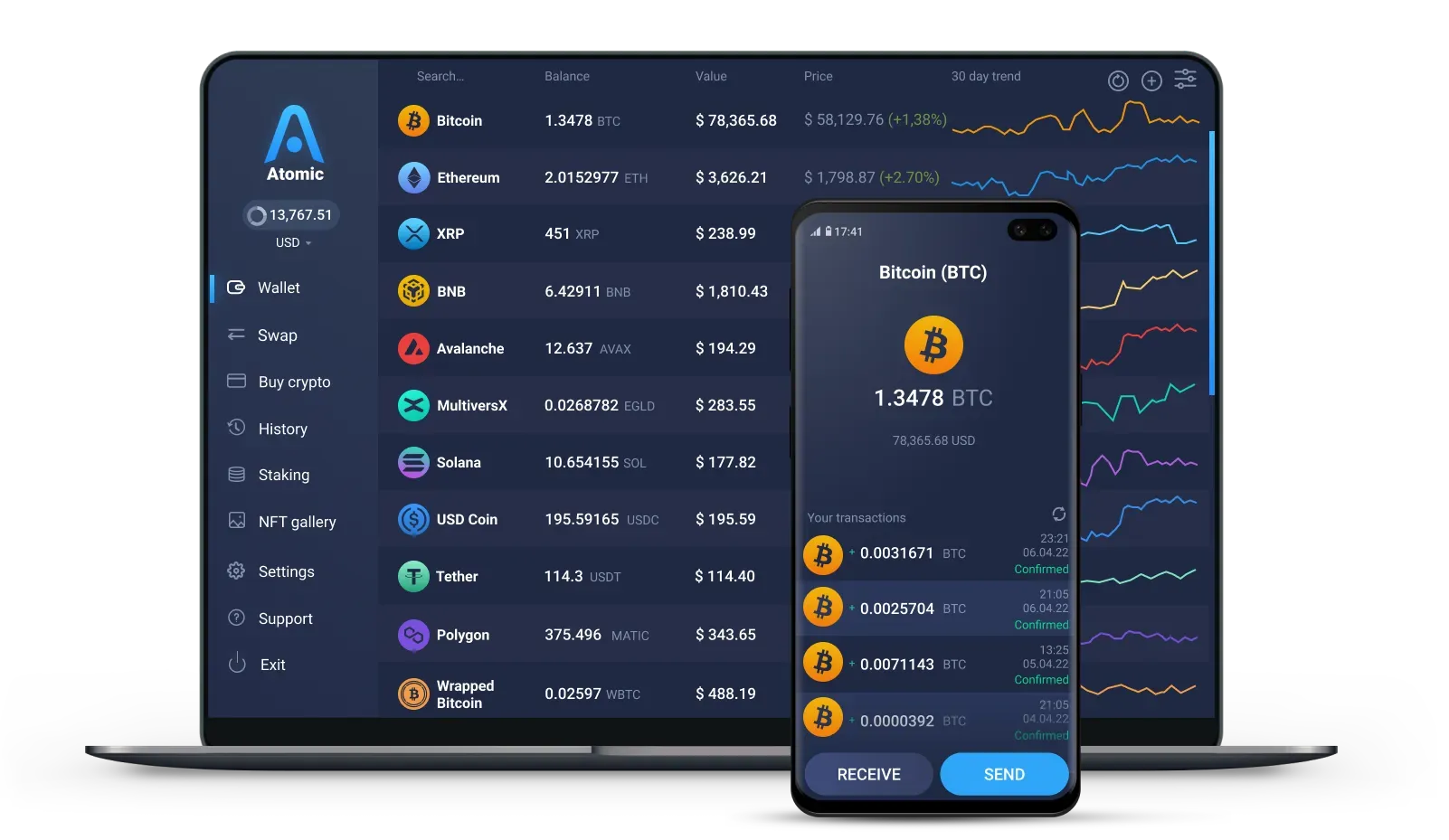
The safest way to hold ELF is a self-custody wallet, where only you control the private keys. In Atomic Wallet your keys are encrypted and never leave your device, and a 12-word backup phrase lets you restore your wallet on any device. You can buy ELF with a card, swap it for BTC, USDT or ETH, and keep it next to the rest of your crypto in one app.