What is USDC?
USDC is a stablecoin pegged to the US dollar. It is issued by regulated affiliates of Circle and can be redeemed 1:1 for dollars. With USDC you can hold dollars on a blockchain, send them in minutes at any hour and use them in crypto apps, without converting back to a bank account each time.
Circle publishes a monthly reserve attestation, so holders can check that the tokens in circulation are matched by dollars and Treasuries.
What backs USDC?
Circle says every USDC is backed 100% by highly liquid cash and cash-equivalent assets. Part of the reserves is cash held at regulated banks. The rest sits in the Circle Reserve Fund, which can hold short-dated US Treasuries, overnight Treasury repurchase agreements and cash. The fund is managed by BlackRock and held in custody at The Bank of New York Mellon.
The monthly attestations are prepared by a Big Four accounting firm, and Deloitte is Circle's independent auditor.
Where does USDC run?
Circle issues USDC natively on dozens of blockchains, including Ethereum, Solana, Arbitrum, Base, Polygon, Avalanche and Optimism. USDC on each network is its own token, so the sender and the receiver must use the same network. Bridged versions issued by third parties also exist and are not the same as native USDC.
USDC supply
USDC has no fixed supply. Circle mints new USDC when customers deposit dollars and burns it when they redeem, so the number of tokens follows demand and matches the reserves. Around 68.44 billion USDC are in circulation today.
A short history of USDC
USDC launched on September 26, 2018. It was introduced by Circle together with the CENTRE consortium, a joint project of Circle and Coinbase that set the rules for the stablecoin. In 2023 the consortium was closed and Circle took over sole governance of USDC. Since then USDC has spread to many new blockchains.
Why does USDC stay near $1?
USDC is not built to gain value. Its price holds near one dollar because Circle mints and redeems it 1:1 for dollars and keeps matching reserves. If the market price slips below $1, buying USDC cheap and redeeming it at par pulls the price back. Short moves off the peg are possible when there are doubts about the reserves or the banks that hold them.
How to store USDC safely
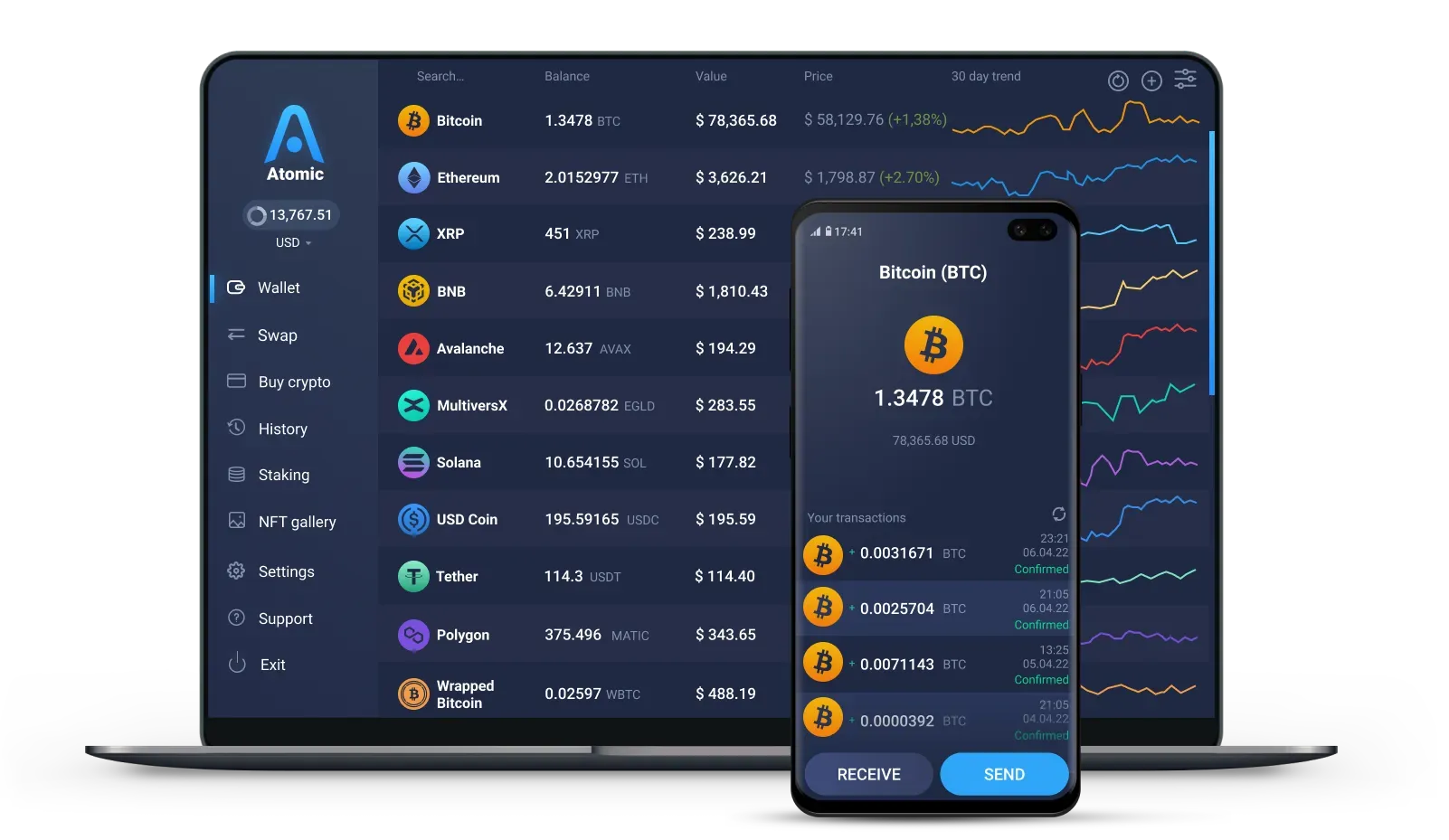
The safest way to hold USDC is a self-custody wallet, where only you control the private keys. In Atomic Wallet your keys are encrypted and never leave your device, and a 12-word backup phrase lets you restore your wallet on any device. Keep a little of the network's own coin, such as ETH on Ethereum or SOL on Solana, to pay the fee when you send USDC.