What is TRON?
TRON is a blockchain designed for fast, cheap transactions and decentralized apps. Its smart contracts are compatible with Ethereum's, so developers can move their apps over with few changes. Its biggest use today is stablecoins: TRON carries a large share of all USDT, and many people use it to send dollars across borders for a fraction of a cent.
TRX is the native coin of TRON. It pays for activity on the network, gives holders a vote in choosing who runs it, and can be staked for rewards.
How does TRON work?
TRON uses delegated proof of stake. TRX holders vote for Super Representatives, and the 27 candidates with the most votes produce blocks and confirm transactions. A new block is added every 3 seconds.
Instead of paying a fee for every action, you can stake TRX to get two network resources: bandwidth for simple transfers and energy for smart contracts such as USDT transfers. If you do not have enough of them, the network burns a small amount of TRX to cover the cost.
Staking TRX
When you stake TRX, you lock it to get bandwidth and energy and to vote for Super Representatives, who share part of their block rewards with voters. In Atomic Wallet you can stake TRX in a few taps and earn about 5% a year, while your keys stay with you.
TRX supply
TRX has no fixed maximum supply. New TRX is created as block rewards, while part of the fees paid on the network is burned. When the network is busy, more TRX can be burned than created, and the supply shrinks. Around 95.05 billion TRX are in circulation today.
A short history of TRON
Justin Sun founded TRON in 2017 and raised funds through a token sale. TRX first existed as an Ethereum token and moved to TRON's own blockchain after the mainnet launched on May 31, 2018. The same year TRON bought BitTorrent, the file-sharing company. Since then TRON has grown into one of the most used networks for stablecoin payments.
What moves the price of TRX?
TRX moves with the wider crypto market. Its price also follows how much the network is used: more USDT transfers and app activity mean more TRX staked for energy and more TRX burned for fees. News about TRON's founder and about stablecoin rules affects the price too.
How to store TRON safely
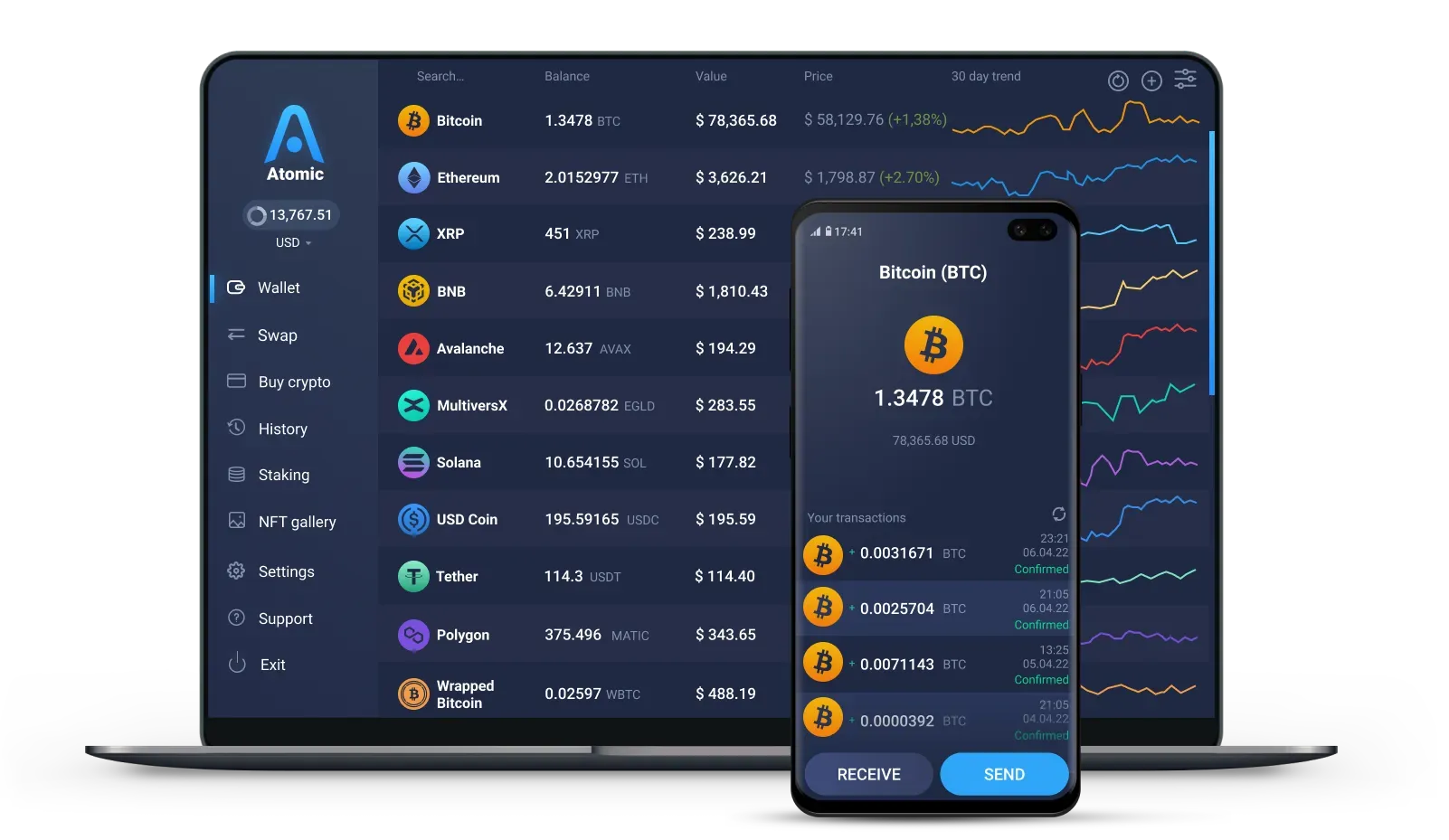
The safest way to hold TRX is a self-custody wallet, where only you control the private keys. In Atomic Wallet your keys are encrypted and never leave your device, and a 12-word backup phrase lets you restore your wallet on any device. The same wallet holds TRC-20 tokens, so you can keep TRX and USDT on TRON in one place and swap between them.