What is Stacks?
Stacks is a blockchain that brings smart contracts and apps to Bitcoin. Every Stacks block is anchored to Bitcoin, so the network inherits Bitcoin's security, while transactions run faster and cheaper on Stacks itself. Through sBTC, a token backed by Bitcoin, BTC can be used in Stacks apps.
STX is the native coin. It pays transaction fees, rewards miners and is locked by holders in stacking, which earns rewards in Bitcoin.
How does Stacks work?
Stacks uses Proof of Transfer. Miners spend BTC to compete for the right to produce Stacks blocks during each Bitcoin block, and the winner is drawn at random, weighted by the BTC bid. Since the Nakamoto upgrade in October 2024 a miner produces a new Stacks block about every 10 seconds, and signers who hold at least 70% of the stacked weight must approve each block.
Because miners reuse Bitcoin's work, Stacks needs no significant extra electricity.
Stacking STX
Holders can lock STX in stacking for reward cycles of about two weeks and earn Bitcoin rewards, paid as sBTC by default. The PoX-5 upgrade in July 2026 removed the minimum amount for individual stakers and let BTC holders take part by pairing their BTC with locked STX.
STX supply
STX has no fixed maximum supply. New STX is created as a reward for every block. The figure of 1.81 billion that is often quoted was an early estimate of supply in 2050, not a cap. In 2025 holders approved SIP-031, which raised emissions for five years to fund a community endowment. Any change to the supply needs a public proposal and an on-chain vote. Around 1.89 billion STX are in circulation today.
A short history of Stacks
Stacks grew out of Blockstack, the project's earlier name. The Stacks 2.0 mainnet launched on January 14, 2021, and since then independent miners have run the network. Muneeb Ali is named as its co-founder. The Nakamoto upgrade went live in October 2024, sBTC launched on mainnet in December 2024, and the PoX-5 upgrade of July 2026 opened stacking to BTC holders.
What moves the price of STX?
STX follows the wider crypto market. Stacking locks part of the supply, and Bitcoin staking through PoX-5 needs STX next to every BTC, which links demand for STX to how much BTC joins. New STX from block rewards adds supply.
How to store Stacks safely
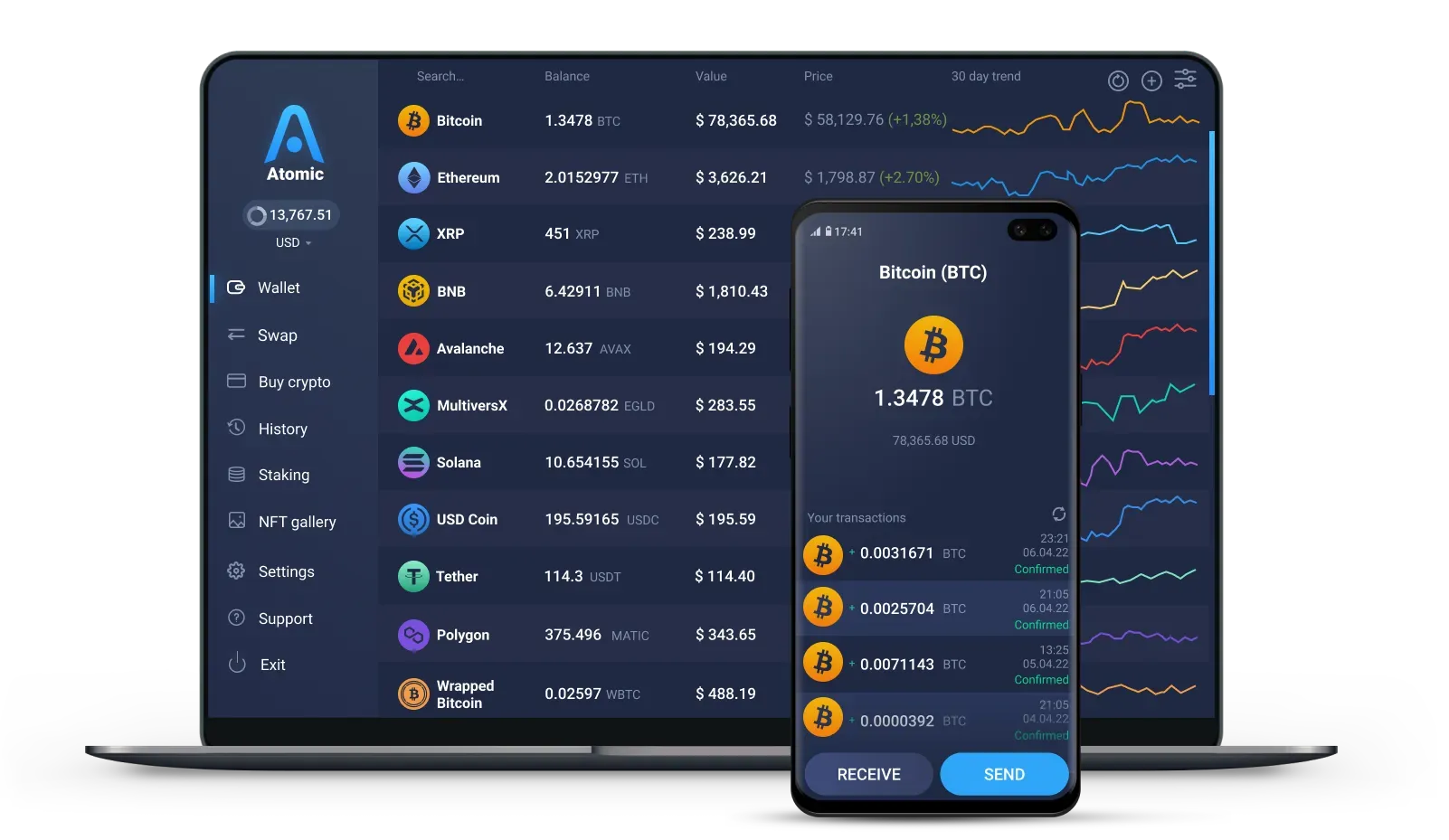
The safest way to hold STX is a self-custody wallet, where only you control the private keys. In Atomic Wallet your keys are encrypted and never leave your device, and a 12-word backup phrase lets you restore your wallet on any device. You can swap STX for BTC, USDT or BNB and keep it next to the rest of your crypto in one app.