What is Virtuals Protocol?
Virtuals Protocol is an onchain ecosystem of AI agents. Anyone can launch an AI agent with its own token, and people can buy and trade those tokens. Virtuals also builds tools for agents to hold wallets, pay for things and trade with each other through its Agent Commerce Protocol.
VIRTUAL is the base token of the ecosystem. Creating an agent is free, and some optional launch modules are paid in VIRTUAL. Every agent token is paired with VIRTUAL in its liquidity pool, and buyers usually swap into VIRTUAL before they buy an agent token.
How agent launches work
A new agent token starts on a bonding curve. Once buyers put in 42,000 VIRTUAL, a Uniswap pool pairing the agent token with VIRTUAL is created automatically, and its liquidity is locked for 10 years. Each trade pays a 1% fee: 70% goes to the agent's creator and 30% to the Virtuals treasury. Because so much VIRTUAL ends up locked in these pools, the project says launches put deflationary pressure on VIRTUAL.
Staking VIRTUAL
Holders can lock VIRTUAL for up to two years and receive veVIRTUAL, which decreases over time. veVIRTUAL holders vote on protocol proposals at gov.virtuals.io and are eligible for airdrops from new agent launches.
VIRTUAL supply
VIRTUAL has a fixed supply of 1 billion tokens, all already unlocked, so there are no unlock events. 60% went to public distribution, 5% to the liquidity pool and 35% to an ecosystem treasury controlled by a DAO multisig. Its emissions cannot exceed 10% annually for the next three years, and every release needs governance approval. Around 659.05 million VIRTUAL are in circulation today.
A short history of Virtuals Protocol
Virtuals Protocol started on Base, and its agent launchpad was running by October 2024. Virtuals then expanded to Solana and introduced the Agent Commerce Protocol in 2025, with VIRTUAL as the currency of payments between agents. VIRTUAL now also exists on Ethereum, Robinhood Chain and Arc.
What moves the price of VIRTUAL?
VIRTUAL follows the wider crypto market and interest in AI agents. Buying into new agents needs VIRTUAL, and it gets locked in pools, so busy periods for launches raise demand. Releases from the ecosystem treasury, up to 10% of supply a year, are the main source of new tokens on the market.
How to store Virtuals Protocol safely
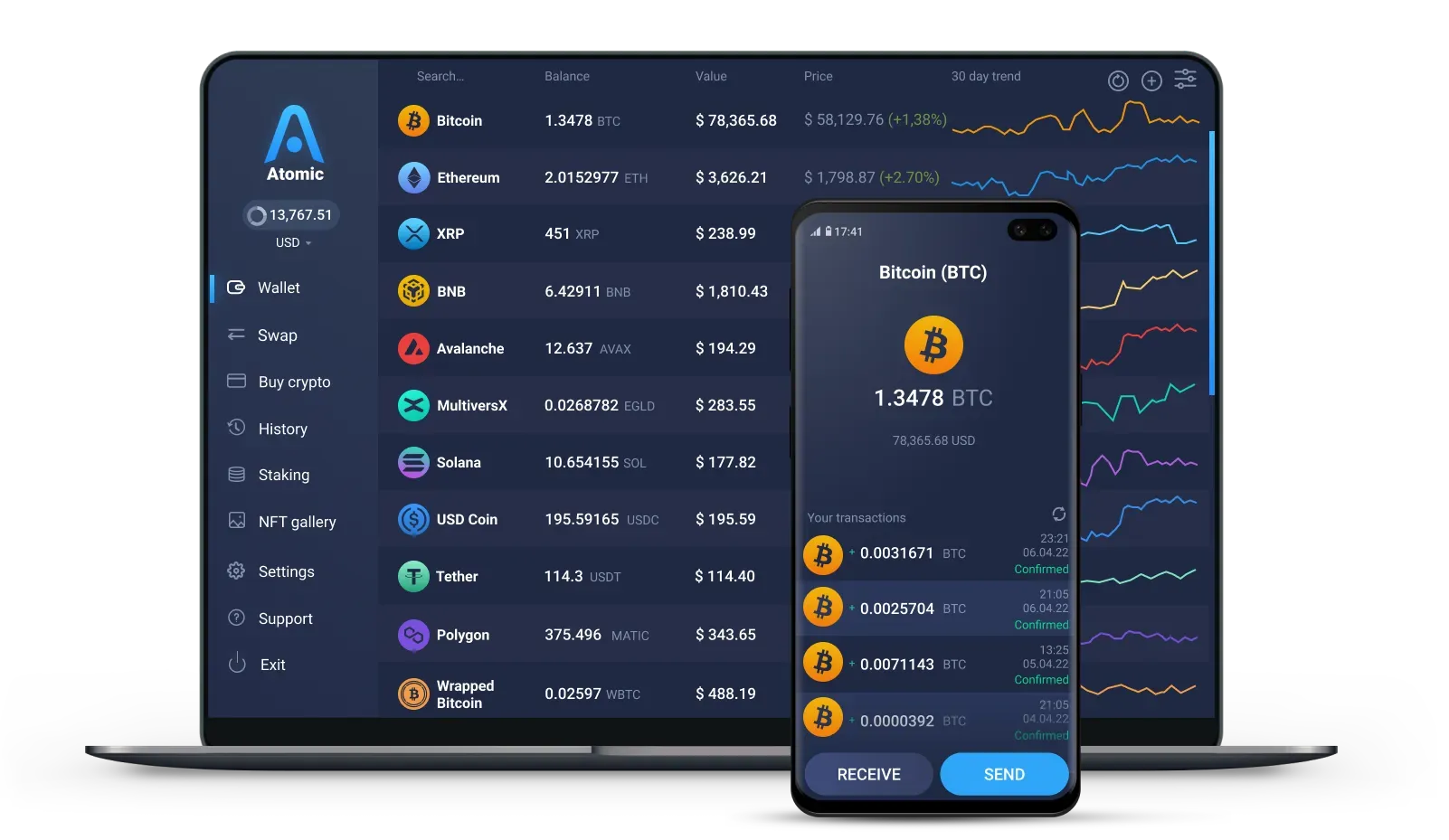
The safest way to hold VIRTUAL is a self-custody wallet, where only you control the private keys. In Atomic Wallet your keys are encrypted and never leave your device, and a 12-word backup phrase lets you restore your wallet on any device. VIRTUAL exists on Base, Ethereum, Solana and other networks, so check which one you are using before you send.