What is Wormhole?
Wormhole is a cross-chain messaging protocol. It lets an app on one blockchain send a message, or a token, to an app on another blockchain. DeFi apps, NFT projects and DAOs use it to work across many networks at once instead of being stuck on one.
W is Wormhole's token. Holders use it to vote on how the protocol develops.
How does Wormhole work?
Messages sent through Wormhole are checked by the Guardian network, a decentralized group of nodes that validates and signs each cross-chain message. Only a message signed by the Guardians is accepted on the other side. On top of this, Wormhole uses several verification methods to make sure the data it carries is valid.
W token and governance
W is a multichain token: on Solana it is an SPL token, and on Ethereum, Arbitrum, Base and other EVM chains it is an ERC-20. Holders stake W to vote through MultiGov, Wormhole's cross-chain governance system. Staking for governance does not lock the tokens, and holders can unstake or change their delegate at any time. Wormhole also runs a staking rewards program that pays W to active participants.
W supply
The max supply of W is 10 billion tokens. Around 6.81 billion W are in circulation today.
What moves the price of W?
W depends on how much value and how many messages move through Wormhole, and on competition from other bridges and messaging protocols. A large part of the 10 billion supply is still locked, so scheduled unlocks add tokens to the market over time.
How to store Wormhole safely
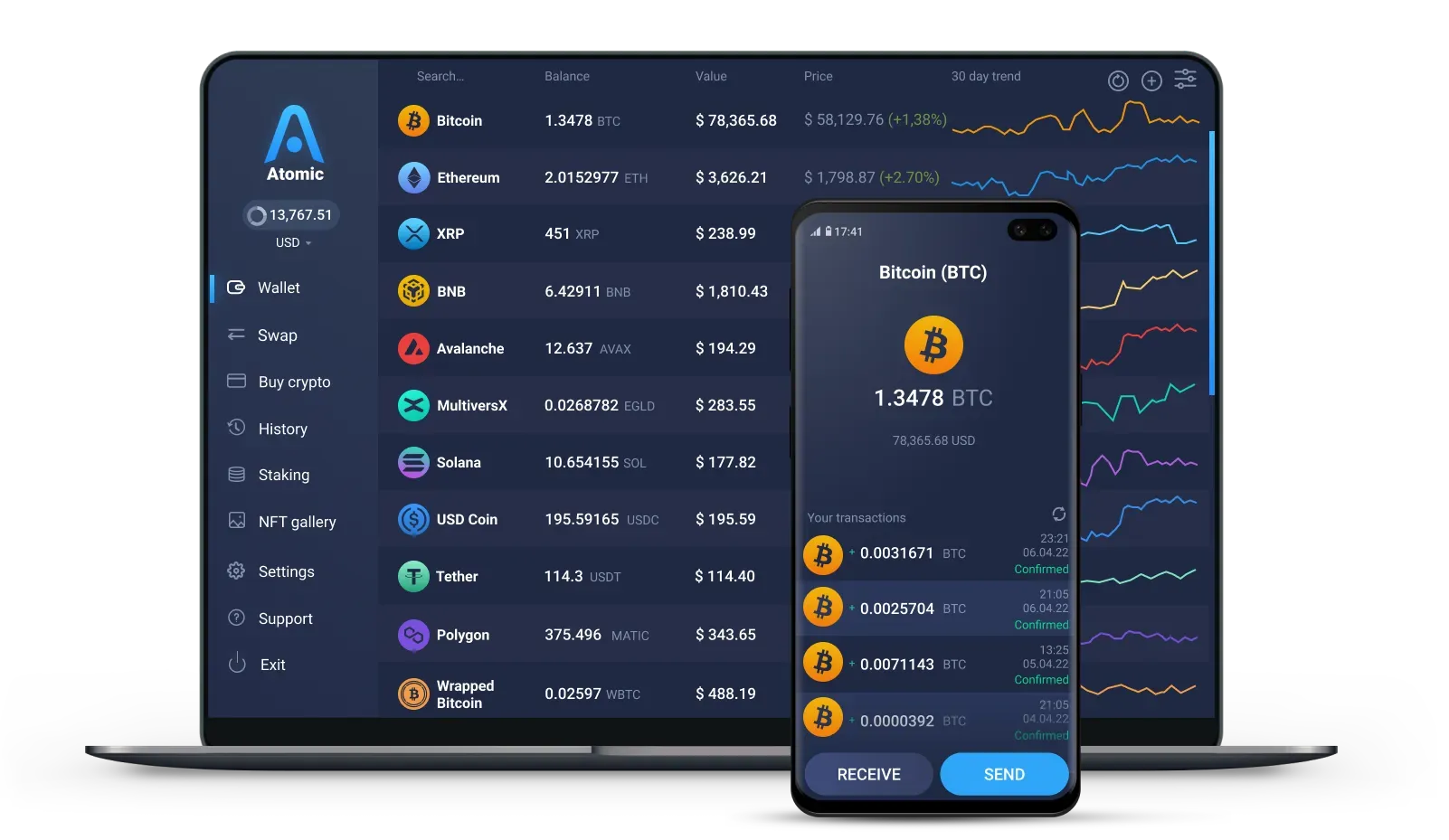
The safest way to hold W is a self-custody wallet, where only you control the private keys. In Atomic Wallet your keys are encrypted and never leave your device, and a 12-word backup phrase lets you restore your wallet on any device. You can buy W with a card and keep it next to the rest of your crypto in one app.