What is Celo?
Celo is a blockchain focused on payments, stablecoins and apps that run on a phone. Transactions finalize in about a second, fees are often below a cent, and users can pay those fees in several tokens instead of only CELO. The network is fully compatible with Ethereum, so Ethereum apps and tools work on it.
CELO is the native token of the network. It is also an ERC-20 compatible token and gives holders a vote in Celo governance.
From layer 1 to Ethereum layer 2
Celo launched as its own layer 1 blockchain. On March 26, 2025, at block 31,056,500, the network moved to Ethereum as a layer 2. The old chain was stopped one block earlier, and its full history was carried over, so balances and past transactions stayed in place. Since the move, Celo relies on Ethereum for security.
CELO supply
CELO has a maximum supply of 1 billion tokens. Around 609.98 million CELO are in circulation today.
A short history of Celo
The Celo mainnet launched on Earth Day, April 22, 2020, as an independent layer 1. The Donut hard fork in May 2021 improved Ethereum compatibility. In July 2023 cLabs proposed turning Celo into an Ethereum layer 2, and in April 2024 it proposed building it on the OP Stack. After test networks moved first, the mainnet switched over in March 2025.
What moves the price of CELO?
CELO follows the wider crypto market. Since the network targets payments, the volume of stablecoin transfers and the number of people using Celo apps shape demand for it. Governance decisions and news about the Ethereum layer 2 ecosystem also affect the price.
How to store Celo safely
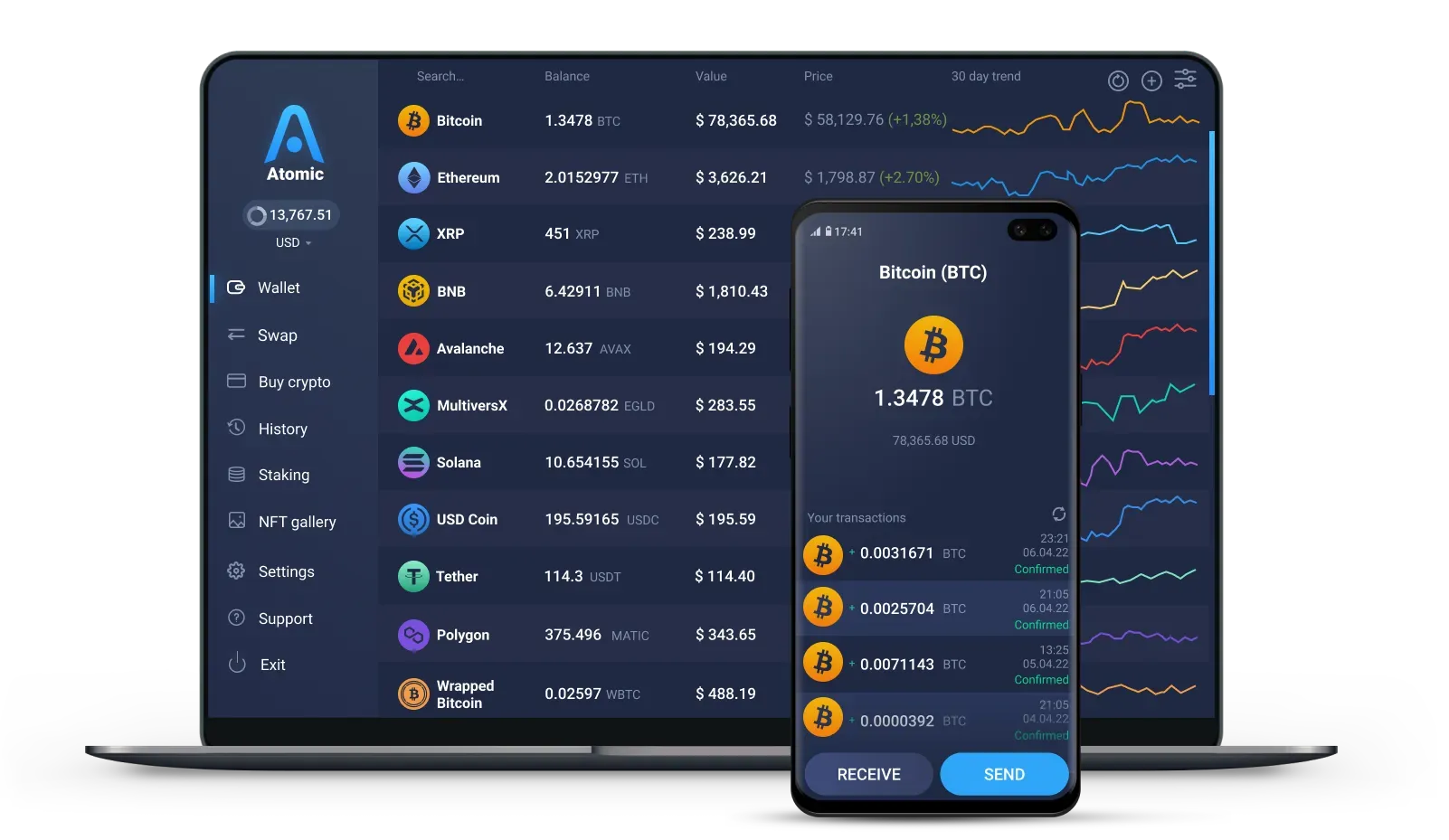
The safest way to hold CELO is a self-custody wallet, where only you control the private keys. In Atomic Wallet your keys are encrypted and never leave your device, and a 12-word backup phrase lets you restore your wallet on any device. You can buy CELO with a card, swap it for BTC or USDT, and keep it next to the rest of your crypto in one app.