What is Chainlink?
Chainlink is a decentralized oracle network. Smart contracts cannot see anything outside their own blockchain, such as asset prices, weather data or payments in a bank. Chainlink nodes fetch that data, check it and deliver it on chain, so lending apps, exchanges and other contracts can act on real-world information.
LINK is the token of the network. It pays node operators for their work and is staked as collateral that keeps them honest.
How does Chainlink work?
Independent node operators run Chainlink nodes and answer requests from smart contracts, from price feeds to off-chain computation. Because the network is decentralized, a smart contract does not have to trust one company or one server for the data it acts on.
Chainlink also runs the Cross-Chain Interoperability Protocol (CCIP), a standard for moving tokens and messages between public and private blockchains, plus services such as Chainlink Functions and Automation.
What is LINK used for?
Apps pay in LINK for data, computation and cross-chain transfers, and they fund subscriptions to Chainlink Functions and Automation with it. Node operators stake LINK as collateral: if they deliver inaccurate data, part of that stake can be slashed. This ties the security of the data to the value of the token.
LINK supply
LINK has a fixed maximum supply of 1 billion tokens, all of which were created at launch. The rest of the supply is released into circulation over time. Around 766.85 million LINK are in circulation today.
A short history of Chainlink
Sergey Nazarov and Steve Ellis founded Chainlink in 2017; cryptographer Ari Juels co-authored its white paper. In September 2017 the project raised $32 million in a token sale. Sergey Nazarov now leads Chainlink Labs as CEO. Over the years the network added staking for node operators, services such as Functions and Automation, and the CCIP standard for cross-chain transfers.
What moves the price of LINK?
LINK follows the wider crypto market, especially Ethereum and DeFi. Its own drivers are demand for Chainlink services: new chains and apps that use its data feeds, cross-chain transfers through CCIP, and the amount of LINK locked in staking. Releases of tokens from the unreleased supply add selling pressure.
How to store Chainlink safely
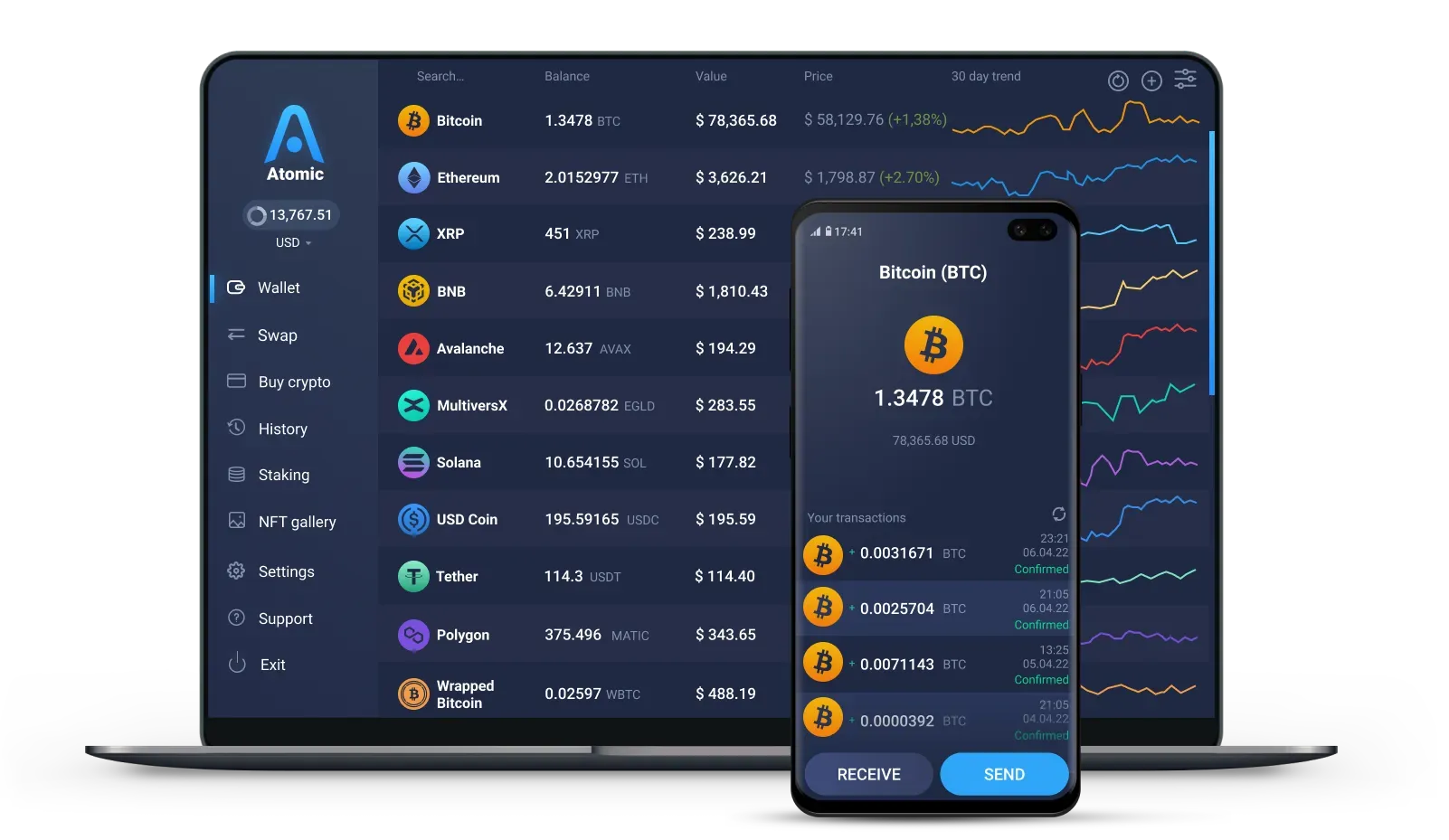
The safest way to hold LINK is a self-custody wallet, where only you control the private keys. In Atomic Wallet your keys are encrypted and never leave your device, and a 12-word backup phrase lets you restore your wallet on any device. LINK lives on Ethereum, so keep a little ETH in the wallet to pay the network fee when you send it.