What is Chromia?
Chromia is a layer 1 blockchain that stores data in relational tables, the way a regular PostgreSQL database does. Developers write apps in Rell, a language made for this model, and each app runs on its own chain. Users do not pay gas: the app pays for hosting, so people can use it without holding tokens.
How the Chromia network works
Apps rent capacity on node clusters in units called SCUs and pay for it in CHR. Nodes in a cluster agree on blocks with EBFT, a Byzantine fault tolerant protocol: validators take turns proposing a block, and it is final once more than two thirds sign it. Blocks are built on demand, about every 2 seconds on average. System chains handle the directory, the economy, tokens and anchoring.
CHR staking
CHR holders can stake and delegate to node providers on the native network for a yield of about 3% a year, with a 14-day withdrawal period. Staking of the ERC-20 and BEP-20 versions closed in April 2026, so only native CHR can be staked now.
CHR supply
The maximum supply of CHR is 978,064,789: one billion minus 21.9 million burned in May 2020. CHR exists natively on Chromia and as tokens on Ethereum and BNB Chain, linked by a bridge. Around 978.06 million CHR are in circulation today.
A short history of Chromia
Chromia comes from ChromaWay, a company founded in 2014 that built the Postchain database blockchain in 2016. Chromia itself was founded in 2018, and CHR launched in May 2019. The mainnet went live in July 2024, and Chromia Pay launched in October 2026.
What moves the price of CHR?
Demand for CHR comes from apps that pay for hosting and from holders who stake it with node providers. The growth of apps on the network and the yield on staking both affect it.
How to store Chromia safely
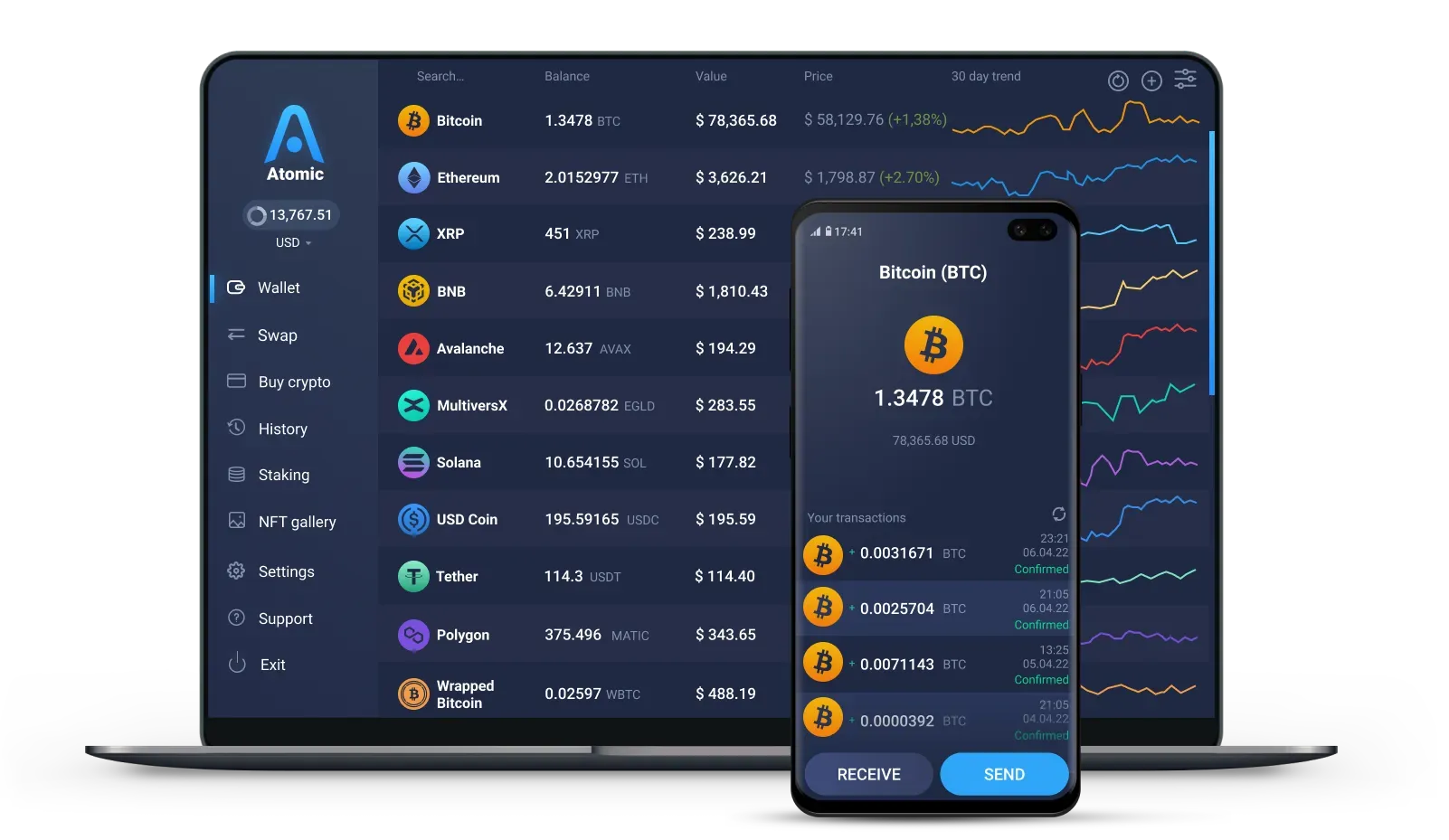
A self-custody wallet keeps CHR under your control. In Atomic Wallet your private keys are encrypted and never leave your device, and a 12-word backup phrase restores the wallet on any device. You can buy CHR with a card, swap it for BTC, USDT, ETH or BNB, and keep it next to your other coins.