What is Filecoin?
Filecoin is a peer-to-peer network for storing files. Clients pay storage providers in FIL to keep their data, and providers prove every day that the data is still there. Most providers also run IPFS, a peer-to-peer file-sharing protocol, and Filecoin adds the payments that keep them storing data.
FIL pays for storage and gas on the network, and providers lock it as collateral. Filecoin is used for NFT storage, archives such as the Internet Archive, app data and, more recently, AI datasets.
How does Filecoin work?
Filecoin runs its own blockchain with Expected Consensus. Every 30 seconds the network holds a secret election among storage providers, weighted by how much storage each one contributes, and the winners propose blocks. A provider that keeps failing its storage proofs loses part of the FIL it locked as collateral.
Since March 2023 the Filecoin Virtual Machine lets developers run smart contracts on the network, including contracts written for Ethereum.
FIL supply
Filecoin's supply is capped at 2 billion FIL. 70% is set aside as rewards for storage providers, released over many years: part on a fixed schedule with a six-year half-life, and part only as the network's total storage grows. Protocol Labs received 15% and the Filecoin Foundation 5%. Another 10% was set aside for fundraising, of which 7.5% was sold in the 2017 token sale. Gas fees and penalties burn FIL for good, so the cap will never be fully reached. Around 854.33 million FIL are in circulation today.
A short history of Filecoin
Protocol Labs published the Filecoin white paper in July 2017. Its token sale that year raised about $205 million from more than 2,100 investors. The mainnet launched on October 15, 2020, and within six weeks the network passed 1 exbibyte of storage. Smart contracts arrived with the Filecoin Virtual Machine on March 14, 2023.
What moves the price of FIL?
FIL follows the wider crypto market. Demand for storage on the network matters as well: providers have to lock FIL as collateral to add capacity, and the more storage the network has, the more rewards are released. Gas burns slowly remove FIL from the supply.
How to store Filecoin safely
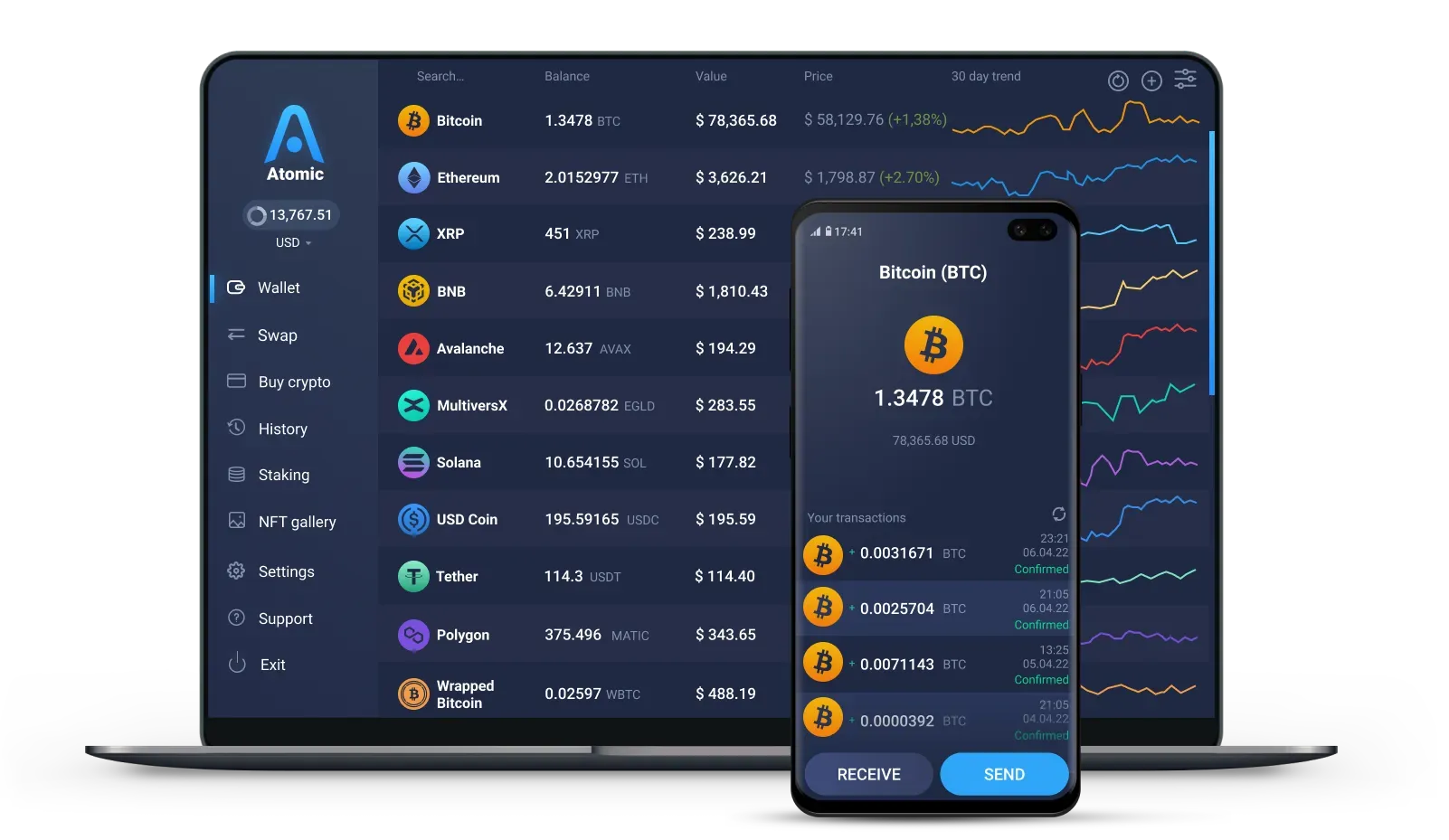
The safest way to hold FIL is a self-custody wallet, where only you control the private keys. In Atomic Wallet your keys are encrypted and never leave your device, and a 12-word backup phrase lets you restore your wallet on any device. You can buy FIL with a card, swap it for BTC, USDT, ETH or BNB, and keep it next to the rest of your crypto in one app.