What is Ontology?
Ontology is a public blockchain built around identity and trust. Its tools let people and apps create decentralized IDs, attach verifiable credentials to them and share data without handing control to one company. The project calls itself the trust layer for Web3.
Ontology was started in 2017 by OnChain, the company behind the NEO blockchain, led by Da Hongfei and Erik Zhang. Its mainnet went live on June 30, 2018.
ONT and ONG: two tokens
Ontology splits its economy between two tokens. ONT is the main token: it is staked to secure the network and gives holders a say in governance. ONG is the gas token that pays for transactions and smart contracts. When you stake ONT, you earn ONG as a reward, so holding ONT gives you the fuel to use the chain.
How does Ontology reach consensus?
Ontology uses VBFT, a consensus algorithm that combines proof of stake, a verifiable random function and Byzantine fault tolerance. Nodes stake ONT to take part, a random function picks who proposes and confirms each block, and BFT voting makes blocks final once they are confirmed.
ONT supply
ONT has a fixed supply of 1 billion tokens, and no new ONT is created; stakers are rewarded in ONG instead. Around 1 billion ONT are in circulation today.
What moves the price of ONT?
ONT follows the wider crypto market. Demand for staking, which pays out in ONG, and the use of Ontology's identity tools by apps both affect it. Listings on exchanges and the activity of the NEO and Ontology communities also play a role.
How to store Ontology safely
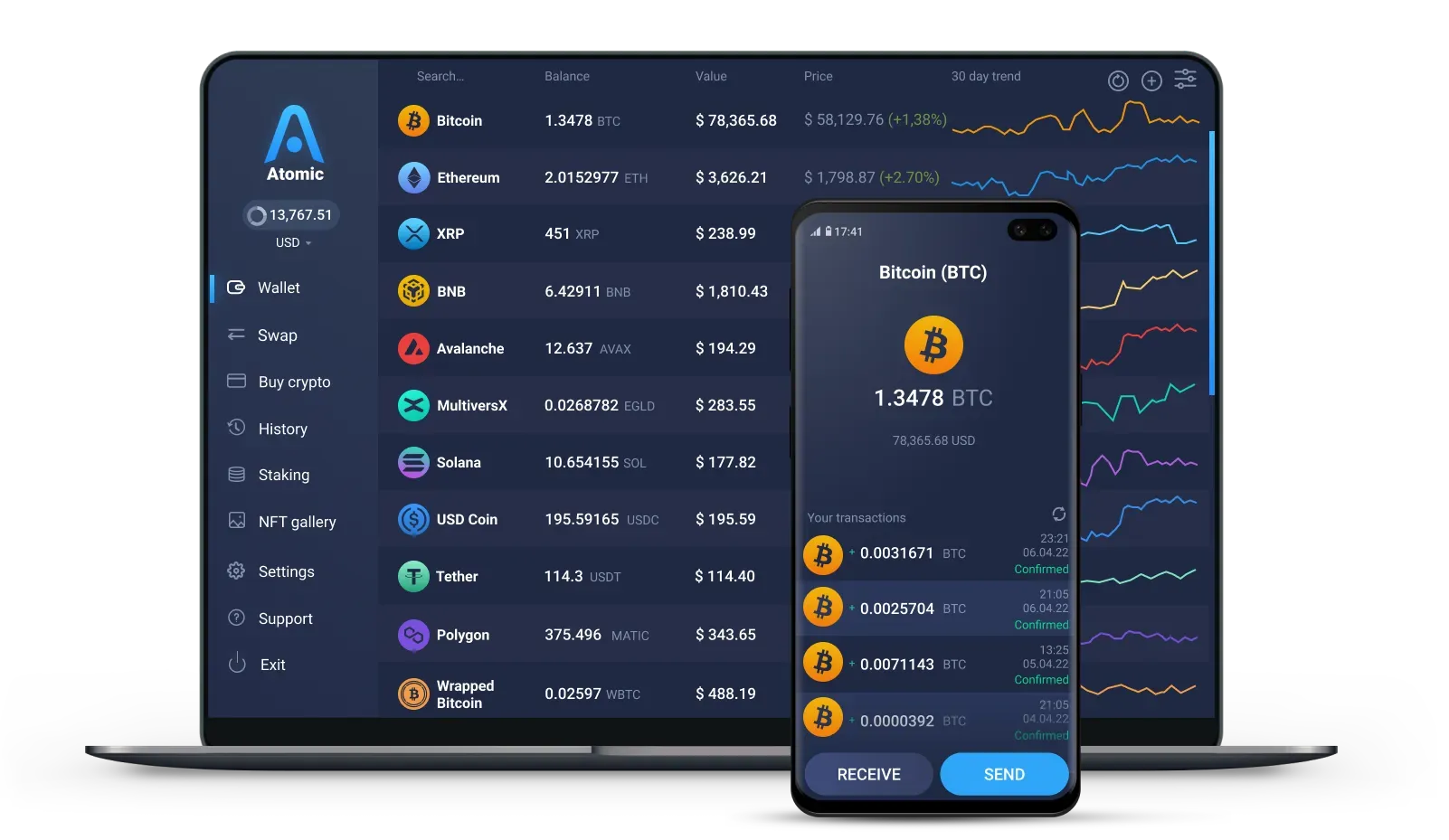
The safest way to hold ONT is a self-custody wallet, where only you control the private keys. In Atomic Wallet your keys are encrypted and never leave your device, and a 12-word backup phrase lets you restore your wallet on any device. You can buy ONT with a card, swap it for BTC, USDT or ETH, and keep it next to the rest of your crypto in one app.