What is Celestia?
Celestia is a data availability network. Most blockchains do everything in one place: run transactions, agree on their order and store the data. Celestia only orders data and keeps it available, while rollups and other chains run their transactions elsewhere and post their data to Celestia. This is called a modular blockchain.
TIA pays the fees for publishing data on Celestia, is staked with validators to secure the network and is used to vote on its parameters. New chains can also use TIA as their gas token.
How does Celestia work?
Celestia checks that data is available with data availability sampling. Light nodes download small random pieces of each block instead of the whole block, and the more light nodes take part, the larger the blocks can safely be. Data is sorted into namespaces, so each app downloads only its own data. The chain itself runs proof of stake on CometBFT and the Cosmos SDK.
Staking TIA
TIA holders delegate their coins to validators and earn a share of new TIA and fees. Since the Matcha upgrade in 2025 unstaking takes about 14 days instead of 21, and since the Lotus upgrade rewards are no longer claimed automatically. 2% of block rewards go to the community pool.
TIA supply
Celestia started with 1 billion TIA and has no hard cap: new TIA is issued as staking rewards. Inflation began at 8% a year and goes down every year towards a floor of 1.5%, and the Lotus upgrade in 2025 cut it by a third. Tokens of investors and core contributors unlocked in steps from October 30, 2024. Around 994.2 million TIA are in circulation today.
A short history of Celestia
Celestia grew out of LazyLedger, a 2019 research paper by Mustafa Al-Bassam. Its Mainnet Beta went live on October 31, 2023, after a Genesis Drop of 60 million TIA to researchers, Ethereum rollup users and Cosmos stakers. In September 2024 the Celestia Foundation raised $100 million in a round led by Bain Capital Crypto. The Lotus and Matcha upgrades in 2025 lowered inflation, connected native TIA to other chains through Hyperlane and shortened unstaking.
What moves the price of TIA?
TIA follows the wider crypto market and demand for blockspace on Celestia from rollups. New TIA from staking rewards adds supply every year, and unlocks of investor and contributor tokens added more after October 2024. Changes to inflation, voted on by holders, affect how fast supply grows.
How to store Celestia safely
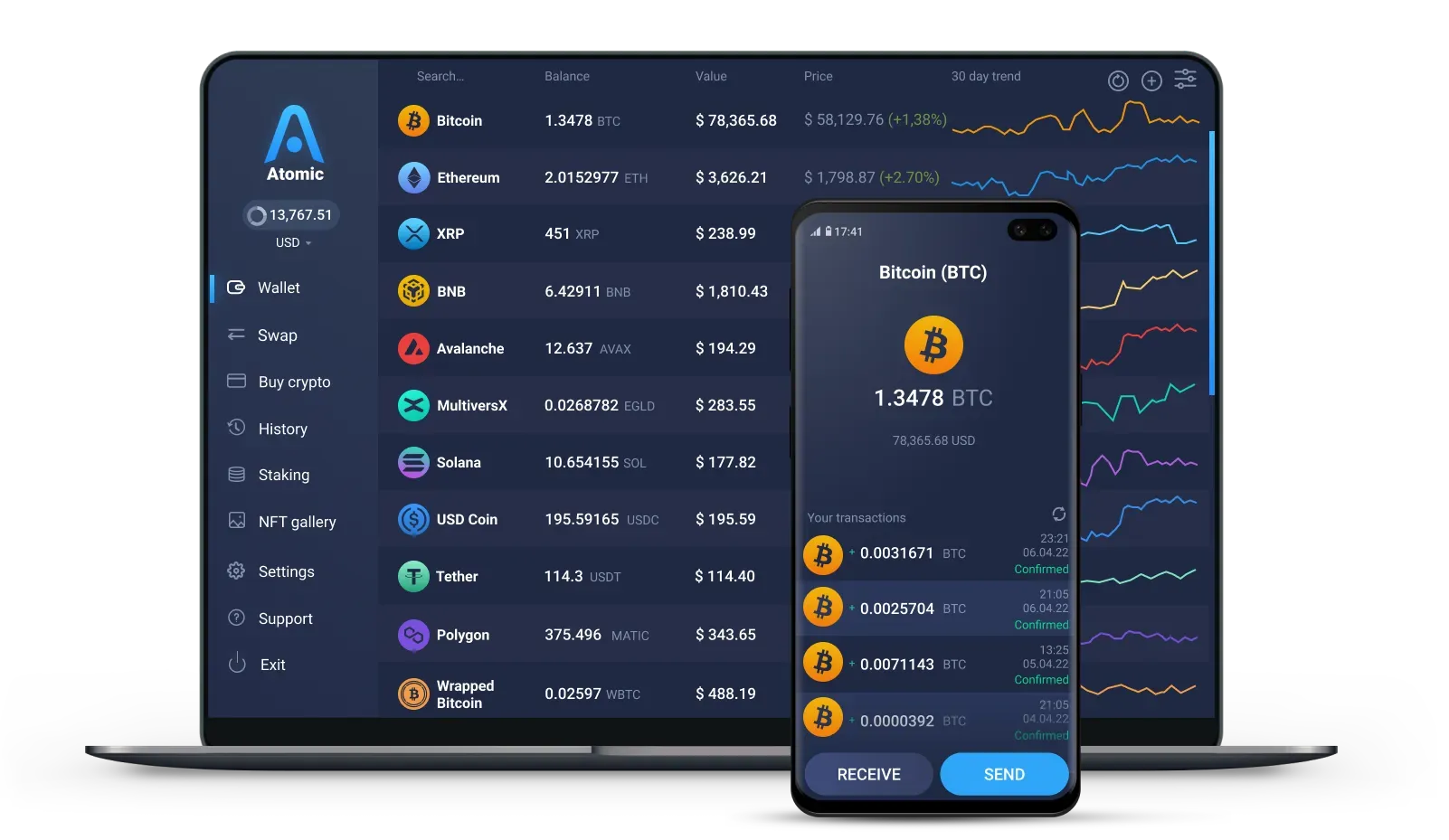
The safest way to hold TIA is a self-custody wallet, where only you control the private keys. In Atomic Wallet your keys are encrypted and never leave your device, and a 12-word backup phrase lets you restore your wallet on any device. TIA also exists on other chains as IBC or Hyperlane versions: check which network you use before you send.