What is Uniswap?
Uniswap is a set of smart contracts that let anyone swap tokens, provide liquidity or create a new market directly on chain. There is no order book and no company matching trades: you trade against a pool of two tokens, and the price follows a formula based on how much of each token the pool holds.
UNI is the governance token of the Uniswap protocol. Holders vote on how the treasury is used and on changes to the protocol.
How does Uniswap work?
Uniswap is an automated market maker. Liquidity providers deposit pairs of tokens into a pool and earn the swap fees paid by traders. Uniswap v3 added concentrated liquidity, where each provider chooses the price range for their funds. Uniswap v4 kept that model and added hooks, small contracts that let pool creators set dynamic fees, limit orders and other custom rules.
The core contracts cannot be upgraded or paused once deployed. Governance can turn on protocol fees on supported pools within set limits.
UNI supply
1 billion UNI were minted at genesis and unlocked over four years. 60% went to the community, including the airdrop and the governance treasury, and the rest to the team, investors and advisors on four-year vesting. The original plan also set a perpetual inflation of 2% a year after those four years. Around 623.2 million UNI are in circulation today.
A short history of Uniswap
Hayden Adams founded Uniswap in 2018, inspired by an idea first described by Vitalik Buterin. On September 16, 2020 the protocol introduced UNI with a retroactive airdrop: every address that had used the Uniswap v1 or v2 contracts before a September 1 snapshot could claim 400 UNI. The protocol has since moved through v3 and v4, and UNI is now also deployed on Unichain and other networks.
What moves the price of UNI?
UNI follows the wider crypto market and especially DeFi activity on Ethereum. Trading volume on Uniswap matters, and so do governance decisions about protocol fees, because fees that reach the protocol could change what UNI holders get. Unlocks of tokens set aside for the team and investors have added supply in the past.
How to store Uniswap safely
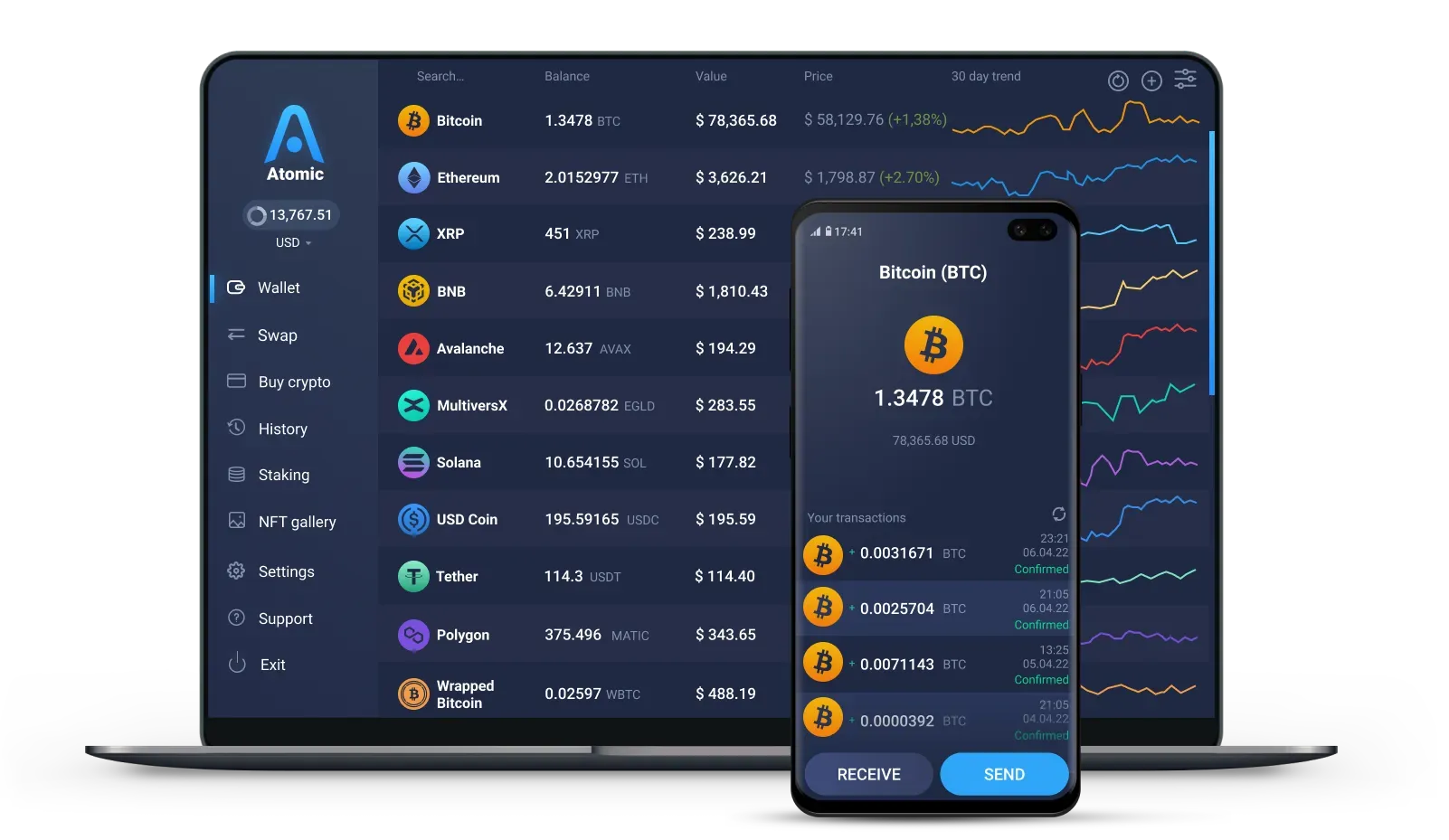
The safest way to hold UNI is a self-custody wallet, where only you control the private keys. In Atomic Wallet your keys are encrypted and never leave your device, and a 12-word backup phrase lets you restore your wallet on any device. UNI is a token on Ethereum, so keep a little ETH to pay the network fee when you send it.